ब्रह्माण्ड-व्यापक रूप
नाम पाँच-सौ-एक से छह-सौ। माया, मूल-प्रकृति, सर्वगा।
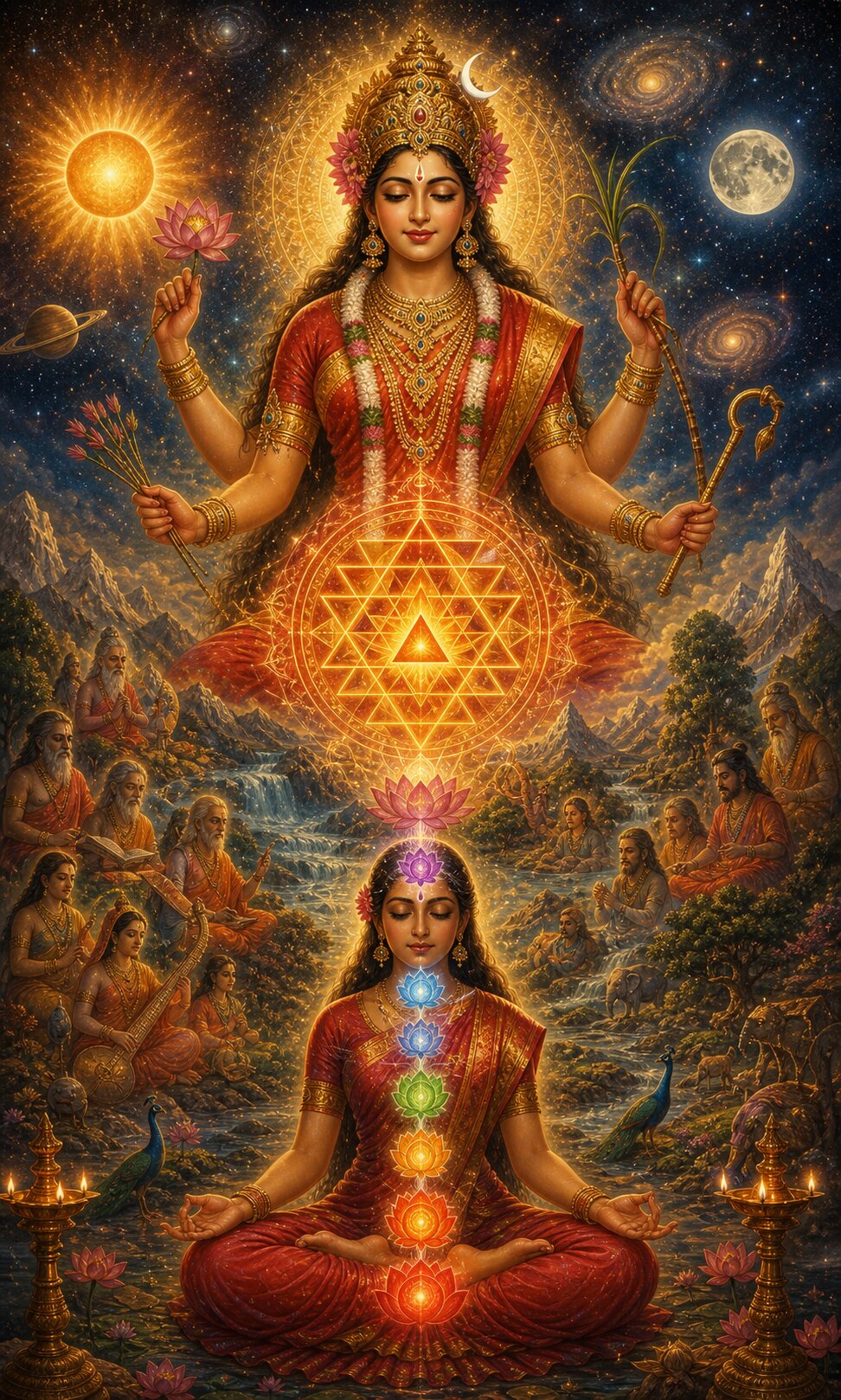
इस खण्ड में देवी किसी एक मन्दिर की, किसी एक रूप की देवी नहीं रह जातीं। यहाँ उनका नाम-संकीर्तन सम्पूर्ण सृष्टि के क्रियाशील तत्त्व का संकीर्तन हो जाता है। माया, मूल-प्रकृति, अव्यक्त और सर्व-व्यापिनी, ये इस खण्ड के मूल स्वर हैं।
यहाँ देह के भीतर के षट्चक्र खुलते हैं। पाँच-सौ-एक से पाँच-सौ-चौंतीस तक की नाम-माला उन योगिनियों का स्मरण है जो भीतर के चक्रों में विराजती हैं, मणिपूर की लाकिनी, स्वाधिष्ठान की काकिनी, मूलाधार की साकिनी, आज्ञा की हाकिनी, और सहस्रार-कमल पर बैठी परम देवी। साधक की कुण्डलिनी मूलाधार से उठकर सहस्रदल कमल में शिव से मिलती है, और यह नाम-क्रम उसी आरोहण को नाम-दर-नाम छूता चलता है।
आगे की नाम-माला में देवी अक्षर, श्रुति, स्मृति, विद्या और प्रज्ञान-घन के रूप में पुकारी जाती हैं। श्रीविद्या, षोडशाक्षरी विद्या, त्रिकूटा और कामकोटिका, ये नाम उस मन्त्र-रहस्य की ओर संकेत करते हैं जिस पर इस उपासना की समूची परम्परा टिकी है।
खण्ड के अन्त की ओर देवी पराशक्ति, परानिष्ठा और महाप्रलय की साक्षिणी कही जाती हैं। जो सृष्टि के आरम्भ में आकाश से लेकर पृथ्वी तक के पंच महाभूतों को जन्म देती हैं, वही महाप्रलय में उन सबके लय की मौन साक्षी रहती हैं। छह-सौवाँ नाम दक्ष-यज्ञ के विध्वंस तक पहुँचकर इस खण्ड को विराम देता है।
खण्ड का आरम्भ कोमल स्वर में होता है। पहले देवी उस माँ की तरह पुकारी जाती हैं जिनका मन गुड़-मिले अन्न के नैवेद्य से प्रसन्न होता है, और जो अपने समूचे भक्त-समुदाय को सुख बाँटती हैं। यहीं से नाम-माला भीतर मुड़ती है, क्योंकि अगला नाम मणिपूर-चक्र की अधिष्ठात्री लाकिनी अम्बा का स्मरण कराता है।
नाम 501-503 · नैवेद्य से भीतर की ओर
अब नाम-क्रम स्वाधिष्ठान के छह-दल कमल में उतरता है, जहाँ काकिनी योगिनी विराजती हैं। उनके चार मनोहर मुख हैं, हाथों में त्रिशूल आदि आयुध, पाश, कपाल और अभय-मुद्रा। उनका वर्ण पीला है, उनकी मुद्रा में एक उन्नत गर्व है, और वे प्राणियों की मेद-धातु में अधिष्ठित रहती हैं। मधु से बने नैवेद्य से वे प्रसन्न होती हैं, और बन्धिनी आदि शक्तियाँ उन्हें घेरे रहती हैं।
नाम 504-511 · स्वाधिष्ठान की काकिनी
दधि-मिश्रित अन्न के नैवेद्य में जिनका हृदय अनुरक्त रहता है, वही देवी अब काकिनी का रूप धारण किए हुई दिखती हैं, और फिर नाम-क्रम और नीचे उतरकर मूलाधार के कमल पर आ बैठता है। यहाँ की साकिनी के पाँच मुख हैं, वे अस्थि-धातु में संस्थित रहती हैं, अंकुश आदि आयुध धारण करती हैं, वरदा आदि शक्तियाँ उनकी सेविका हैं, और मूँग से बने अन्न के नैवेद्य में उनका चित्त रमता है। इसी मूलाधार-योगिनी का नाम है साकिन्यम्बा।
नाम 512-520 · मूलाधार की साकिनी
अब नाम-क्रम भौंहों के बीच आज्ञा-चक्र के दो-दल कमल में पहुँचता है। यहाँ की हाकिनी का वर्ण श्वेत है, उनके छह मुख हैं, वे मज्जा-धातु की अधिष्ठात्री हैं, और हंसवती तथा क्षमावती शक्तियाँ उनके दोनों दलों में बैठी रहती हैं। हल्दी से सँवारे अन्न के नैवेद्य में उनकी विशेष रुचि है, और इसी रूप में वे हाकिनी कहलाती हैं।
नाम 521-527 · आज्ञा की हाकिनी
चक्रों का यह आरोहण अपने शिखर पर आता है। सिर के ऊपर सहस्रदल कमल में स्थित देवी का स्मरण होता है, वह हज़ार पंखुड़ियों वाला कमल जिसे षट्चक्रों से ऊपर माना जाता है। मूलाधार से उठी कुण्डलिनी यहीं शिव से मिलती है, और उस मिलन से झरते अमृत का अनुभव साधक को होता है। इसी परम स्थान पर बैठी देवी अनेक वर्णों की आभा से सुशोभित हैं, समस्त ज्ञात आयुधों को धारण करती हैं, शुक्र-धातु में संस्थित रहती हैं, सब दिशाओं की ओर मुख किए हुई हैं, हर प्रकार के अन्न-नैवेद्य से प्रसन्न होती हैं, और याकिनी योगिनी के रूप में विराजती हैं।
नाम 528-534 · सहस्रार की याकिनी
योगिनियों की माला पूरी होते ही नाम-क्रम यज्ञ और वेद की ओर मुड़ जाता है। देवी वही ‘स्वाहा’ हैं जो अग्नि में आहुति देते समय मन्त्रों के अन्त में उच्चरित होती है, और वही ‘स्वधा’ जो पितरों के तर्पण में पुकारी जाती है। वे अविद्या के रूप में भी विद्यमान हैं और धारणाशक्ति-रूपी प्रज्ञा के रूप में भी। वही वेद-रूप श्रुति हैं, और वेद के अर्थ पर टिके शास्त्र-रूप स्मृति भी।
नाम 535-540 · स्वाहा, स्वधा, श्रुति, स्मृति
अब स्तुति देवी की महिमा और उनके पुण्यदायी संकीर्तन की ओर झुकती है। उनसे बढ़कर कोई नहीं, उनकी कीर्ति पवित्र और पुण्यमयी है, और वे केवल पुण्यात्माओं को ही प्राप्त होती हैं। जो उनका श्रवण और कीर्तन करता है, उसे पुण्य मिलता है। इन्द्र की पत्नी पुलोमजा उनकी अर्चना करती हैं। वे स्वयं हर बन्धन से रहित हैं और भक्तों को बन्धन से मुक्त करती हैं, उनके केश घुँघराले हैं, और वे विमर्श अर्थात् स्व-प्रकाश आत्म-चेतना के रूप में स्थित हैं।
नाम 541-549 · पुण्य-कीर्ति और बन्ध-मोचन
यहाँ देवी सम्पूर्ण जगत् की जननी कही जाती हैं। ‘वियत्’ अर्थात् आकाश से लेकर समस्त भूतों तक से बने जगत् की वे मूल माँ हैं। तैत्तिरीय उपनिषद् के क्रम में आत्मा से आकाश, आकाश से वायु, वायु से अग्नि, अग्नि से जल और जल से पृथ्वी प्रकट होती है, और इन्हीं पंच महाभूतों तथा उनसे रचे जगत् की वे प्रसूति हैं। इसी कारण वे समस्त रोगों और शोकों का शमन करती हैं और भक्तों को हर प्रकार की मृत्यु से बचाती हैं।
नाम 550-552 · आकाश से जगत् की जननी
आगे की नाम-माला देवी के विविध रूपों और कथाओं को छूती चलती है। वे सबमें अग्रगण्य हैं, उनका रूप विचार की पहुँच से परे है, और वे कलियुग के पापों का नाश करती हैं। कत ऋषि के कुल में प्रकट कात्यायनी, मृत्यु का संहार करने वाली कालहन्त्री, और कमलाक्ष विष्णु जिनकी शरण लेते हैं, ये सब उन्हीं के नाम हैं। उनका मुख पान से भरा रहता है, उनकी आभा अनार के फूल जैसी है, और उनके नेत्र हिरनी के नेत्रों जैसे बड़े और सुन्दर हैं।
नाम 553-561 · कात्यायनी से मृगाक्षी
अब देवी मोहित करने वाली, सबमें प्रथम, और शिव की पत्नी मृडानी के रूप में पुकारी जाती हैं। वे समूचे जगत् की मित्र हैं, नित्य तृप्त रहती हैं, भक्तों की निधि और कोष हैं, समस्त प्राणियों को सन्मार्ग पर प्रेरित करती हैं, सबकी ईश्वरी हैं, और मैत्री आदि शुभ भावनाओं के अभ्यास से ही प्राप्त होती हैं।
नाम 562-570 · मृडानी, निखिलेश्वरी
यहाँ नाम देवी के परम और गूढ़ रूप तक पहुँचते हैं। जब सृष्टि अपने आदि-तत्त्व में लौट जाती है, तब वे महाप्रलय की मौन साक्षिणी रहती हैं। वे ही आदि और परम पराशक्ति हैं, परम लक्ष्य और परम अधिष्ठान परानिष्ठा हैं, और शुद्ध घनीभूत प्रज्ञान के रूप में स्थित हैं। माध्वी-पान से अलस-सी, हर उत्कण्ठा से रहित, आनन्द में मत्त, और वर्णमाला के अक्षरों के रूप में वे प्रकट होती हैं।
नाम 571-577 · महाप्रलय-साक्षिणी, प्रज्ञानघन
अब देवी महाकैलास में निवास करती हुई दिखती हैं, जिनकी भुजा-लताएँ कमल-नाल जैसी कोमल और शीतल हैं। वे पूजनीय और वन्दनीय हैं, करुणा की साक्षात् मूर्ति हैं, और तीनों लोकों के महासाम्राज्य का संचालन करती हैं। यहीं से वे ज्ञान के रूपों में पुकारी जाती हैं, आत्मा का ज्ञान, उस आत्म-ज्ञान का आश्रय महाविद्या, और पंचदशी मन्त्र के रूप में श्रीविद्या।
नाम 578-585 · महाकैलास, श्रीविद्या
श्रीविद्या के मन्त्र-रहस्य के साथ नाम-माला और गहरी होती है। देवी कामदेव से सेवित हैं, सोलह अक्षरों वाले षोडशाक्षरी मन्त्र के रूप में हैं, पंचदशी के तीन कूटों अर्थात् त्रिकूटा के रूप में हैं, और जिनका एक अंश-मात्र स्वयं शिव हैं, वही कामकोटिका हैं। उनके कटाक्ष-मात्र से वशीभूत कोटि-कोटि लक्ष्मियाँ उनकी सेवा में लगी रहती हैं।
नाम 586-590 · षोडशाक्षरी, त्रिकूटा, कामकोटिका
अन्त की ओर नाम देह के भीतर देवी के स्थानों को छूते हैं। वे शिर में स्थित हैं और चन्द्रमा-सी आभावान हैं, भौंहों के बीच ललाट में स्थित हैं और इन्द्रधनुष-सी प्रभा वाली हैं, हृदय में स्थित हैं और सूर्य के तेज-सी दीप्त हैं, और श्रीचक्र के त्रिकोण के भीतर ज्योति-रूप में प्रकाशित होती हैं।
नाम 591-597 · शिर, भाल, हृदय, त्रिकोण
खण्ड का विराम सती और दक्ष-यज्ञ की कथा पर आता है। दक्ष प्रजापति की पुत्री दाक्षायणी, दैत्यों का संहार करने वाली, और दक्ष के उस यज्ञ की विनाशिनी। दक्ष ने अपने महायज्ञ में शिव को निमन्त्रण नहीं दिया, फिर भी सती बिन बुलाए वहाँ पहुँचीं, पिता के मुख से शिव का अपमान सह न सकीं और योगाग्नि में देह त्याग दी। शिव ने वीरभद्र को प्रकट किया, जिसने यज्ञ-मण्डप को विध्वस्त कर दिया। इसी रूप में देवी दक्ष-यज्ञ की विनाशिनी कही जाती हैं, और छह-सौवाँ नाम इसी कथा पर इस खण्ड को विराम देता है।