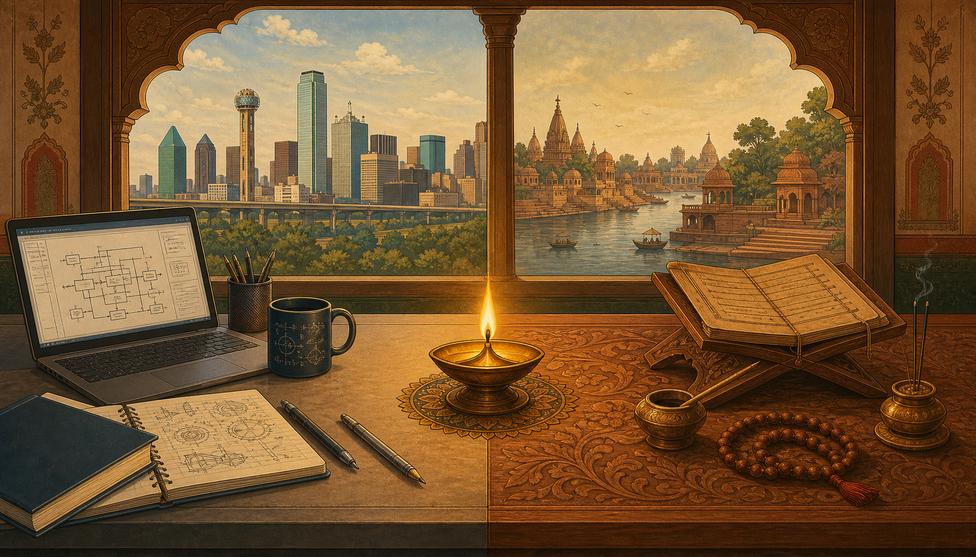
एक इंजीनियर की बही, जिसमें भारतीय ग्रंथों के पन्ने दर्ज हैं।
मैं राजीव लुल्ला हूँ। पढ़ाई से इंजीनियर, काम से कम्पनियाँ बनाने और चलाने वाला। कामकाजी जीवन के तीन दशक तकनीक में गए, और पढ़ने के जीवन का बड़ा हिस्सा उन थोड़े से ग्रंथों में, जो बरसों के साथ और काम के होते गए। यह साइट वही बही है जिसमें हम अपने नोट्स रखते आए हैं।
हिन्दी ही क्यों, और यह साइट क्यों
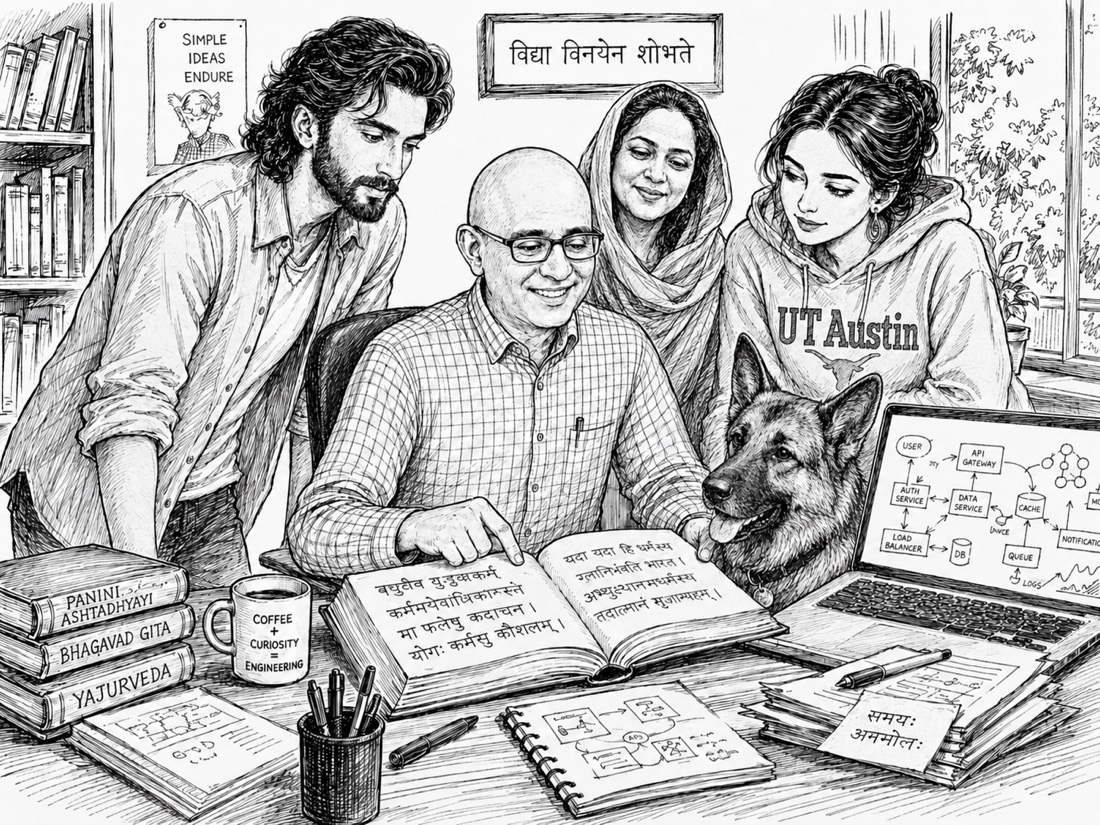
परवरिश दिल्ली की है, इसलिए घर और पहले पाठकों के लिए हिन्दी स्वाभाविक चुनाव थी। सच पूछिए तो पहले कुछ पन्ने घरवालों के साथ महीने भर की व्हाट्सऐप बातचीत से उठे थे। भगवद्गीता को हम भी बरसों वैसे ही पढ़ते रहे जैसे अधिकतर इंजीनियर पढ़ते हैं: जिज्ञासा से, कभी-कभार प्रेरणा से, अधिकतर उलझन से। फिर एक शिक्षक ने दिखाया कि उसका ढाँचा एक समस्या-कथन का है, जिसके बाद एक से बढ़कर एक सधे हुए उत्तर आते चले जाते हैं। अर्जुन उस निर्णय के सामने ठिठके खड़े हैं जिसे लेने की सामर्थ्य, अधिकार और समझ, तीनों उनके पास हैं; अगले सत्रह अध्याय श्रीकृष्ण उसी ठिठक का उत्तर देते हैं। जिस दिन यह दिखा, उस दिन से पढ़ना रुका नहीं।
अब यहाँ क्या-क्या मिलेगा
उन व्हाट्सऐप नोट्स से शुरू हुई बात अब चालीस से अधिक ग्रंथों की लाइब्रेरी बन चुकी है। महाभारत और रामायण के प्रमुख प्रसंग कथा-रूप में, श्रीमद्भागवत की पैंसठ कथाएँ, शिव पुराण, विष्णु पुराण और देवी भागवत के कथा-खण्ड, उपनिषद, गीताएँ, स्तोत्र और गुरुवाणी। साथ में पढ़ने के रास्ते, पात्रों के पन्ने, शब्द-कोश, और कथा-आकाश जैसे अनुभव। अंग्रेज़ी संस्करण बढ़ता जा रहा है। जिन पन्नों पर वाचन उपलब्ध है, वहीं सुनने का साधन मिलता है; इन रिकॉर्डिंगों को सुनने के संग्रह में भी एक साथ रखा गया है।
ये पन्ने बनते कैसे हैं
महाभारत, रामायण और कई पुराणों के लिए उपलब्ध गीता प्रेस संस्करण प्रधान साक्षी हैं। दूसरे संग्रहों के आधार-ग्रंथ स्रोत-पृष्ठ पर दर्ज हैं। वहाँ पुनर्कथन का दायरा और पाठ-मिलान की स्थिति भी बताई गई है। मसौदे आज के औज़ारों की, यानी AI की, सहायता से बनते हैं; फिर पढ़कर, स्रोत से मिलाकर, हाथ से सुधारे जाते हैं। चित्र इसी साइट के लिए बनवाए जाते हैं और कथा के पाठ से जाँचे जाते हैं; उनकी कहानी चित्रों की बात में है। जो भूलें पकड़ में आती हैं, वे सुधार-पत्र में दर्ज होती हैं। कोई भूल आपको दिखे तो लिखिए: lullarajiv [at] gmail [dot] com
परम्परा की बात
हरि ॐ। शालोम। नमस्कारम्। प्रणाम।
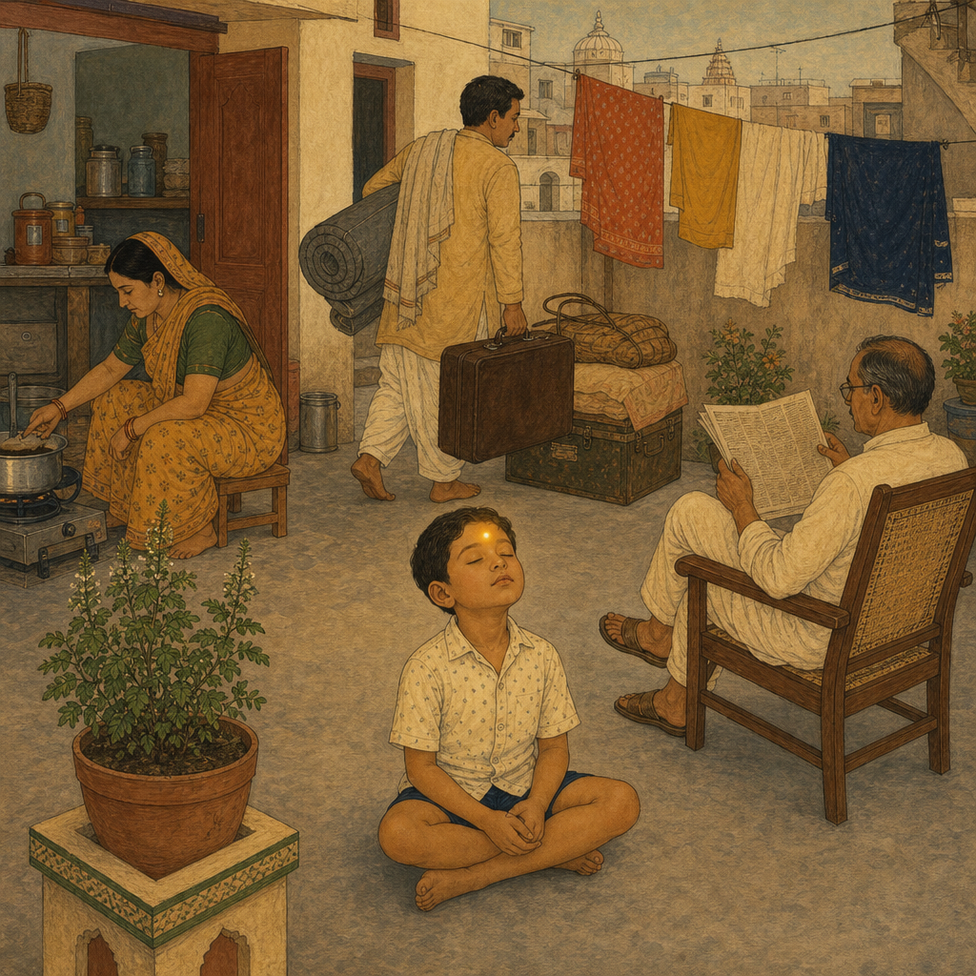
हमारा परिवार सिन्ध से आया, बँटवारे के बाद का शरणार्थी परिवार: मेहनती, हिम्मती, शायद भीतर से आध्यात्मिक, पर धार्मिक रीति-रिवाज़ों में विशेष नहीं। फिर भी भीतर कुछ बचपन से ही उस ओर झुका हुआ था। पाँच-सात बरस की उम्र में माथे की ओर रक्त-प्रवाह इच्छा से मोड़ लेने का कौतुक, चौदह की उम्र में बिना किसी सिखावन के मौन ध्यान की ओर खिंचाव, और पूजा की जगहों पर रीढ़ में उठती ठंडी सिहरनें। ये अनुभव आज भी याद हैं, हालाँकि तब समझाने वाला कोई नहीं था।
बरसों में लौकिक और आध्यात्मिक, दोनों पढ़ाइयाँ पूरी लगन से चलीं। कुछ डिग्रियाँ मिलीं; भीतर की राह भी उतनी ही लगन से चली: चिन्मय मिशन (पूज्य स्वामी शान्तानन्द जी के सान्निध्य में), विपश्यना शिविर, सिद्ध योग, ईशा योग का गहन अध्ययन, श्री श्री रविशंकर, अर्ष विद्या गुरुकुलम्, इंटीग्रल योग, क्रिया योग श्री एम से तथा परमहंस हरिहरानन्द और उनके उत्तराधिकारी परमहंस प्रज्ञानानन्द से, और योगानन्द परमहंस की सेल्फ़ रियलाइज़ेशन फ़ेलोशिप। लगन से हमारा आशय है दीक्षा लेना, हर अगला पाठ्यक्रम पूरा करना, और सबको बिना फेरबदल रोज़ की साधना में रखना। हर परम्परा की कोई न कोई कथा भीतर ठहर गई है।
अब हम डलास, टेक्सस में रहते हैं। साधना बीस बरस से अधिक से अटूट है। निष्ठा, अनुशासन या तत्परता की कमी नहीं रही, फिर भी एक ईमानदार प्रश्न साथ चलता है: क्या आगे की यात्रा अब और अभ्यास जोड़ने से खुलेगी, या उस जीवित गुरु-सम्बन्ध से, जो देख सके कि साधक सचमुच कहाँ खड़ा है। कई परम्पराएँ कहती हैं कि एक पड़ाव के बाद गुरु-शिष्य सम्बन्ध अनिवार्य हो जाता है। शिक्षकों की दुकानें टटोलना हमें स्वीकार नहीं; पूर्ण समर्पण के साथ दिशा की खोज जारी है। इन दिनों हिमालयन इंस्टीट्यूट परम्परा (विशोका ध्यान और व्यापक श्री विद्या धारा) के विद्यार्थी भी हैं, और पूरब-पश्चिम के कई जीवित और ऐतिहासिक शिक्षकों को पढ़ते रहते हैं।
इस साइट की व्याख्या इनमें से किसी परम्परा की दीक्षित शिक्षा नहीं है, और न इसे वैसे पढ़ा जाए। यह एक इंजीनियर-साधक का पढ़ना है, खुले मन से रखा हुआ, असहमति के न्योते के साथ।