मन्त्र-शरीर और कुण्डलिनी का आरोहण
नाम पचासी से एक-सौ-पैंसठ। आँख से नहीं, मन्त्र और साधना से जाना जाने वाला स्वरूप, और निर्गुण की ओर गति।
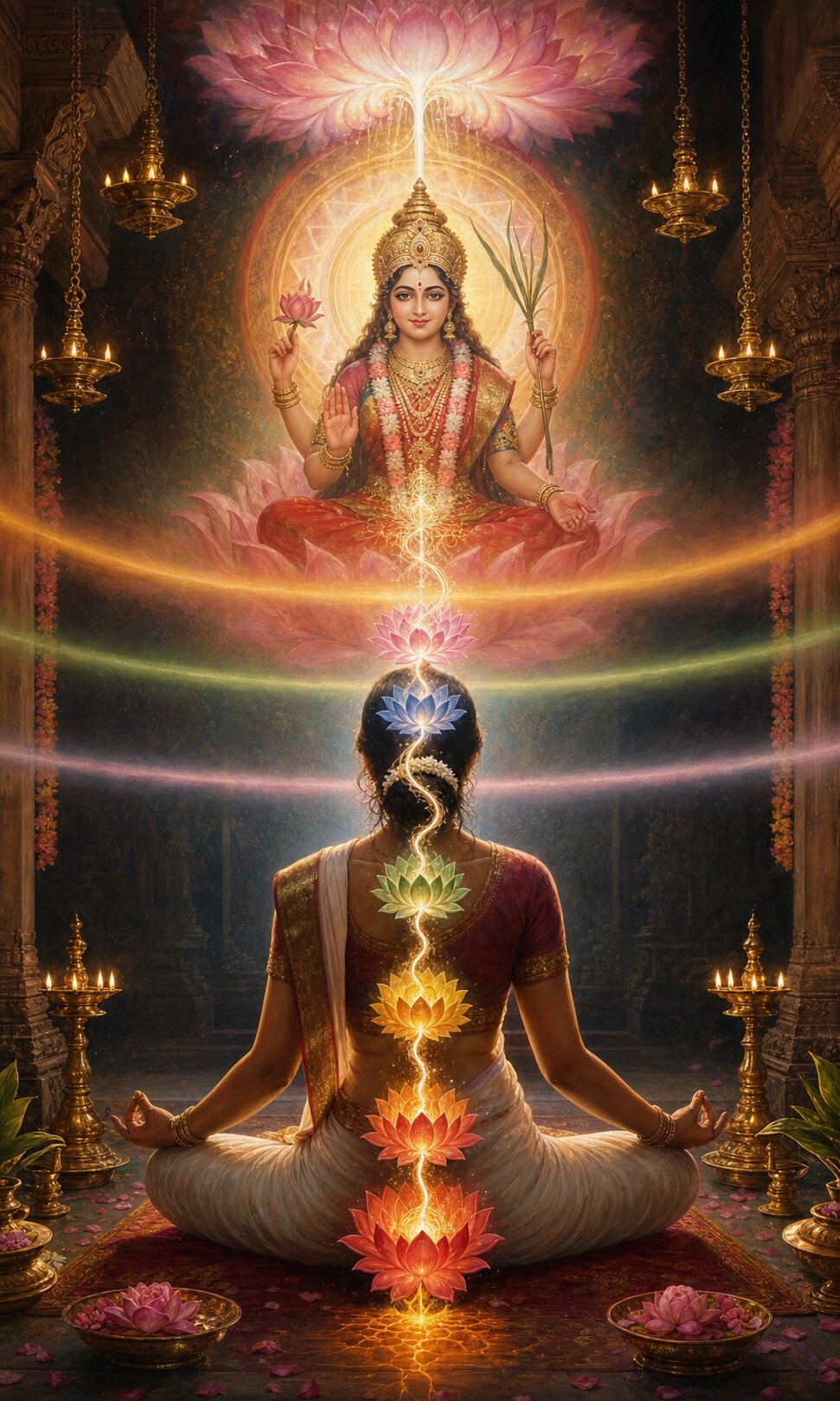
पहले खण्ड में देवी के स्थूल विग्रह का ध्यान था, उनके आयुध, उनकी शोभा, उनका मुख। दूसरे खण्ड का स्वर भीतर की ओर मुड़ता है। यहाँ देवी का वह स्वरूप वर्णित है जो आँख से नहीं, मन्त्र और साधना से ही जाना जाता है।
आचार्य भास्करराय की ‘सौभाग्य-भास्कर’ टीका इन्हीं नामों को इसी क्रम में पढ़ती है। नीचे की संगति उसी परम्परा के अनुसार है।
नाम 85 से 165
पहले पाँच नाम देवी का ‘मन्त्र-शरीर’ खोलते हैं। श्रीविद्या का मूल-मन्त्र पंचदशाक्षरी है, पन्द्रह अक्षरों का, और वह तीन कूटों में बँटा है। यहाँ देवी का मुख-कमल श्रीयुक्त वाग्भव-कूट कहा गया, कण्ठ से कटि तक का भाग मध्य-कूट, और कटि के नीचे का भाग शक्ति-कूट। यह पैर से सिर तक का अंग-वर्णन नहीं, देह के तीन भागों पर मन्त्र के तीन कूटों का न्यास है, जिससे साधक के सामने देवी और मूल-मन्त्र एक ही हो जाते हैं। इसीलिए अगला नाम कहता है, देवी स्वयं मूल-मन्त्र का स्वरूप हैं, और उनका सूक्ष्म-शरीर इन्हीं तीन कूटों से रचा है।
नाम 85 से 89 · मन्त्र-शरीर
अब नाम ‘कुल’ की धारा में उतरते हैं। कुल यहाँ श्रीविद्या के उस गुप्त मार्ग का नाम है जिसका रस अमृत-सा है। देवी उसी कुल-अमृत में रमती हैं, उसके गुप्त साधना-संकेतों की रक्षा करती हैं, उत्तम कुल की कुलवती नारी हैं, कुल-विद्या के भीतर बसती हैं, कुल-परम्परा की अधिष्ठात्री और कुलों में निवास करने वाली योगिनी हैं। फिर अन्तिम नाम पलट कर कहता है, वही अकुला भी हैं, कुल से परे, जिनका कोई कुल नहीं, क्योंकि अकुल तो शिव का ही संकेत है।
नाम 90 से 96 · कुल की धारा
यहाँ से साधना की भीतरी यात्रा खुलती है। पहले दो नाम ‘समय’ मार्ग की ओर ले जाते हैं, देवी उस मार्ग के भीतर बसती हैं और समयाचार-उपासना में तत्पर रहती हैं। फिर नाम सीधे कुण्डलिनी के आरोहण में उतर जाते हैं। देवी का मुख्य निवास मूलाधार-चक्र है, वहीं जाग कर वे पहली गाँठ ब्रह्म-ग्रन्थि को भेदती हैं, मणिपूर में उदित होती हैं, विष्णु-ग्रन्थि खोलती हैं, आज्ञा-चक्र के मध्य स्थित हो रुद्र-ग्रन्थि भेदती हैं, सहस्रदल कमल पर आरूढ़ होती हैं, और वहाँ से अमृत की धारा बरसाती हैं। तीन ग्रन्थियाँ साधक की तीन रुकावटें हैं, और उनका भेदन ही साधना की भीतरी सीढ़ी है। नाम निन्यानबे से एक-सौ-छह तक यही एक अखण्ड साधना-गाथा है।
नाम 97 से 106 · मूलाधार से सहस्रार तक
सहस्रार तक चढ़ने के बाद नाम देवी के उस सूक्ष्म रूप को बाँधते हैं जो इस आरोहण में प्रकट हुआ। उनकी कान्ति बिजली की लता-सी कौंधती है, वे छहों चक्रों के ऊपर सहस्रार में स्थित हैं, शिव-शक्ति के आनन्दमय मिलन में अत्यन्त आसक्त हैं, कुण्डली के रूप में लिपटी वही शक्ति हैं, और कमल-नाल के तन्तु-सी अत्यन्त सूक्ष्म और कोमल।
नाम 107 से 111 · सूक्ष्म कुण्डलिनी-रूप
अब स्वर ‘भ’ पर लौटता है, भव और भक्ति की ओर। देवी भव यानी शिव की पत्नी भवानी हैं, बाहरी कल्पना से नहीं केवल अन्तर्ध्यान की भावना से प्राप्त होती हैं, और संसार-रूपी वन को काटने वाली कुल्हाड़ी हैं। आगे का गुच्छ मंगल और भक्ति में खुलता है, वे मंगल को प्रिय रखती और सब मंगल देती हैं, साक्षात् कल्याण की मूर्ति हैं, भक्तों को सौभाग्य देती हैं, भक्ति उन्हें प्रिय है, केवल भक्ति से ही प्राप्त होती हैं, भक्ति के वश में हो जाती हैं, और भय को दूर करती हैं।
नाम 112 से 116 · भव और मंगल
नाम 117 से 121 · भक्ति का वश
अगली लड़ी ‘श’ पर टिकती है, शिव की शक्ति और शम-कल्याण के नामों पर। वे शम्भु की शाम्भवी हैं, सरस्वती द्वारा पूजित, शर्व की शर्वाणी, सुख देने वाली शर्मदायिनी, शंकर की शक्ति शाङ्करी, श्री देने वाली श्रीकरी, और पवित्र पतिव्रता साध्वी। फिर तीन नाम फिर से रूप और शान्ति को छूते हैं, उनका मुख शरद् के निर्मल पूर्ण चन्द्र-सा दीप्त है, कटि क्षीण और सुडौल, और स्वरूप शान्ति से युक्त।
नाम 122 से 126 · शिव की शक्ति
नाम 127 से 131 · श्री और शान्ति
यहीं से नामों का स्वर निषेध की ओर मुड़ जाता है। ‘नि’ और ‘निर्’ से आरम्भ होने वाली यह लम्बी लड़ी देवी को रूप, गुण और उपाधि से परे, निर्गुण ब्रह्म के रूप में सूचित करती है। जो अभी क्षण भर पहले मन्त्रमयी और चक्र-निवासिनी थीं, वही अब किसी सीमा से अबद्ध कही जाती हैं। पहली तरंग में वे किसी आधार पर निर्भर नहीं स्वयं-आधार हैं, निर्लिप्त, कर्म के लेप से रहित, सब मलों से निर्मल, नित्य और शाश्वत, आकार से रहित, क्षोभ से रहित, तीनों गुणों से परे, और अंशों से रहित अखण्ड।
नाम 132 से 140 · निषेध की पहली तरंग
निषेध आगे बढ़ता है और गहराता है। वे शान्त स्वरूपा हैं, कामना से रहित, अविनाशी, सांसारिक बन्धनों से सदा मुक्त, विकार-रहित अपरिवर्तनशील, इस दृश्य प्रपंच से परे, किसी आश्रय पर निर्भर न रहने वाली, नित्य-शुद्ध, नित्य-प्रबुद्ध, और किसी दोष से रहित स्तुत्य।
नाम 141 से 150 · शुद्ध और बुद्ध
इस लड़ी का शिखर ‘निरन्तरा’ है। इसका एक अर्थ है, जो सर्वत्र व्याप्त हैं, जिनमें कोई अन्तराल नहीं, भीतर-बाहर का कोई भेद शेष नहीं। यहाँ निषेध अन्ततः पूर्ण व्यापकता में बदल जाता है। उसी बोध के साथ वे कारण से रहित कही जाती हैं, कलंक-रहित निर्दोष, किसी उपाधि या सीमा से अबद्ध, और परम-स्वतन्त्र, जिनसे ऊपर कोई स्वामी या ईश्वर नहीं।
नाम 151 से 155 · व्याप्ति का शिखर
अन्तिम गुच्छ निषेध को मन के विकारों पर मोड़ देता है, और हर दोष के साथ उसके नाशक का नाम जोड़ता है। वे राग से रहित हैं, और राग का मन्थन कर उसे नष्ट करने वाली भी। मद से रहित, और मद का नाश करने वाली। चिन्ता से रहित, अहंकार से रहित जिनमें ‘मैं’ और ‘मेरा’ नहीं, मोह से रहित और भक्तों के मोह का नाश करने वाली, किसी वस्तु के प्रति ममता से रहित, और ममत्व-स्वामित्व के भाव का नाश करने वाली। दोष-रहित होना और दोष को मिटा देना, यही देवी का दोहरा स्वरूप इस खण्ड को विराम देता है।