Mahamudra
Sinh Sanskrit 3.10 to 18 · Critical edition 3.10 to 18
Posture, breath, and attention meet in the first of three closely connected practices.
Practice · Hands and attention
Settle into a comfortable seat and choose a hand gesture. Each guide shows the position, offers a focus for attention, and explains how to finish. Anjali is open below; choose another whenever you wish.
Classical practices and sourcesLet the meeting of the hands mark a small pause in your day. Feel their contact and give your attention to the moment you are in.
 Enlarge image
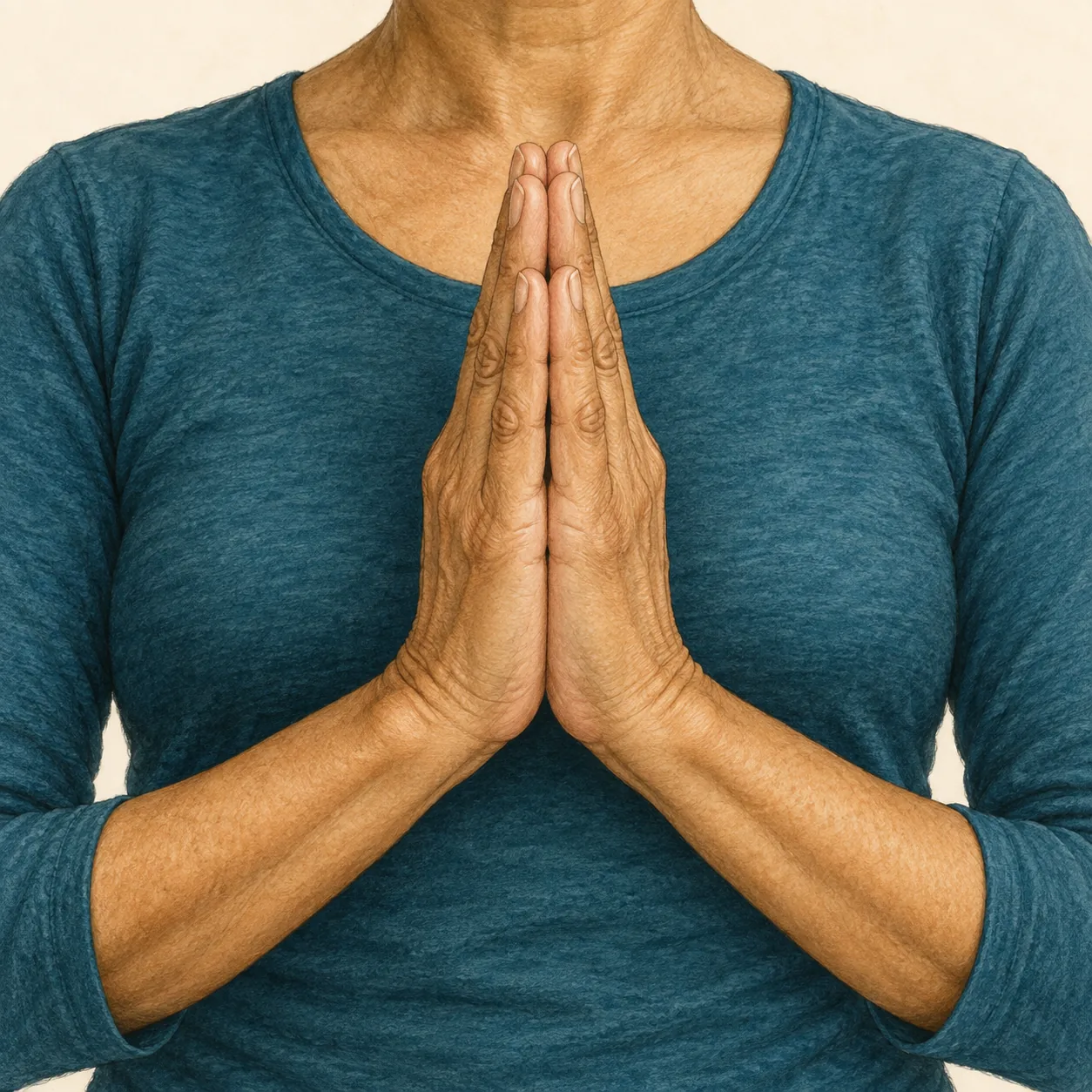
Anjali: palms meet lightly, fingers upward.
Sit comfortably on a chair or in a seated position you already use. Let the shoulders settle.
Start with your hands resting on your thighs and your face relaxed.
Let the breath come and go naturally. If you wish, notice an incoming breath and the outgoing breath that follows, without trying to meet a count.
Separate the palms, lower both hands to your thighs, and let the fingers rest.
Hold the hands a little lower or leave some space between the palms. Comfortable contact is enough.
Avoid forcing sore fingers straight or pressing the palms flat. Release the gesture if pain, numbness, or increasing strain appears.
The teaching sources use joined hands in the prayer position. Joseph LePage identifies this as Anjali and relates it to reverence and devotion. This seated introduction adapts that hand position for a quiet pause. You may bring a sense of greeting, gratitude, or attentive presence to it.
Give your attention a small, clear point of contact. When the mind wanders, the meeting of finger and thumb offers a simple place to return.
 Enlarge image
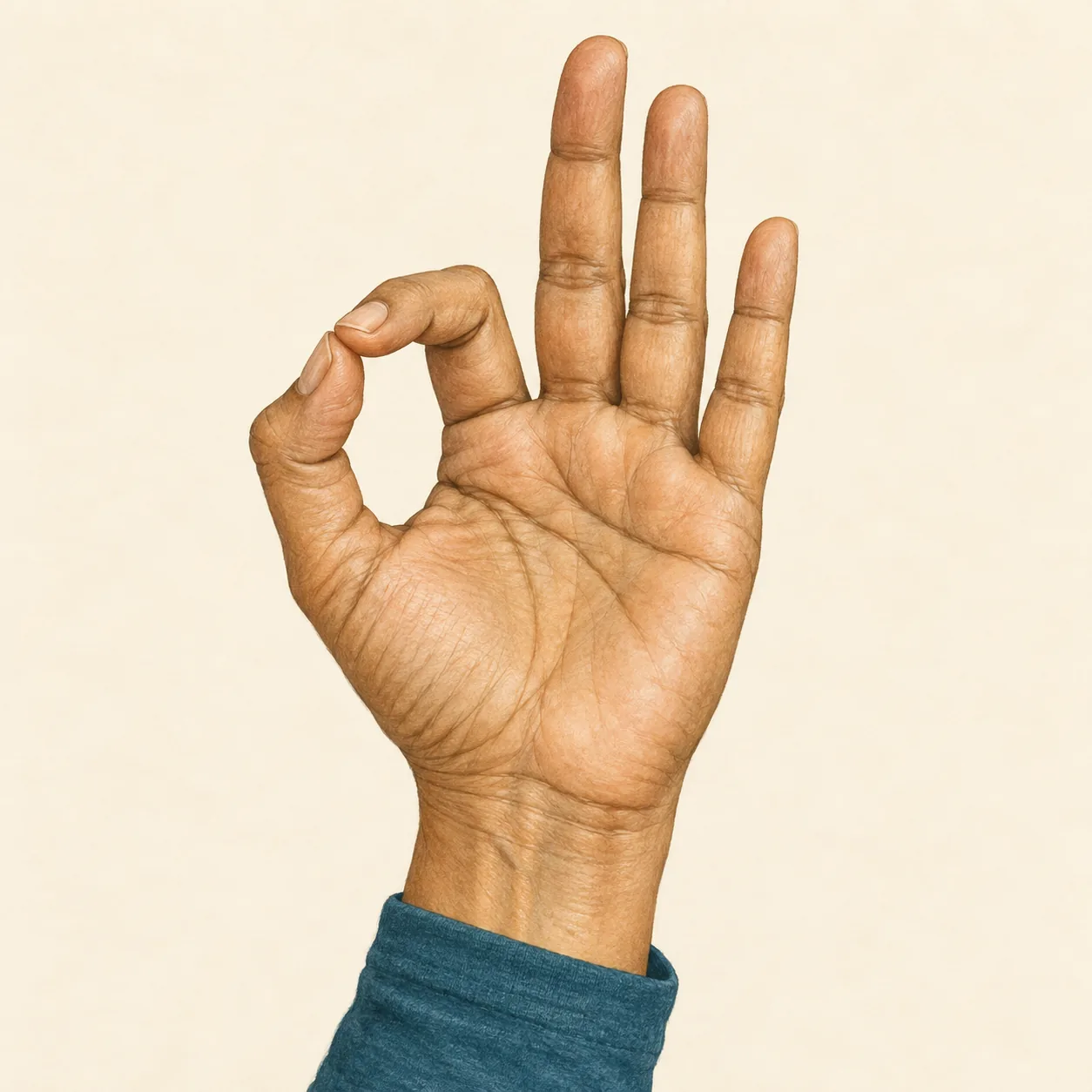
Chin: a close-up of finger placement. Follow the instructions for resting the hand comfortably.
Sit comfortably upright and rest both hands on your thighs, with the elbows at ease.
Breathe naturally while noticing the light contact between finger and thumb. When attention wanders, return to that contact.
Separate thumb and index finger, open the hands, and let them rest on the thighs.
Try one hand at a time. If bringing the fingertips together is uncomfortable, let that hand rest open.
Do not pull on the finger joints to complete the circle. Release if the position causes pain or tingling.
The practice begins with the palms-up form called Chin mudra in the cited sources. The Australian School of Meditation and Yoga calls the same finger shape with palms down Jnana mudra. You can gently turn the hands over to explore that variation if it is comfortable. Names vary across schools. ASMY interprets the meeting of finger and thumb as a symbol of the individual soul’s relationship with the Supreme.
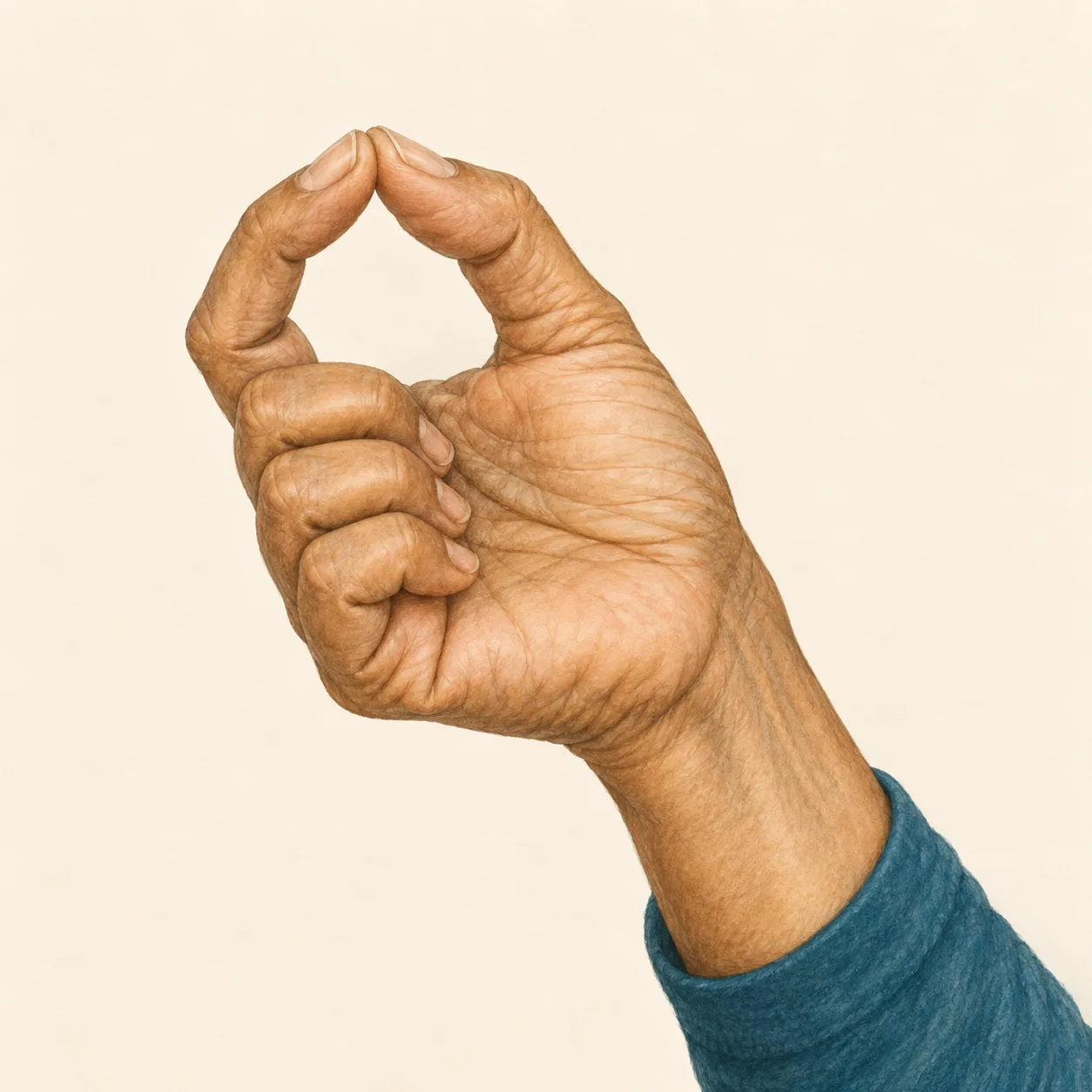
Explore a small change from the open Chin shape: the same light circle, with the other fingers folded. Notice the difference without tightening the hand.
 Enlarge image
Chinmaya: a close-up of finger placement, with the other three fingers gently curled.
Sit comfortably and support the hands on your thighs, allowing the elbows to relax.
Keep breathing naturally. If you catch yourself holding the breath while arranging the fingers, soften the hands and begin again comfortably.
Uncurl the three fingers, separate thumb and index finger, and let the hands rest open.
Fold the fingers only as far as feels easy; they do not have to press against the palm.
Avoid forcing the fingers inward. Open the hand if pain or cramping develops.
ICYER and the AIIMS/DST teaching booklet agree on this finger arrangement. The practice follows ICYER’s placement on the thighs; the other booklet also describes a placement near the chest. Both teach Chinmaya within a fuller breathing lesson. The practice above introduces a comfortable hand position while ordinary breathing continues.
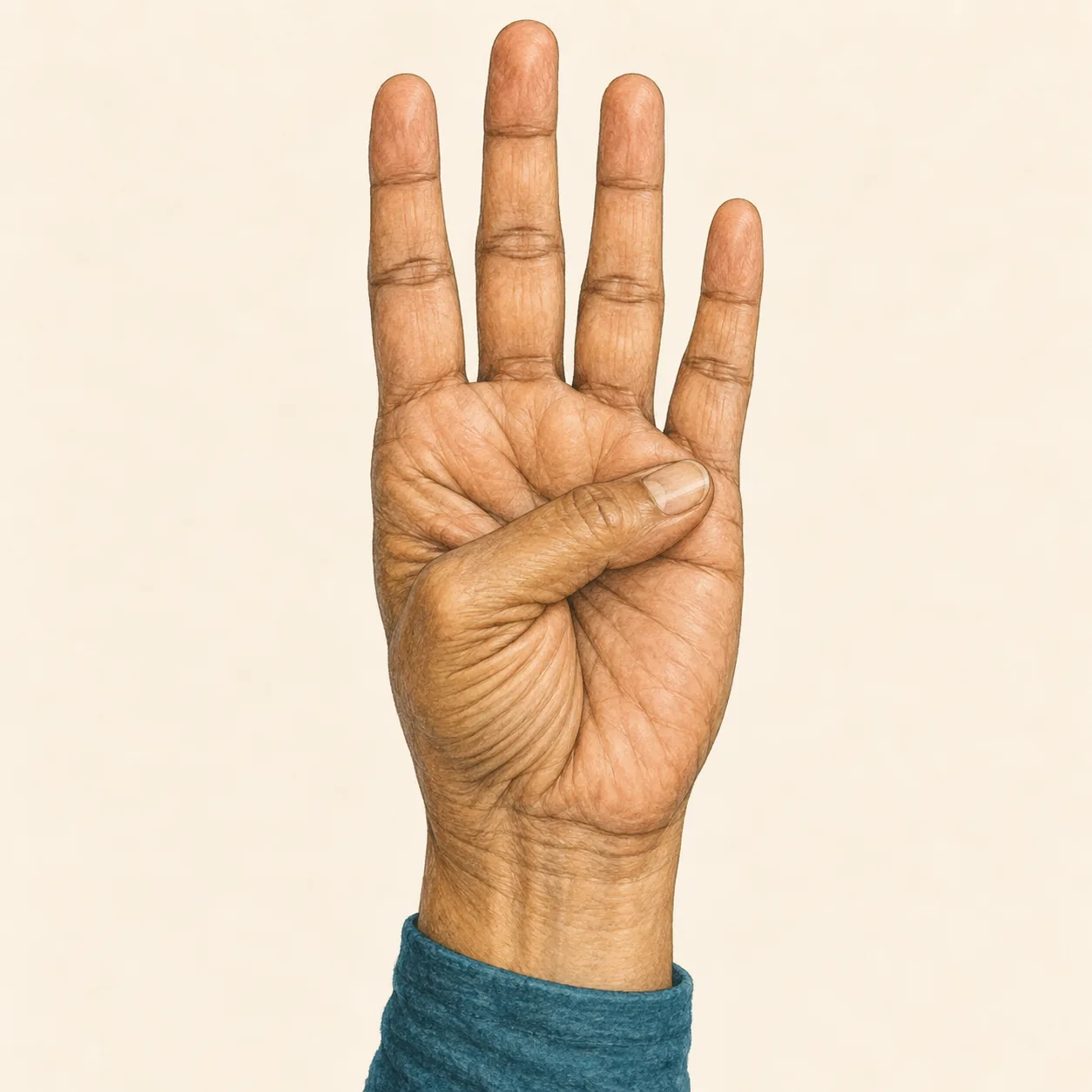
Explore the difference between gathering the fingers and gripping. The hand takes a fist-like shape while the touch inside stays gentle.
 Enlarge image
First rest the thumb inside the palm.
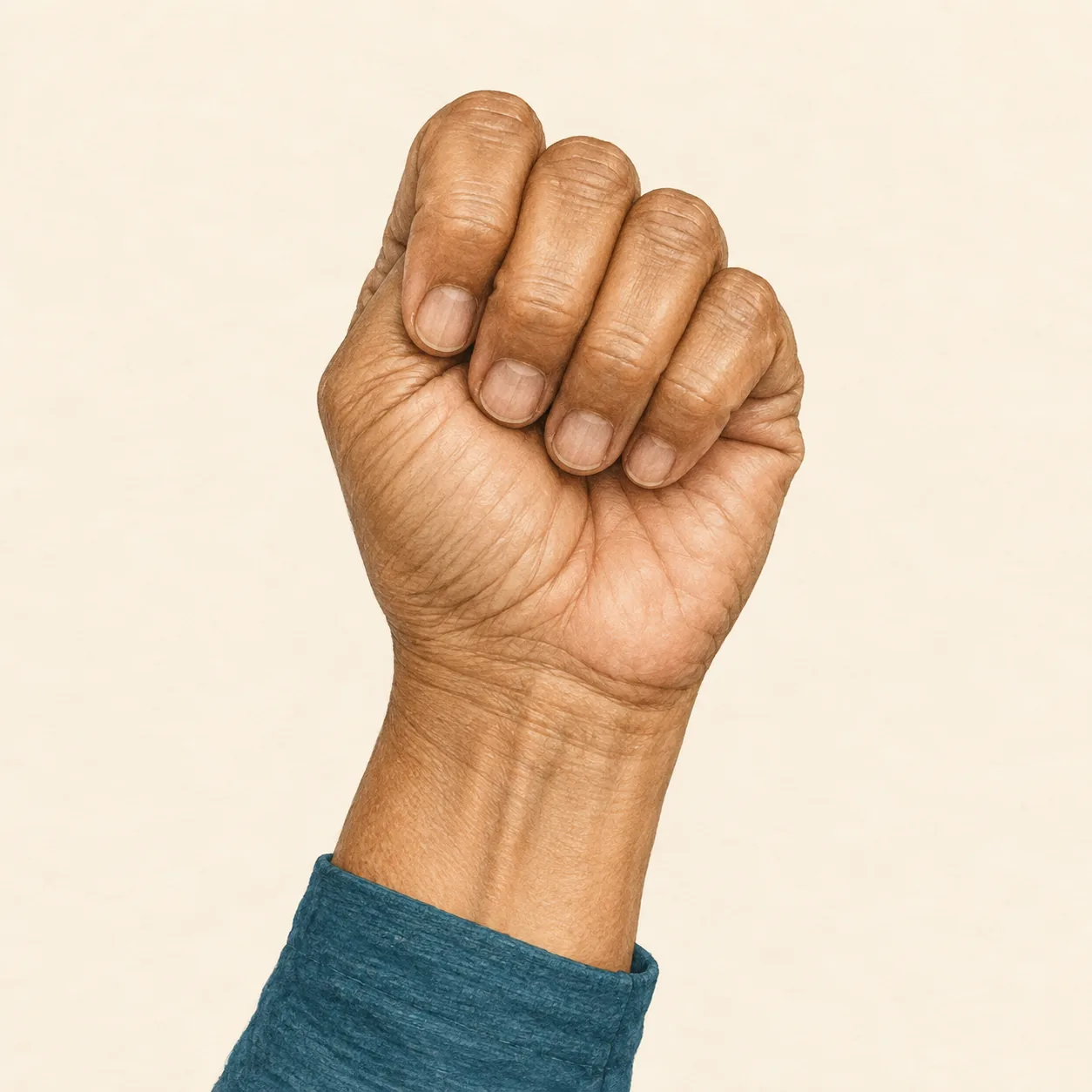 Enlarge image
Then curl the four fingers gently over the thumb.
Sit comfortably with your hands on your thighs and the wrists in an easy position.
Let ordinary breathing continue. If forming the hands makes you tighten the jaw or abdomen, soften that extra effort.
Open the four fingers first, then allow the thumb to unfold. Let the palm rest.
Keep the fingers loosely curved instead of fully closed. Leave the hand open if enclosing the thumb is uncomfortable.
Avoid clenching around the thumb. Open the hand if pain or numbness appears.
ICYER spells the name Adhi; the AIIMS/DST booklet uses Adi. Both describe the thumb enclosed by the fingers within their breathing lessons. This introduction emphasizes comfortable placement and a light hold. Brahma mudra uses the same two hand shapes together near the navel.
Bring the two hands into one balanced arrangement, then make room for ease in the shoulders and abdomen.
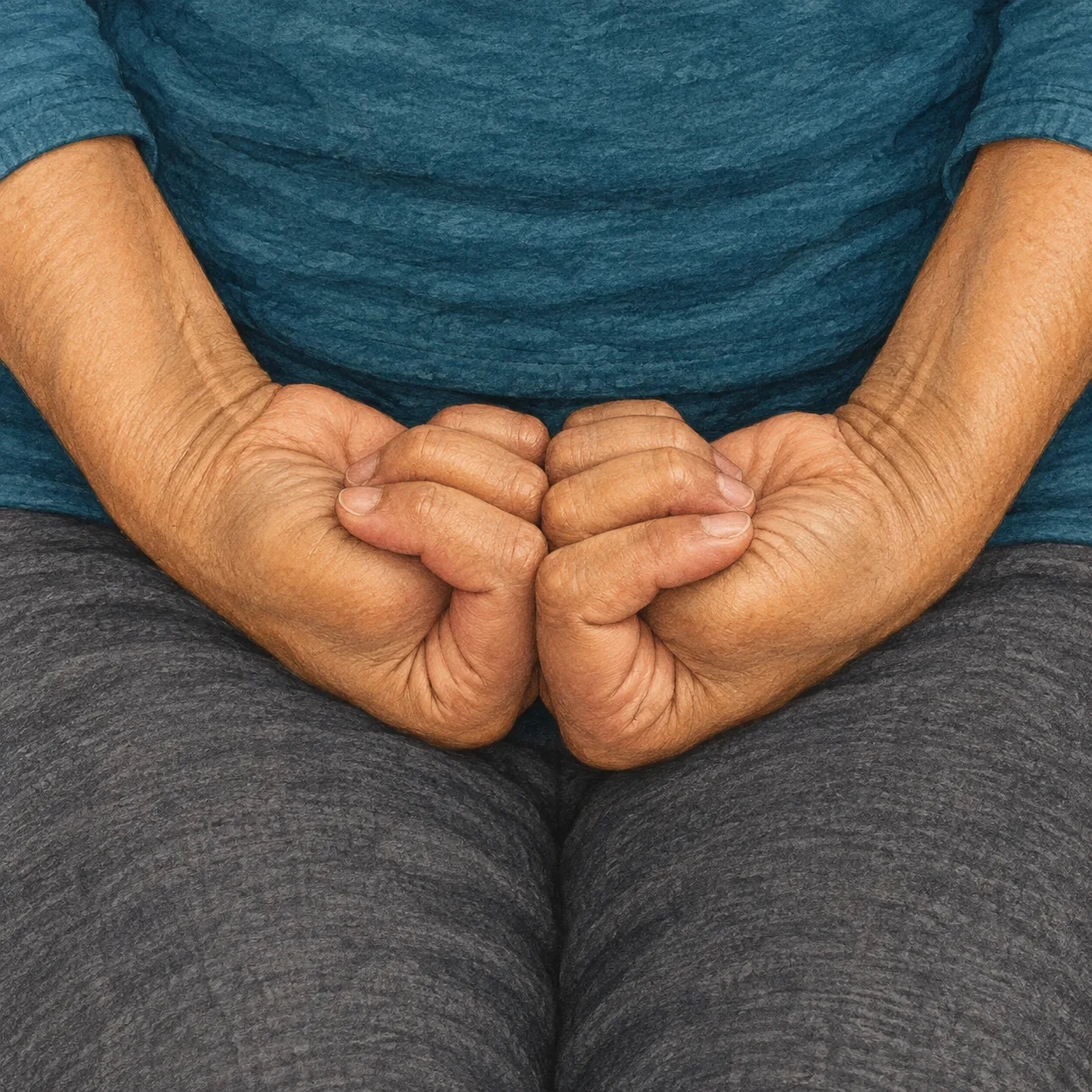 Enlarge image
Brahma: palms face upward, with both hands meeting near the navel.
Enlarge imageFirst rest the thumb inside the palm.
Sit upright in a comfortable seat, with your hands resting on your thighs.
Allow the breath to move naturally. Let the abdomen respond freely while the hands stay softly in place.
Separate the hands and lower them to your thighs. Uncurl the fingers, then release the thumbs.
If holding the hands up tires the shoulders, support them with a cushion or folded cloth in your lap. Let them remain apart if joining them is awkward.
Avoid pressing the fists into the abdomen or bending the wrists to force the knuckles together. Lower the hands if strain develops.
This is the hand form described by ICYER and section 9.1(d) of the AIIMS/DST booklet: thumbs enclosed, knuckles meeting near the navel, palms upward. The manuals place it in a full yogic-breathing lesson. The hand position is introduced with ordinary, unforced breathing, and other exercises that share the name remain within those fuller breathing lessons.
A clear finger arrangement makes it easier to change nostrils gently. Learn the hand first, then use the complete alternate-nostril guide below.
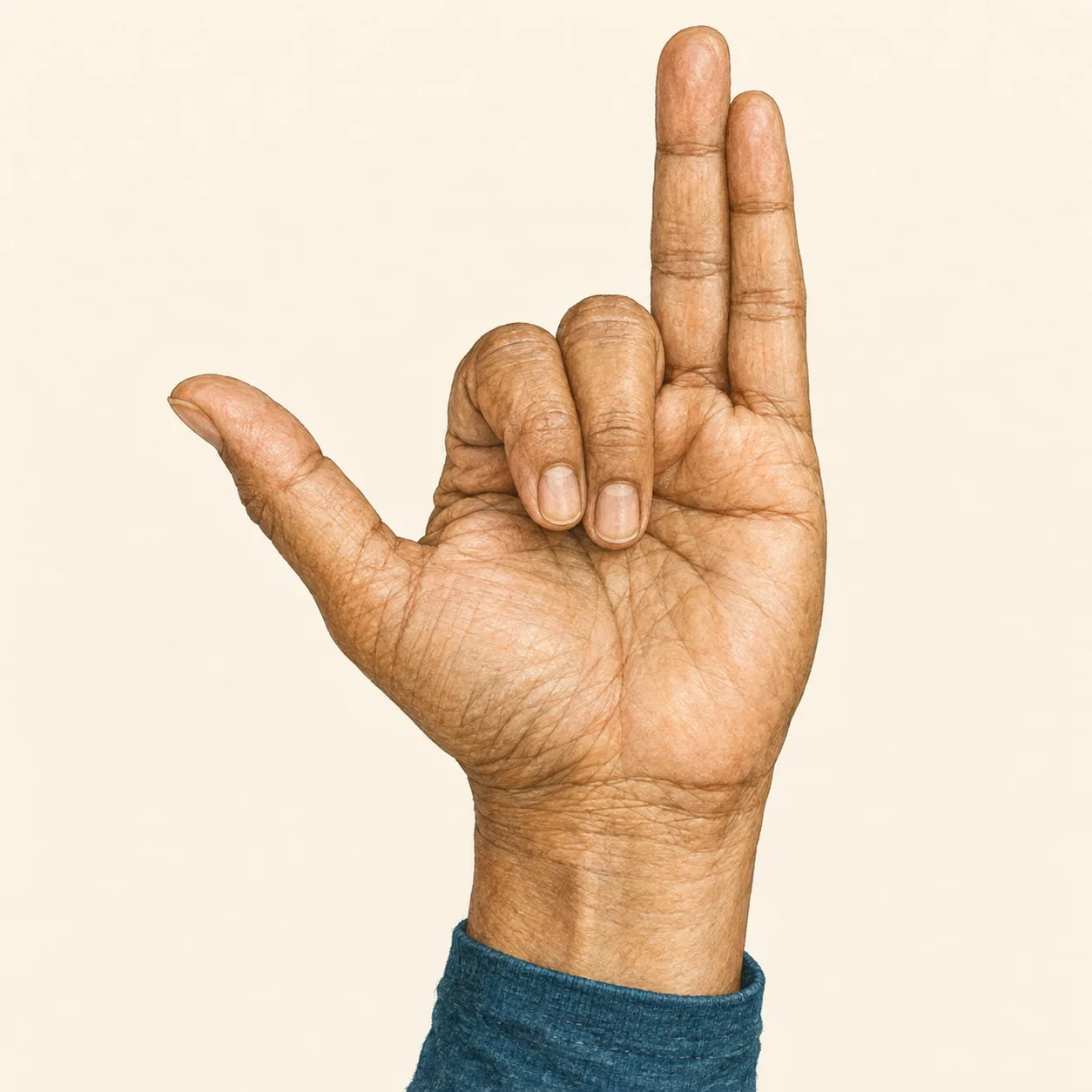 Enlarge image
Vishnu: first learn the finger arrangement.
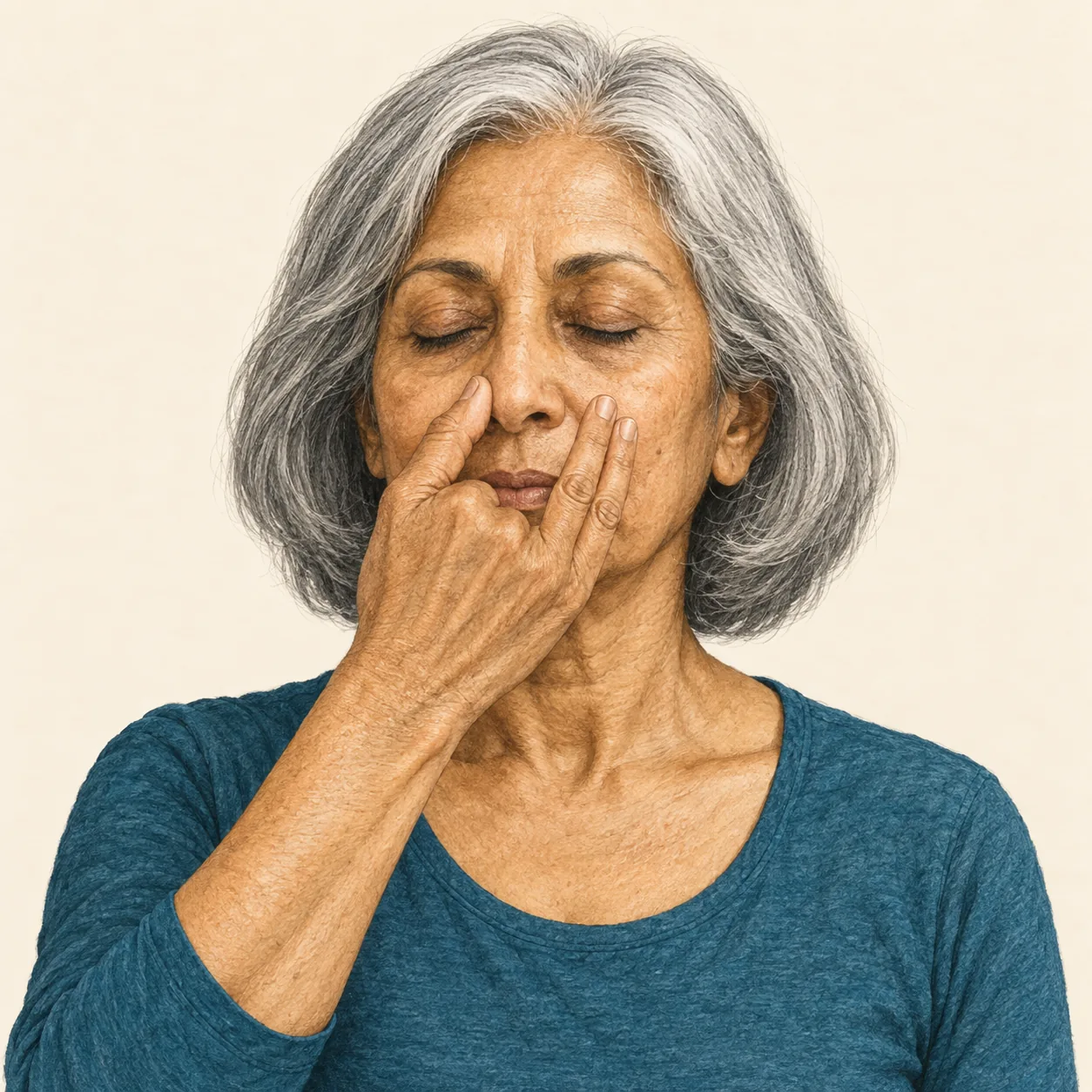 Enlarge image
The first side: right thumb at the right nostril, left nostril open. Follow the complete breathing sequence below.
Sit comfortably upright. Rest the left hand on the thigh and let the right shoulder relax.
The complete guide is below. Breathe in through one nostril and out through the other, then breathe in through that second side and return to the first. Keep the transitions free of breath holding.
Lower the right hand to your thigh, unfold the fingers, and return to normal breathing through both nostrils.
Practice the finger shape away from the nose first. If the arm tires, lower the hand and breathe normally.
Return to natural breathing if a nostril is fully blocked, finger pressure hurts, or controlling the breath increases anxiety. Keep the complete guide’s cautions with the practice.
The practice below alternates the nostrils without retention. One round returns you to the side where the cycle began. Its four-round suggestion belongs to this library’s introductory guide; it is not a quotation from the Common Yoga Protocol, which gives five rounds.
Gentle practice
anuloma viloma
Alternate airflow between the nostrils with Viṣṇu mudrā and no retention.
Sit upright and rest the left hand on the thigh. Form Viṣṇu mudrā with the right hand: fold the index and middle fingers inward, keep the ring and little fingers together, and use the thumb and the last two fingers at the nostrils.
Breath & pace
Begin with 4 rounds at an even, comfortable count.
Different teaching lineages use the names Nadi Shodhana and Anuloma Viloma for several sequences that differ from one another. What you have here is the simple form alone: the breath moves from one nostril to the other and back. Do not treat it as a stand-in for the full traditional sequence, with its set ratios, its bandhas or its kumbhaka.
Modern teaching context: Swami Satyananda Saraswati, Asana Pranayama Mudra Bandha, Nadi Shodhana section. This version uses no retention.
The folded-index-and-middle-finger form is called Vishnu in the Sivananda Companion and Nasagra in the 2026 Common Yoga Protocol. ICYER uses Vishnu for another arrangement with the middle finger at the brow. The hand shape follows Sivananda and the protocol, and the full introductory sequence without retention is given with it.
Give the hands a comfortable resting place, then turn your attention to the breath. Let the support do some of the work of holding the posture.
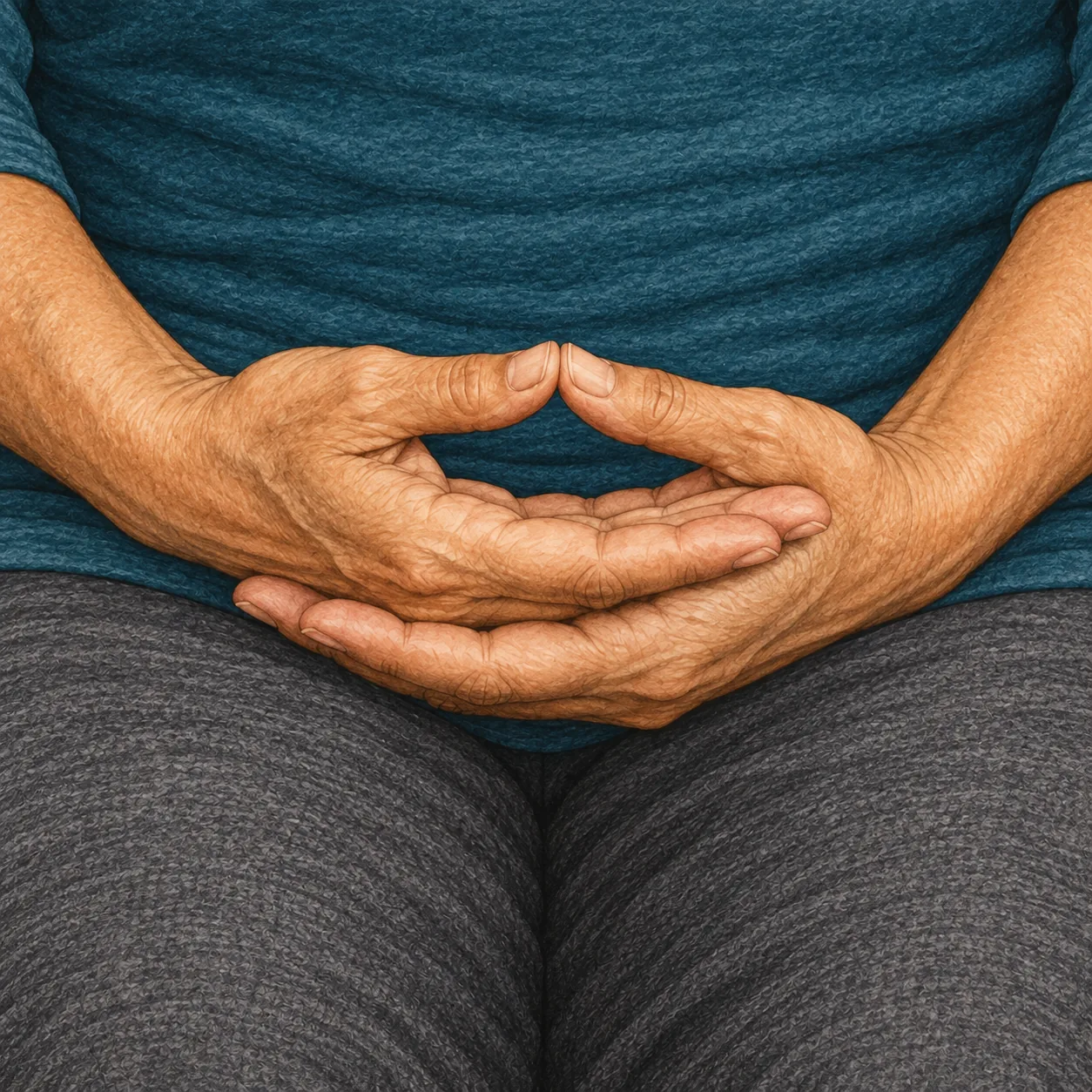 Enlarge image
Dhyana: right hand above the left, with thumb tips meeting lightly.
Sit on a chair or in a comfortable seated posture, with the back gently upright and the shoulders relaxed.
Place a cushion or folded cloth in your lap if the hands need support.
Breathe normally and notice the air entering and leaving at the nostrils. If thoughts carry you away, return to the next breath.
Separate the thumbs, open the hands gently, and rest them on your thighs. Let your attention return to the room.
Rest the hands separately on the thighs. If touching the thumbs is awkward, leave them in an easy position.
Avoid rounding the back to reach the lap. Raise the hand support instead, and change position if pain or numbness appears.
The practice uses the right hand over the left, supported by teaching instructions from the Lama Yeshe Wisdom Archive and Thanissaro Bhikkhu. Wildmind adds practical guidance on hand support and light thumb contact. The arrangement is also familiar in Buddhist art. Other traditions can reverse the hands or use the name Dhyana for another shape; ICYER, for example, describes a different finger arrangement under that name.
Choose one that interests you. There is no need to complete the collection as a sequence. Keep the touch light and let comfort guide how long you stay.
Read further into the Hatha Yoga Pradipika’s seals and locks, related traditional accounts, and the sources behind the hand practices.
Use these thirteen readings to study the texts and discuss their methods with a qualified teacher. They are separate from the hand practices above.
Follow the order of the opening list. Each entry explains the source descriptions and their differences, and the order is a path for reading, with no sequence of physical exercises implied.
“Sinh Sanskrit” means the Sanskrit verse numbers accompanying Pancham Sinh’s 1914 edition. “Critical edition” means the Oxford-Marburg digital edition. Later passages can be reordered, expanded, or displayed as additions, so the ranges below are reading locations, not a verse-for-verse equivalence.
Chapter 3 names the ten below in verses 3.6 to 7. Mahamudra, Mahabandha, and Mahavedha form a connected group; Uddiyana, Mula, and Jalandhara are bandhas, or locks. The list also includes a tongue-related seal, an inverted arrangement, and accounts of Vajroli and Shakti Chalana. Its scope reaches well beyond the fingers.
These are the ten named in this passage. The Pradipika also discusses Shambhavi in chapter 4. The twenty practices in the collection are a selection across identified sources, and no one classical work is claimed to hold exactly these twenty.
Sinh Sanskrit 3.10 to 18 · Critical edition 3.10 to 18
Posture, breath, and attention meet in the first of three closely connected practices.
Sinh Sanskrit 3.19 to 25 · Critical edition 3.19 to 24
A seated lock read beside Mahamudra and Mahavedha, with variations recorded in the text.
Sinh Sanskrit 3.26 to 31 · Critical edition 3.25 to 31
The third member of that group; its description differs from the Gheranda Samhita’s.
Sinh Sanskrit 3.32 to 54 · Critical edition 3.32 to 48
A tongue-related seal with a long textual discussion of attention and nectar.
Sinh Sanskrit 3.55 to 60 · Critical edition 3.58 to 65
An abdominal lock explained through the image of upward flight.
Sinh Sanskrit 3.61 to 69 · Critical edition 3.49 to 57
The root lock, described through the relationship of prana and apana.
Sinh Sanskrit 3.70 to 76 · Critical edition 3.66 to 72
The throat lock, followed by a discussion bringing three bandhas together.
Sinh Sanskrit 3.77 to 82 · Critical edition 3.73 to 77
An inverted bodily arrangement read through the text’s sun-and-moon imagery.
Sinh Sanskrit 3.83 to 103 · Critical edition 3.78 to 93
A historical account concerning sexual fluids, with a markedly different Gheranda description.
Sinh Sanskrit 3.104 to 120 · Critical edition 3.94 to 102
The moving or awakening of Shakti within the text’s account of Kundalini.
Oxford-Marburg, Haṭhapradīpikā Online, 3.6 to 9. The Sanskrit below follows this critical edition. The Hindi and English senses are written fresh for this library; none is quoted from a modern translation.
Pancham Sinh’s 1914 edition, chapter 3 supplies the familiar parallel numbering. Swami Sivananda’s Kundalini Yoga, “Mudras and Bandhas” supplies a separate traditional teaching account. The Gheranda Samhita, James Mallinson’s 2004 edition, chapter 3 supplies comparisons where the named practices differ. Each detail page identifies its exact passages.
The critical edition reads mudrādidaśakam at 3.7, allowing “ten mudras and related practices”; the familiar reading is hi mudrādaśakam, “these ten mudras.” Both name the same ten. The list and the chapter’s discussion also use variant spellings of Uddiyana. These differences are retained in the source quotation and explained without changing the library’s established page names.
Contemporary comparisons: Art of Living’s hand-gesture introduction, Asivana’s hand-mudra catalog, and Joseph LePage’s overview. These show contemporary selections and interpretations; they are not the basis for attributing a gesture or a health effect to the Pradipika.
Scope: a source-guided collection and selected textual comparison, not a complete translation of chapter 3. Source review: September 12, 2026.
mahamudra mahabandho mahavedhash cha khechari
3.6
uddiyanam mulabandhas tato jalandharabhidhah
karani viparitakhya vajroli shaktichalanam
3.7
idam mudradidashakam jaramarananashanam
Mahamudra, Mahabandha, Mahavedha, Khechari, Uddiyana, Mula bandha, the bandha called Jalandhara, the inverted arrangement, Vajroli, and Shakti Chalana: the verse praises these ten mudras and related practices as destroying old age and death.
That final phrase is the text’s claim about attainment, not a promise of longer life or a medical result. The following verses credit the teaching to Adinatha and describe it as protected instruction (3.8 to 9). Reading the praise and its setting together preserves the source’s voice without turning it into a modern health claim.
This quotation follows the critical edition, including uḍḍīyāṇa and mudrādidaśakam. A familiar edition may print uḍḍīyāna and hi mudrādaśakam instead. The source note explains the difference.