Practice the gesture
Explore the difference between gathering the fingers and gripping. The hand takes a fist-like shape while the touch inside stays gentle.
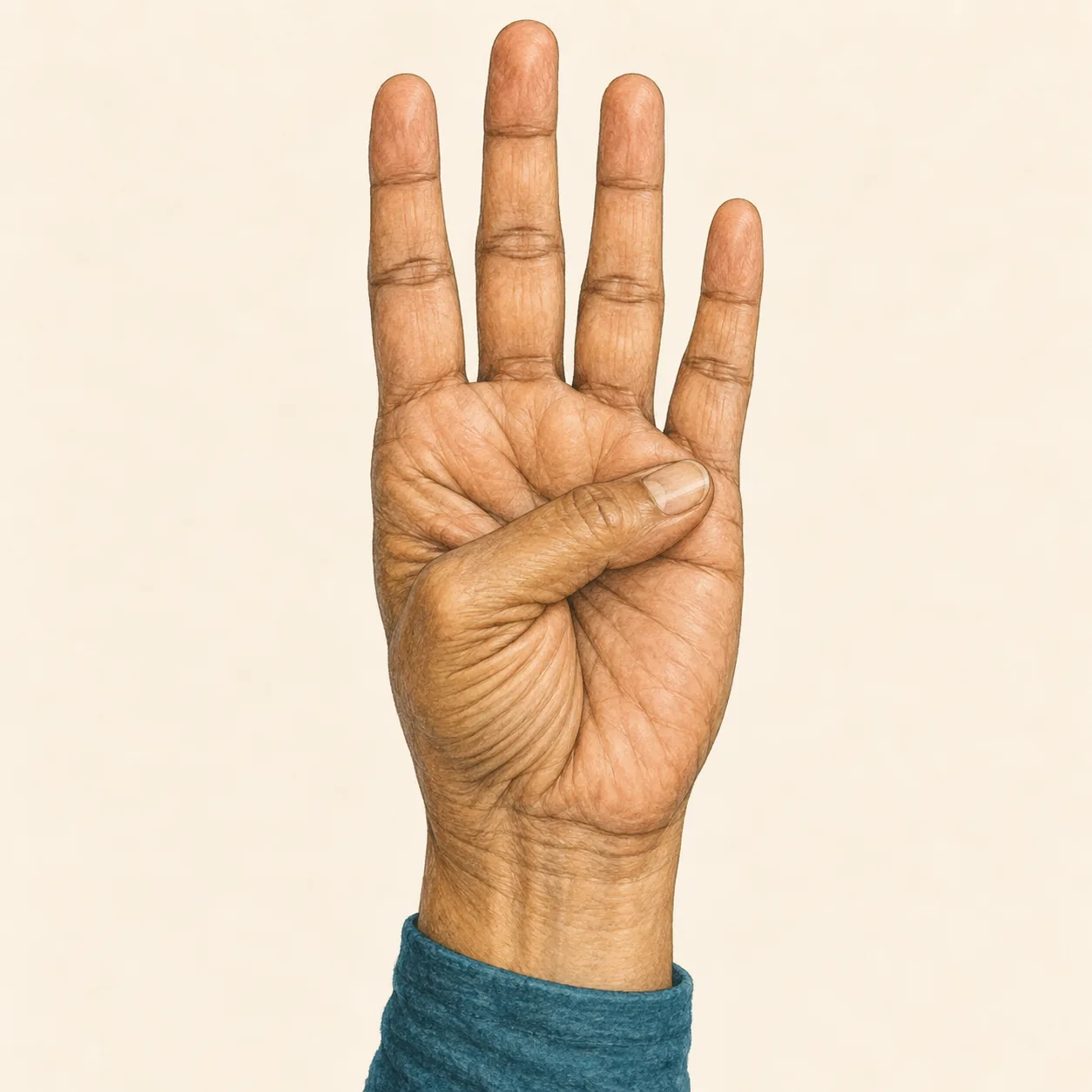 Enlarge image
First rest the thumb inside the palm.
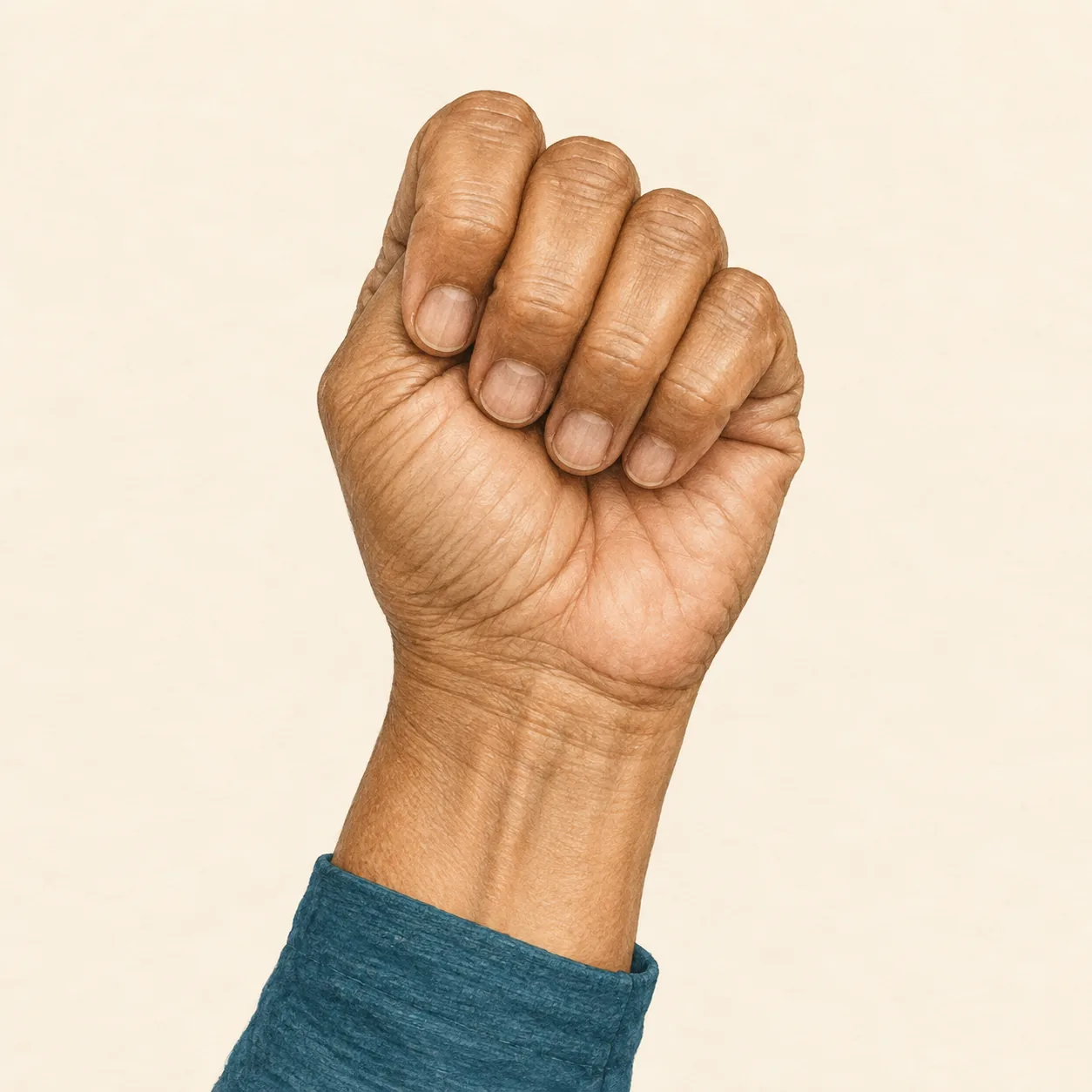 Enlarge image
Then curl the four fingers gently over the thumb.
Settle in
Sit comfortably with your hands on your thighs and the wrists in an easy position.
Place your hands
- Fold the right thumb gently into the palm.
- Curl the four fingers around the thumb and leave it loosely held, with no squeeze.
- Make the same shape with your left hand.
- Rest both hands on the thighs and soften the fingers, wrists, and shoulders.
Breath and attention
Let ordinary breathing continue. If forming the hands makes you tighten the jaw or abdomen, soften that extra effort.
What to notice
- Are the fingers surrounding the thumb or pressing it?
- How lightly can you hold the shape?
Finish gently
Open the four fingers first, then allow the thumb to unfold. Let the palm rest.
Make it easier
Keep the fingers loosely curved instead of fully closed. Leave the hand open if enclosing the thumb is uncomfortable.
Take care
Avoid clenching around the thumb. Open the hand if pain or numbness appears.
Sources and meaning
ICYER spells the name Adhi; the AIIMS/DST booklet uses Adi. Both describe the thumb enclosed by the fingers within their breathing lessons. This introduction emphasizes comfortable placement and a light hold. Brahma mudra uses the same two hand shapes together near the navel.
- Ananda Balayogi Bhavanani, ICYER: Basic Practice of Some Pranayamas · Mudras for pranayama, items 1 to 6, PDF pp. 2 to 3
- AIIMS / DST: Structured Yoga Module for Diabetes (2024) · Section 9.1(a-d), printed p. 49