Practice the gesture
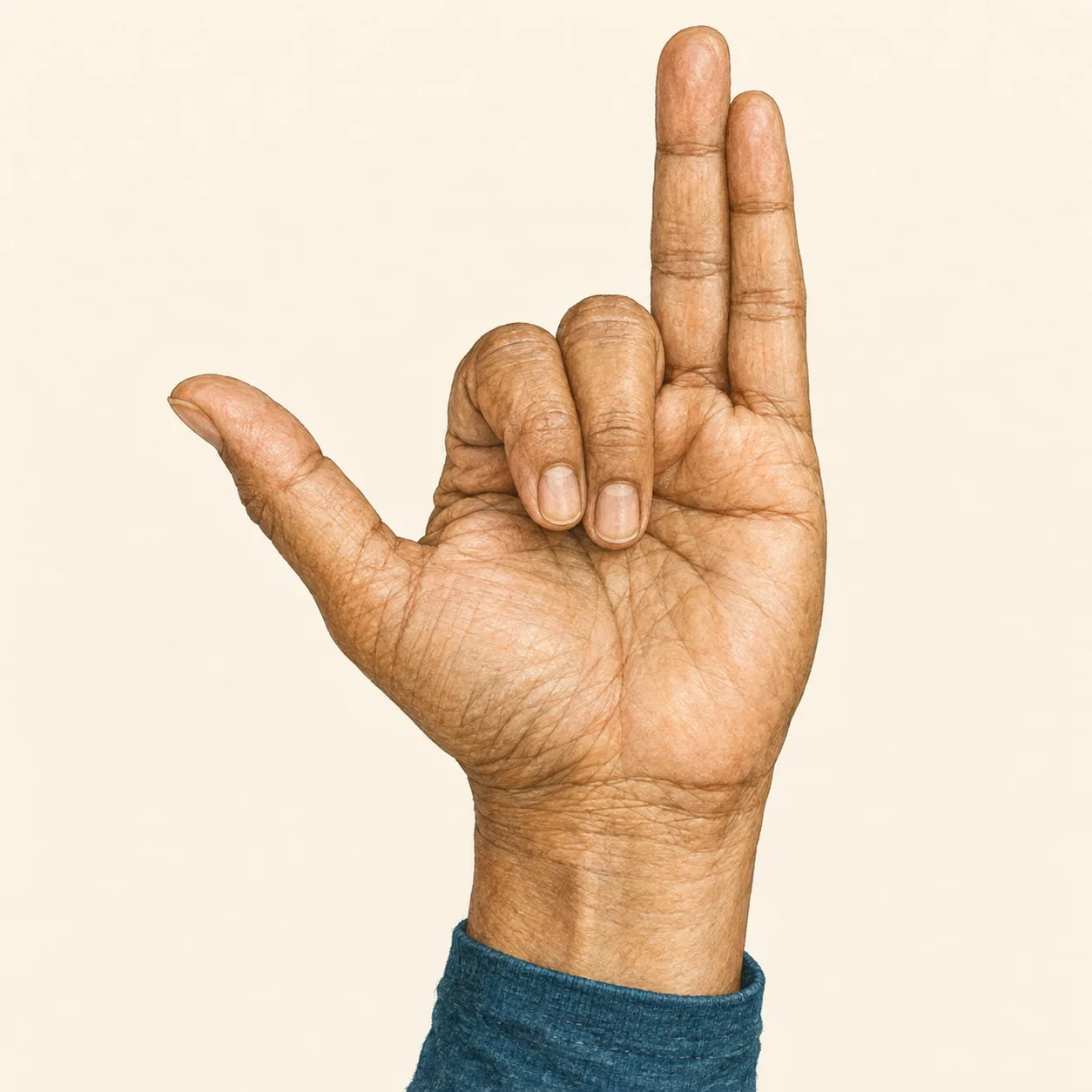
A clear finger arrangement makes it easier to change nostrils gently. Learn the hand first, then use the complete alternate-nostril guide below.
 Enlarge image
Vishnu: first learn the finger arrangement.
 Enlarge image
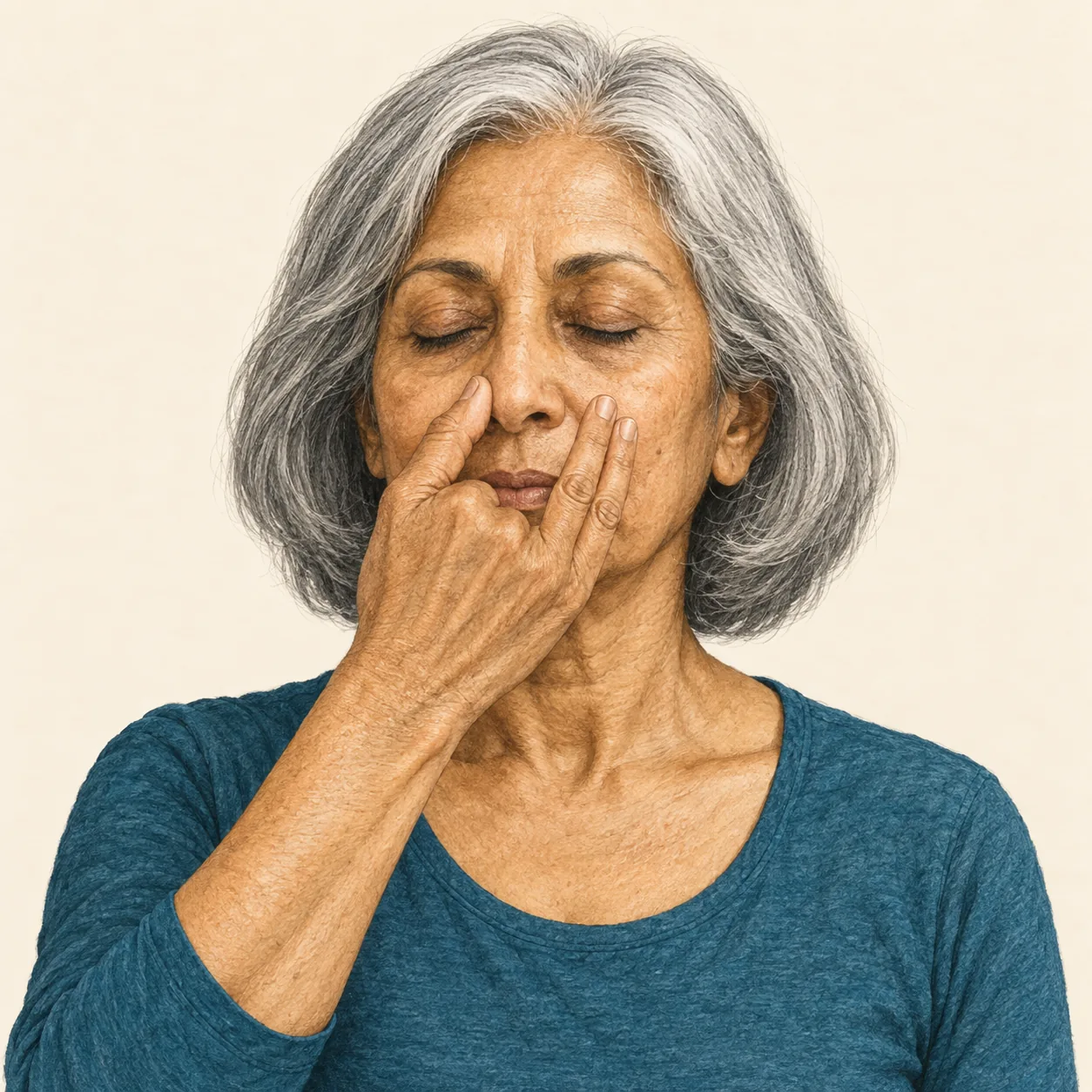
The first side: right thumb at the right nostril, left nostril open. Follow the complete breathing sequence below.
Settle in
Sit comfortably upright. Rest the left hand on the thigh and let the right shoulder relax.
Place your hands
- Fold the right index and middle fingers toward the palm.
- Keep the thumb free and the ring and little fingers together.
- Bring the hand near the nose, with the thumb beside the right nostril and the ring and little fingers beside the left.
- First learn where the fingers rest. Use their light closing touch with the breathing sequence below.
Breath and attention
The complete guide is below. Breathe in through one nostril and out through the other, then breathe in through that second side and return to the first. Keep the transitions free of breath holding.
What to notice
- How little pressure is needed to close a nostril?
- Can the right shoulder and face remain relaxed while you follow the sequence?
Finish gently
Lower the right hand to your thigh, unfold the fingers, and return to normal breathing through both nostrils.
Make it easier
Practice the finger shape away from the nose first. If the arm tires, lower the hand and breathe normally.
Take care
Return to natural breathing if a nostril is fully blocked, finger pressure hurts, or controlling the breath increases anxiety. Keep the complete guide’s cautions with the practice.
Use it for alternate-nostril breathing
What this version includes
The practice below alternates the nostrils without retention. One round returns you to the side where the cycle began. Its four-round suggestion belongs to this library’s introductory guide; it is not a quotation from the Common Yoga Protocol, which gives five rounds.
Gentle practice
Alternate-Nostril Breathing
anuloma viloma
Alternate airflow between the nostrils with Viṣṇu mudrā and no retention.
Set up
Sit upright and rest the left hand on the thigh. Form Viṣṇu mudrā with the right hand: fold the index and middle fingers inward, keep the ring and little fingers together, and use the thumb and the last two fingers at the nostrils.
How to practice
- Close the right nostril with the right thumb and inhale through the left.
- Close the left nostril with the joined ring and little fingers; release the thumb and exhale through the right.
- Inhale through the right; close it with the thumb, release the ring and little fingers, and exhale through the left.
- This completes one round. Keep the touch light and the breath quiet.
Breath & pace
Begin with 4 rounds at an even, comfortable count.
Understanding the practice
Different teaching lineages use the names Nadi Shodhana and Anuloma Viloma for several sequences that differ from one another. What you have here is the simple form alone: the breath moves from one nostril to the other and back. Do not treat it as a stand-in for the full traditional sequence, with its set ratios, its bandhas or its kumbhaka.
Modern teaching context: Swami Satyananda Saraswati, Asana Pranayama Mudra Bandha, Nadi Shodhana section. This version uses no retention.
Sources and meaning
The folded-index-and-middle-finger form is called Vishnu in the Sivananda Companion and Nasagra in the 2026 Common Yoga Protocol. ICYER uses Vishnu for another arrangement with the middle finger at the brow. The hand shape follows Sivananda and the protocol, and the full introductory sequence without retention is given with it.
- The Sivananda Companion to Yoga (1983) · The Vishnu Mudra, printed p. 73
- Ministry of Ayush: Common Yoga Protocol (2026) · Nadishodhana / Anuloma Viloma, printed pp. 41 to 42
- Ananda Balayogi Bhavanani, ICYER: Basic Practice of Some Pranayamas · Mudras for pranayama, items 1 to 6, PDF pp. 2 to 3