On this page
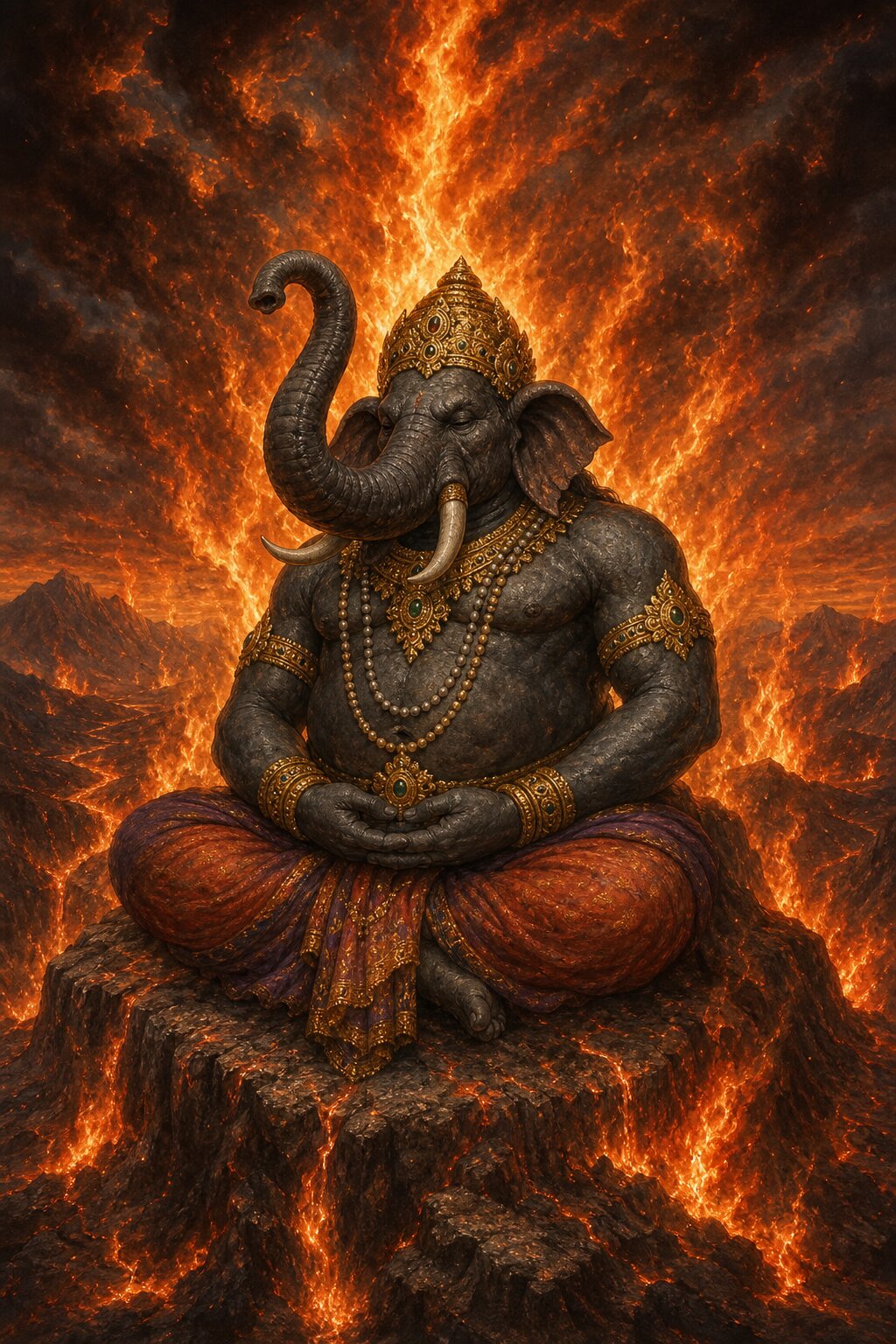
The echo of Mahishasura’s death had not yet fallen still when a fire of vengeance began to smolder inside his son, Gajasura. When he heard that the Devi, moved by the gods, had killed his father, he shed no tears and said nothing to anyone. In a valley of the Himalaya he set his eyes on the sky, raised his arms, stood on the two big toes of his feet, and did not move, and the flame of his tapas set everything around him alight.
Smoke and fire came up out of his head and went through the worlds above and below, and in whatever direction a glance turned, the tongues of that heat were seen spreading. Rivers and seas turned over. Stars came down out of the sky and the planets with them, and the ten quarters burned. The earth had no rest, and the sky had none either. When the scorching grew impossible to bear, the gods, undone by fear, left heaven and went to Brahma with Indra and poured out their grief.
Brahma’s Boon
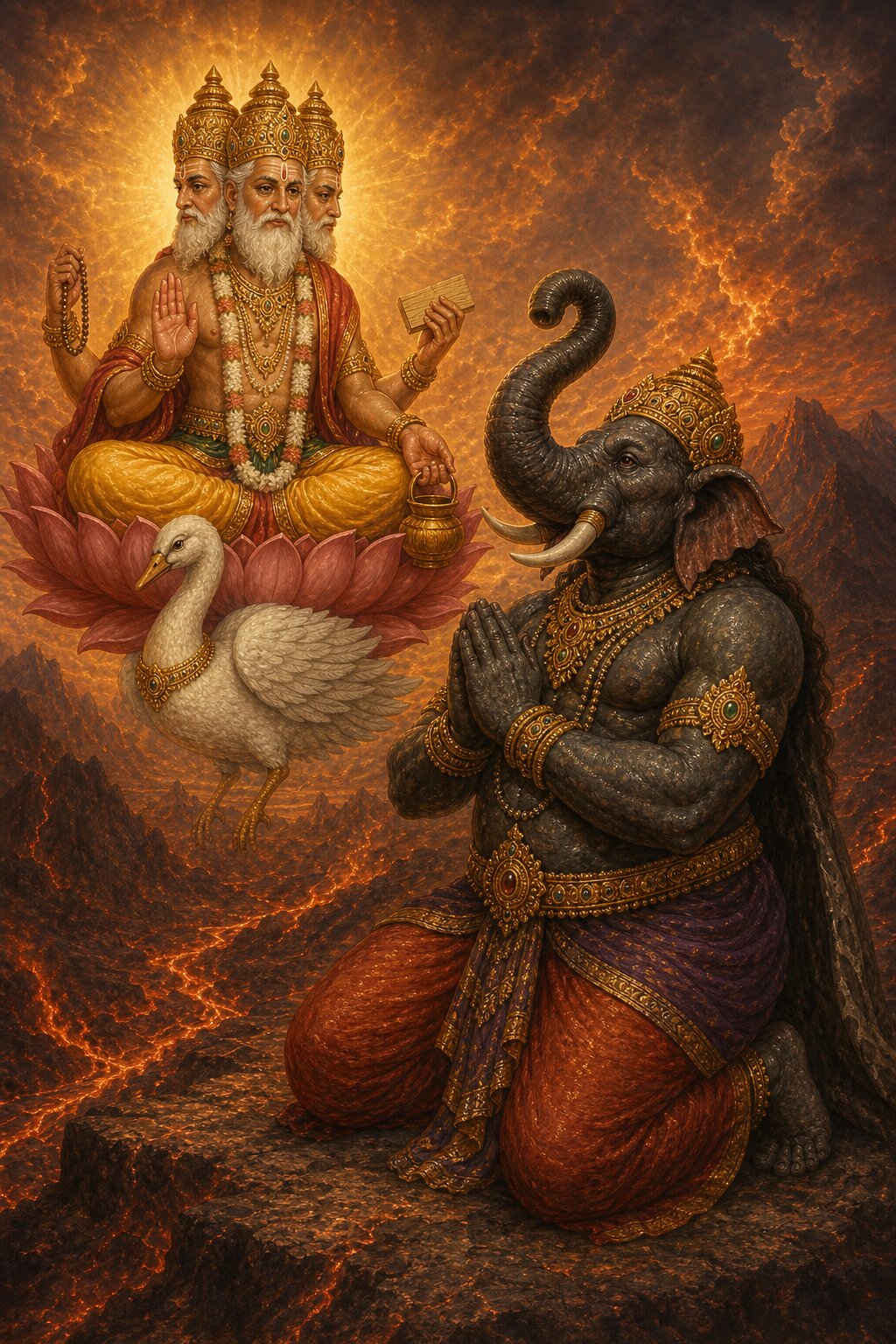
Brahma went out to that hermitage with Bhrigu and Daksha and the rest, and seeing one seated figure quietly scorching heaven, the creator laughed. Stand up, he said, son of Mahisha; your penance is perfect and the giver of boons is here. The demon scrambled up and praised him in a voice that kept catching, and asked, and Brahma granted the boon: he would die at the hands of no woman and no man who was in the grip of desire; he would be immensely strong, and unconquerable to the whole world. In the shadow of that boon, Gajasura’s pride grew without end.
The moment the boon was his, pride filled him. One by one, he took hold of every direction and of the seats of the Lokapalas, the guardians of the quarters, and stripped the glory off them. He took heaven, and Indra’s palace with its garden, and sported there while the gods worshiped his two feet. No corner was left where his terror had not reached. He had never troubled to conquer his senses, so nothing he took ever filled him, and he went on taking.
The Peril of Anandavana Kashi
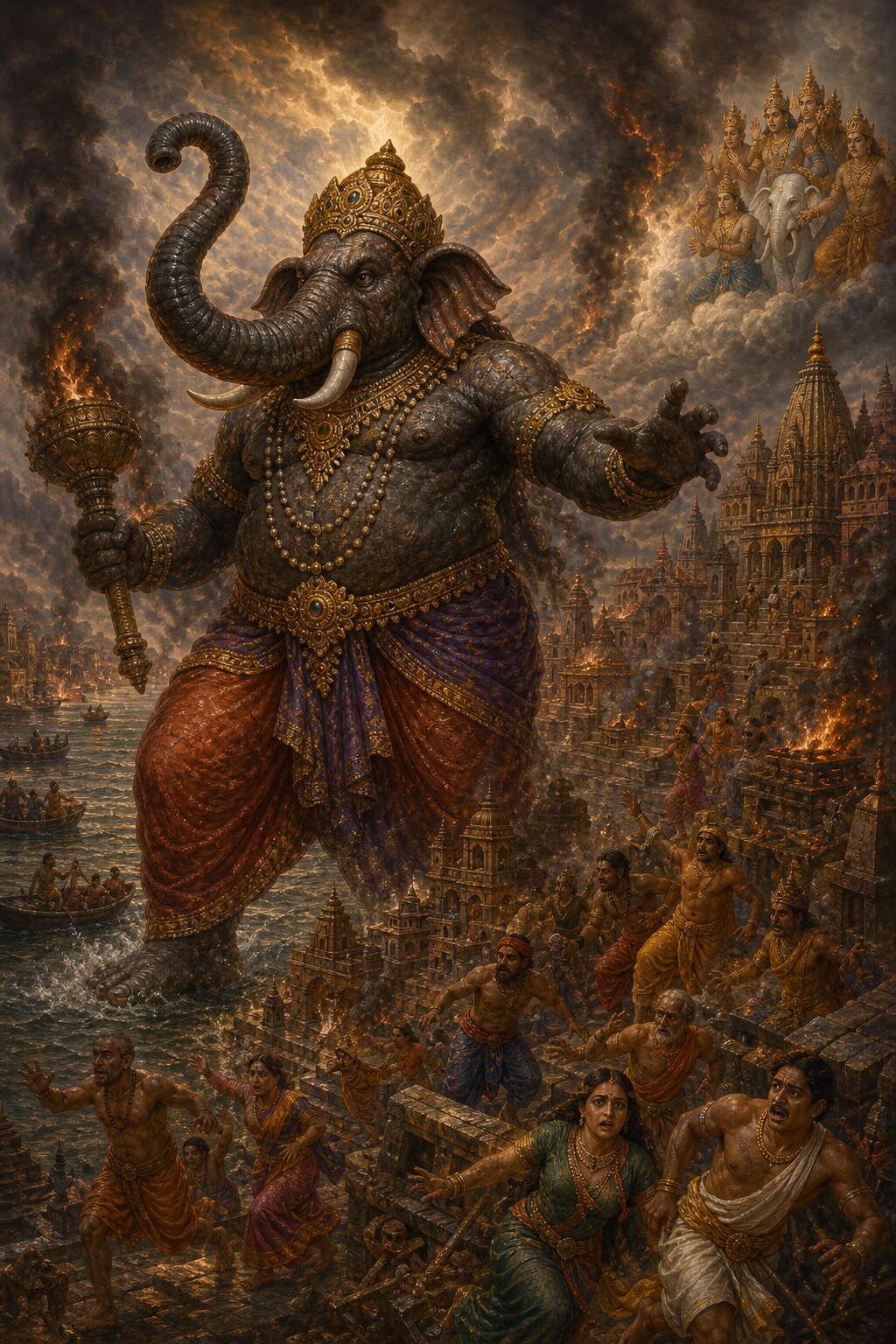
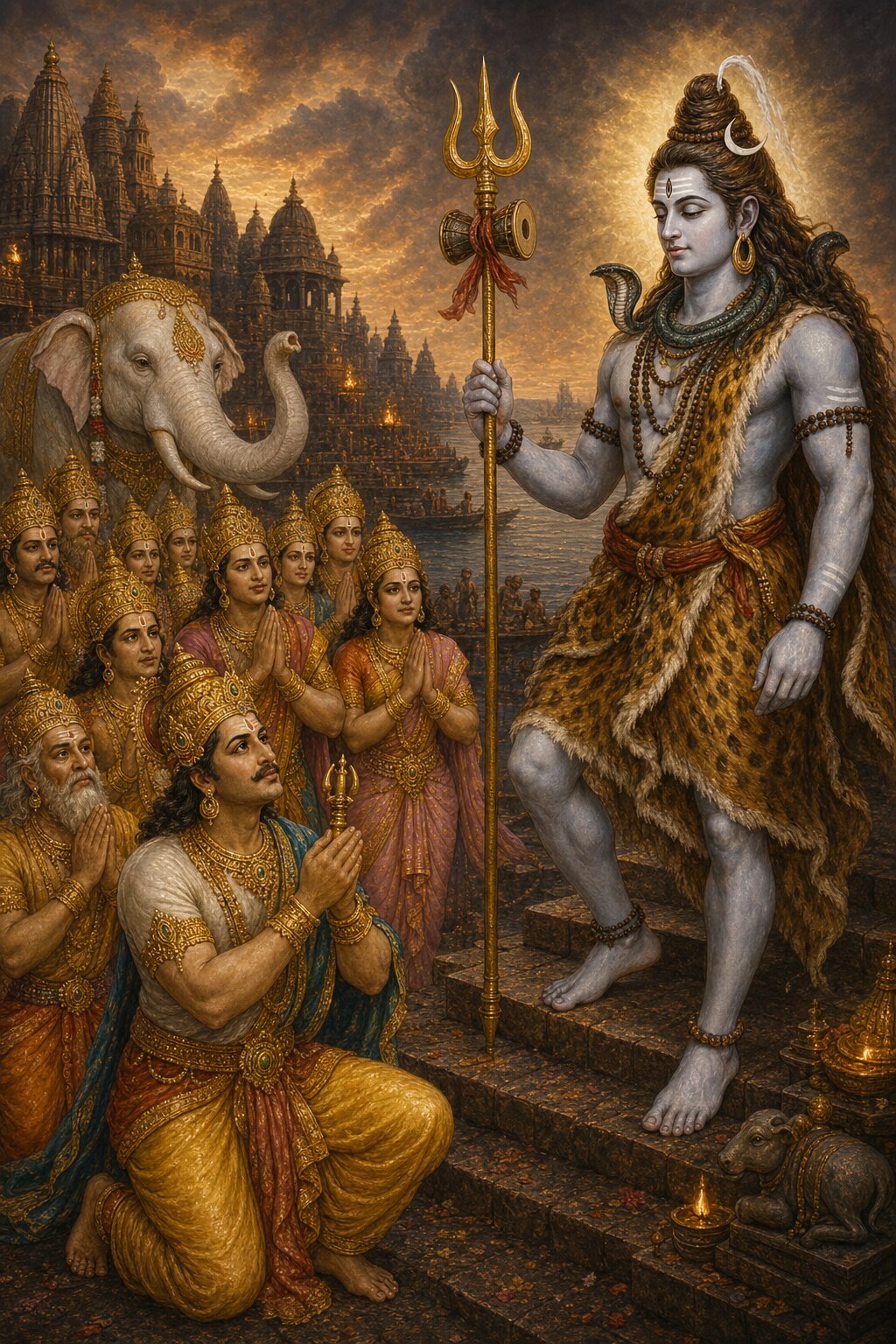
At last he reached Anandavana Kashi, the capital of Lord Shankara. This demon began to torment the very people of the city that men called the ground of liberation, and the cry that went up through the streets was protect us, protect us. In the place where Bholenath himself dwelt, his cruelty now held sway. Defeated, the gods stood once more with folded hands, this time before Lord Shankara himself, and told him what had come to his city. Wherever he sets his foot the ground shakes under the weight of him. He goes past and trees come out of the earth whole, roots and all; he strikes a mountain and there is powder where it stood. His head knocks the clouds out of the sky, and they go on being blue, having touched his hair. He breathes out and the oceans stand up in billows. Nine thousand yojanas he stands, and he is as broad as he is tall. Lightning cannot hold the tawny flicker in his eyes. And all the while he goes about shouting the one line he paid for: no man and no woman in the grip of lust can kill me.
Here the boon came undone from within itself. Gajasura could be killed only at the hands of one who stood beyond desire, and Shankara is the very conqueror of desire. Before a god who had mastered Kama, a boon like that could not hold.
On the Point of the Trident
A terrible war broke out. The demon who had spread himself over all the worlds could not stand for long before Mahadeva. Lord Shankara overpowered Gajasura and threaded him upon his trident, and the demon, going up on the point of it, felt himself opened out overhead like an umbrella. Pierced there, he could no longer flee, and he could no longer fight. Yet in that very moment, in the lap of death, something inside him changed.
Still impaled, he began to sing the praise of Lord Shankara. In his hardened heart a spring of devotion broke open. Shankara was pleased with him and told him to ask for the boon he wished.
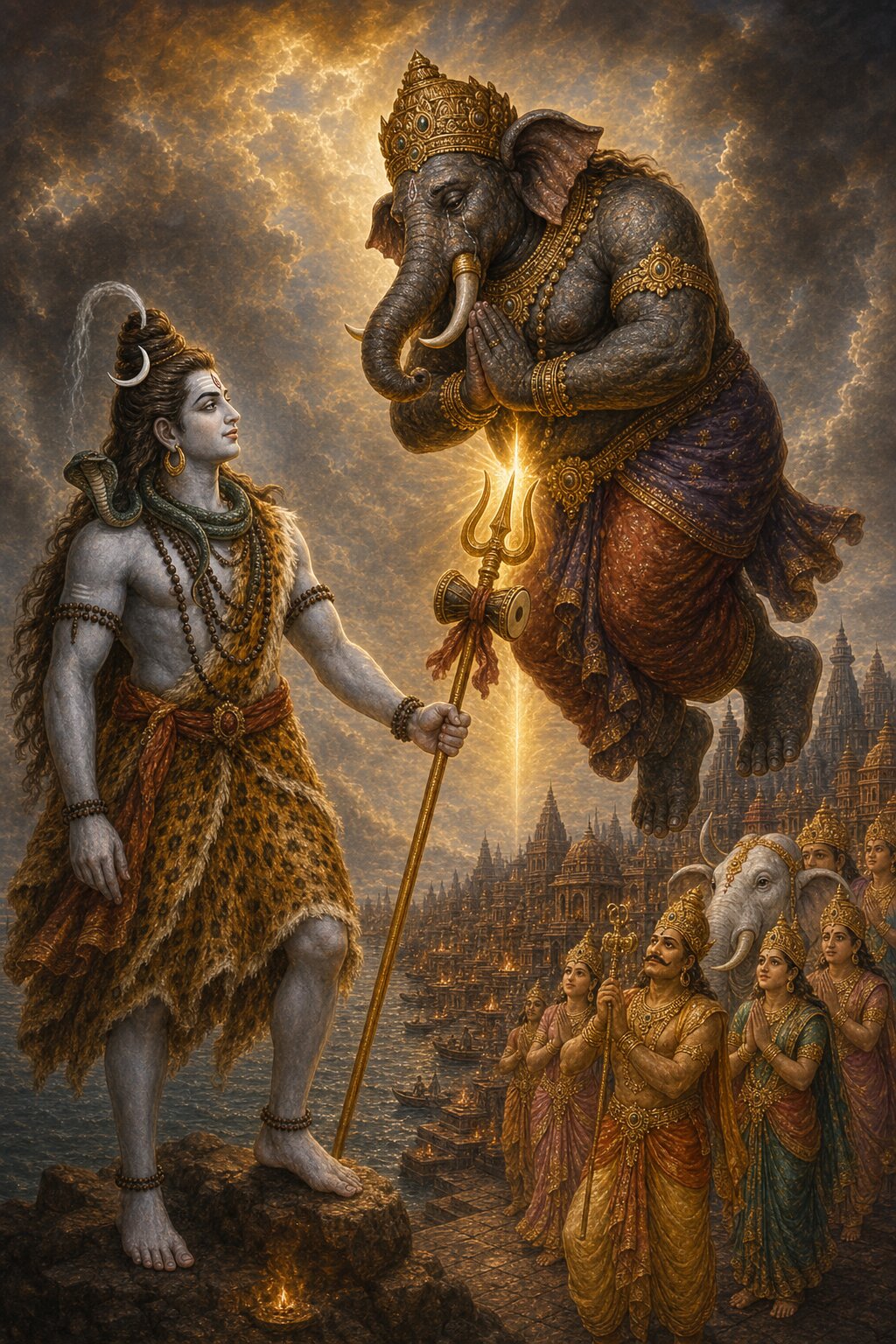
The Name Krittivasa
Gajasura joined his palms and said: “O Maheshana, sky-clad in form! If you are pleased with me, then wear forever this hide of mine, made pure by the fire of your trident. O all-pervading Lord, I am a treasury of holy fragrances; that is why this hide, lying so long in the flame of the fire of austerity, did not burn. O sky-clad one, had this hide not been holy, how would it have earned the company of your limbs? And grant one boon more: from this day let your name be famed as Krittivasa.”
Shankara, tender to his devotees, said “so be it” with great gladness. The mind of that son of Mahishasura had, through devotion, now grown spotless, and so the Lord spoke again.
“King of the danavas! This hide of yours will remain forever in my liberating Kashi, together with my linga. That linga will bear the name Krittivaseshwara. It will grant liberation, destroy even the greatest of sins, stand as the crown jewel among all lingas, and bestow moksha, release.” Having spoken thus, Shiva, the lord of the gods, took up that vast hide of Gajasura and wore it upon his limbs.
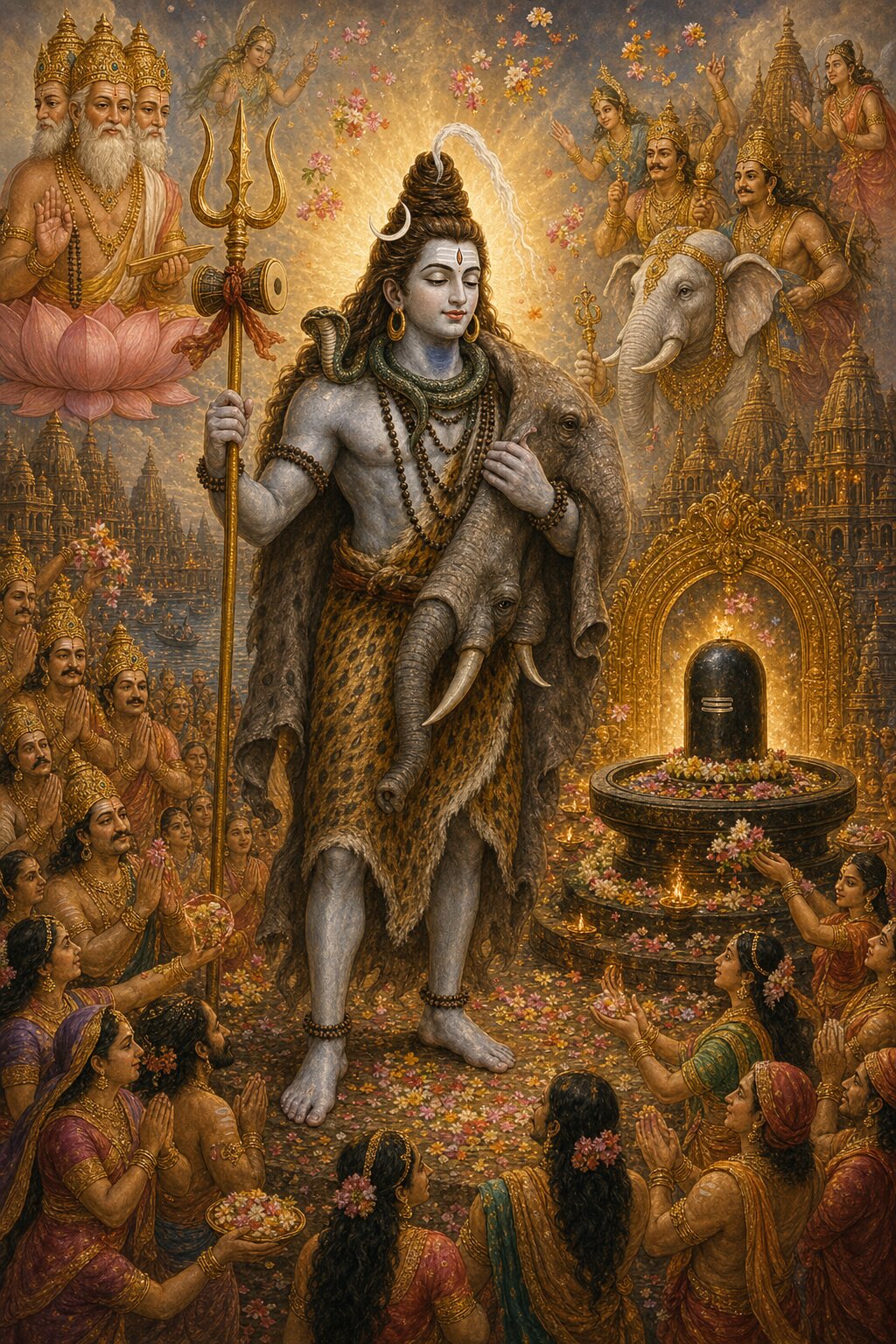
That day a great festival was held in Kashi. Every inhabitant of the city and all the Pramatha hosts sank into joy, the minds of Brahma and the other gods filled with delight, and all of them bowed to Maheshvara with folded hands and sang his praise. The demon who had been born from the fire of vengeance became, at his end, the cause of one of Shiva’s beloved names, and his hide the ornament of Bholenath’s body.
Source: Shiva Purana (Gita Press, Sankshipta Shivapurananka), Rudra Samhita, fifth (Yuddha) Khanda