Textual context
Yathasukha names the thirteenth chapter. In ordinary Sanskrit yathasukham is the word a host says to a guest: sit as you please, be at your ease. Janaka takes that household courtesy and makes it the whole description of a life, a manner that arrives through no effort and goes on by itself.
In the modern age the Japanese Zen master Shunryu Suzuki (1904 to 1971) spoke in Zen Mind, Beginner’s Mind (1970) of a mind that meets each moment without expectations, and a reader of that book will recognize the manner of Janaka’s seven verses.
At Ease
In natural ease · 7 shlokas
Janaka speaks seven shlokas, and six of them come to rest on the same line, “aham ase yathasukham”, I abide at ease. The one that varies says where the ease is anchored. A life brought fully to rest, with nothing to want and nothing to lose.
The chapter describes the state called yathasukha, ease in whatever comes. The free man has one mark here: he no longer weighs a situation on the scale of how it suits him, so every situation settles into the same evenness. Ramana Maharshi (1879 to 1950) called such a state sahaja samadhi, the natural absorption that continues while a man walks, eats and talks.
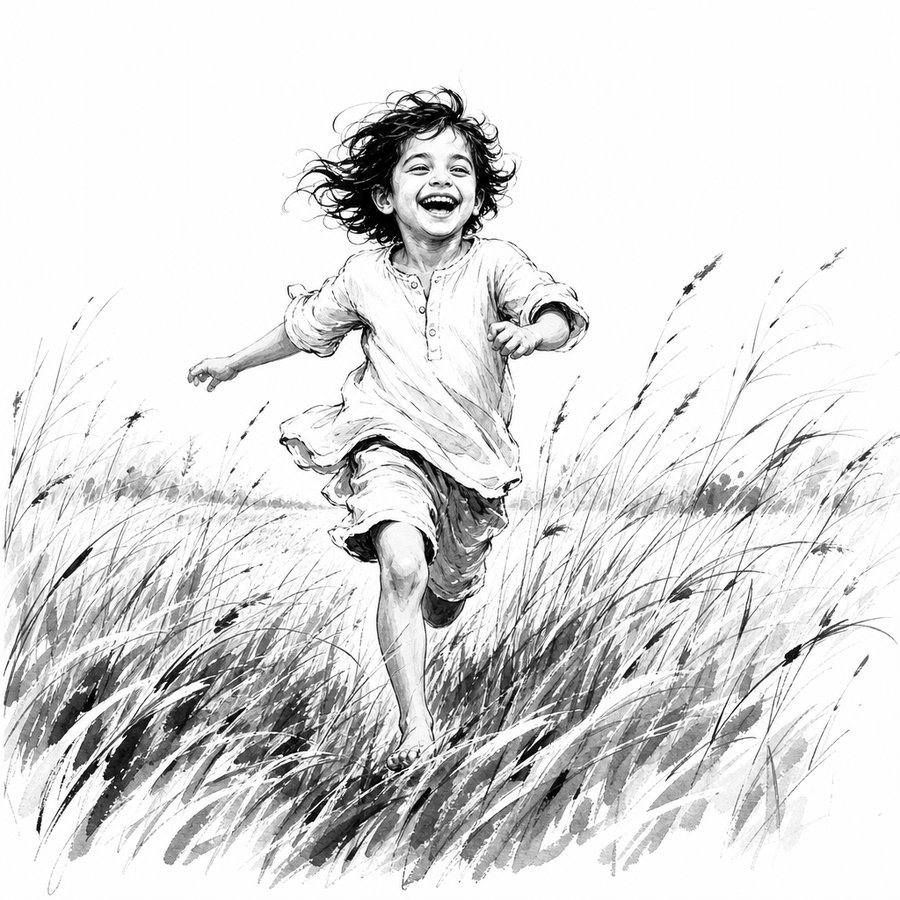
Janaka speaks, and his first sentence turns the ordinary wisdom of a palace on its head. A court assumes that well-being comes from having things within reach. Janaka names a well-being that comes only from holding nothing, and he says it is hard to find even for the ascetic who owns one loincloth, since a loincloth can be gripped as tightly as a treasury; the man who has renounced can hold on to his renouncing. Janaka is caught by neither grip. He has put down acquiring and he has put down renouncing, and with both hands empty he says, I abide at ease.
Shloka 1
The ease that comes from owning nothing is rare even for the man who wears only a loincloth. So I have given up both renouncing and acquiring, and I abide at ease.
Then he looks at the body and the mind, the things every man calls his own with the least thought. Here the body is weary; there the tongue is tired, worn out by a day of speaking, as a king’s tongue often is; somewhere else the mind is spent. Janaka sees each weariness where it sits and does not take it up. He has set all of it down, and he rests in the purushartha, the highest goal a human life can have, and the resting is itself the ease.
Shloka 2
Here the body is weary, there the tongue is tired, somewhere else the mind. I have let all that go, and I rest content in the highest goal of a human life.
Now Janaka loosens the knot of action. He has thought the matter through to the truth: nothing is ever really done, because the one he is does nothing. The work of the kingdom goes on, and the sense of having done it never forms. He does not seek out tasks; whatever comes to be done, he does when it comes, and he stays as he was before it arrived. A king who hears petitions all morning and seals decrees all afternoon describes himself as a man at leisure, and he means it.
Shloka 3
Knowing the truth, I reflect that nothing at all is ever really done; I do whatever comes to be done when it comes, and I abide at ease.
The yogi who still takes himself for the body carries an insistence about action: he must act, or he must refrain from acting, and he argues the point with himself. Janaka has no stake in that argument. There is no union between him and the body, and no separation from it either, since union and separation both need two things, and he has stopped finding a second. With no joining and no parting left to manage, he says, I abide at ease.
Shloka 4
Insistence on action or on inaction belongs to the yogi who takes himself for the body. For me there is neither union nor separation, and I abide at ease.
Then Janaka brings in the plainest matter of a day. Standing, walking, lying down to sleep: none of the three brings him gain, and none brings him loss. They set nothing right in him and spoil nothing. So he stands when standing is called for, walks when walking is, and sleeps when night comes, and the same even ease holds through all of it. The absorption that others tie to a seat and a mat, Janaka finds in every posture.
Shloka 5
Standing, walking or lying down bring me no gain and no loss. So whether I stand, walk or sleep, I abide at ease.
Now he touches the two jolts that move men most. One is loss, the drop in the stomach as something slips away; the other is elation, the rush of having gained. The world fears that sleep will cost it something and hopes that effort will earn it something. For Janaka sleep costs nothing and striving earns nothing, so the two swells, ruin and elation, have nothing to rise on. He has set them both down, and he abides at ease.
Shloka 6
I lose nothing by sleeping and gain nothing by striving. So I have given up loss and elation, and I abide at ease.
Last, Janaka states what he has watched for a lifetime. Pleasure and the rest of the feelings keep no fixed rule; in every circumstance they come, and change, and go, and nothing in them holds still long enough to be counted on. Having seen this again and again, he gives up the pair the whole world sorts its days by, good fortune and bad, and settles into the ease where nothing is pulled toward and nothing fled. I abide at ease, he says, for the last time in the chapter, and the court has heard a king describe a day in which nothing needs to happen.
Shloka 7
Having seen again and again how pleasure and the rest come and go in every circumstance, I have given up good and ill alike, and I abide at ease.