Knowledge Versus Karma
Shlokas 9 to 16
Lakshmana had asked for the direct road to liberation. Here Rama fixes on a single point, that karma binds and knowledge frees, and at this very turn Vedanta breaks from Purva-Mimamsa.
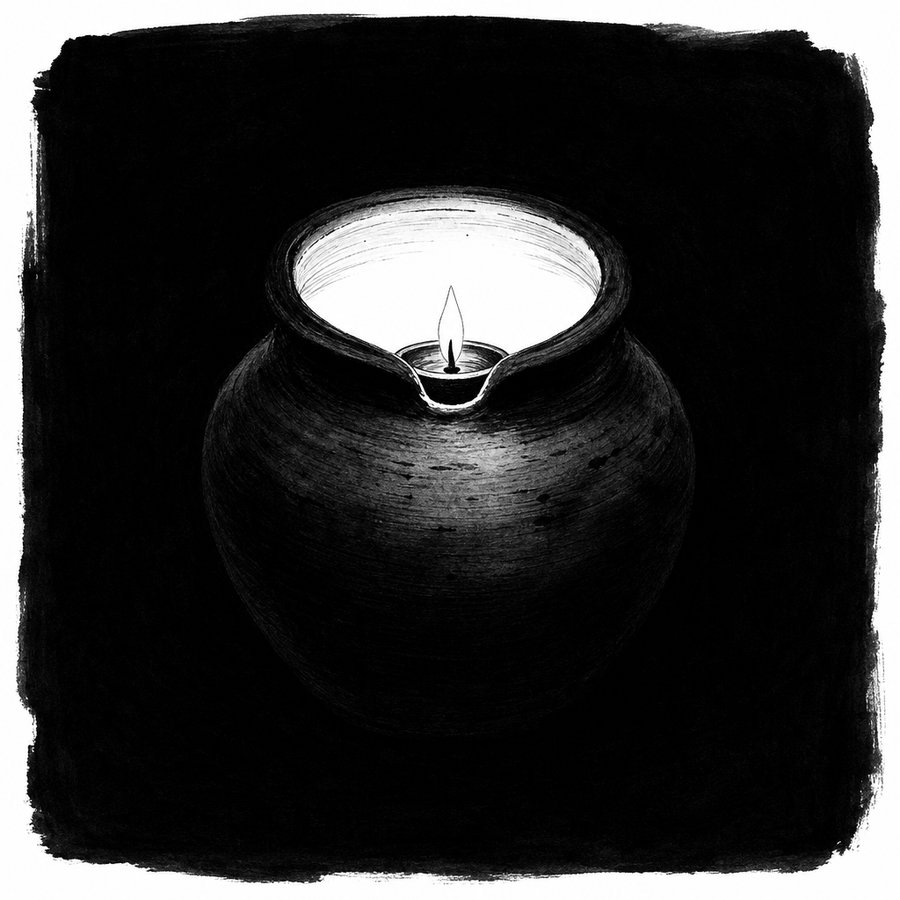
Rama first points to the root that the whole bondage stands on. Ignorance is the source of it all, the one mistake lying beneath every other, and every injunction the shastra lays down has a single aim, the erasing of that ignorance. In that erasing the skill belongs to knowledge. Action holds none of it, because action is itself born from ignorance, a child of the very thing it would have to destroy, and it sets itself against knowledge at every step. Rama presses the point further. So long as ignorance stands and attachment keeps its strength, the same action turns faulty from within, and out of that faulty action the same round of birth and death returns, unchecked, wheel after wheel. This is why the wise person should weigh knowledge alone, and turn the whole of the mind toward that one inquiry.
Now Rama sets out the objection that rises from the side of Purva-Mimamsa, the old school of the ritualists, and he gives it its full weight before he answers it. Someone says the Veda has commanded action as well. The same Veda that named knowledge a means to the human goal fixed a duty for every being that draws breath, and that action, carried out as commanded, walks in as knowledge’s helper and holds the lamp for it. The Shruti has gone further and called even the neglect of action a fault, so the seeker of liberation should keep performing this action always, without a break. The case sounds complete. But Rama answers that knowledge is independent. It accomplishes its own settled work by itself, the way light fills a room without asking the darkness for leave, and it needs nothing from anyone, not even in thought.
Here Rama deepens the opponent’s argument, then cuts it down. A yajna is a true act in itself, and even so it cannot stand alone; it calls for the one who offers, the priests, the fire, and the offering poured into it, and only with all of these together does its fruit arrive. In just the same way, someone says, knowledge gives liberation only when it joins with the works that ritual injunction has brought to light, as the fire needs the ladle. Rama lets the argument finish, and then he names those who make it. They are debaters, he says, people who reason for the pleasure of reasoning, and their claim is unreal because it collides with plain experience, with what anyone can see in his own life. Action grows out of pride in the body, out of the sense that I am this frame of flesh and must do things with it. Knowledge is proven only when that ego dissolves. How could the two run together?
At the end Rama gives the conclusion the whole part rests on. There is a movement of the self that is lit from within by the light of pure knowing, and this movement is called the final one, the last rung of all, because past it the mind has nowhere further to climb. Set the two side by side one last time. Action rises with all its factors, the doer, the deed, and the means, and it cannot rise without them. Knowledge wipes out those very factors, every one, the doer first of all. So the discerning person should give up work entirely, because knowledge stands opposed to it, and where two things stand opposed there can be no combining of them. Let such a seeker stay always intent on the search for the atman, turned inward, past the reach of every movement of the senses, where no sound and no sight arrives.