What makes it different
Sitkari draws the breath in through the teeth; Shitali draws it through a tongue rolled into a tube. The Hatha Yoga Pradipika describes the mouth sound and nasal exhalation; Sivananda gives a more particular tongue position. ICYER describes another mouth-and-tongue arrangement and a more active ending. These are material teaching differences, not interchangeable steps.
The introductory version here
The cooling-breath guide offers Sitkari when the tongue does not roll naturally: the tongue rests behind lightly parted teeth and the incoming breath passes through the teeth. Close the mouth for the gentle nasal exhalation described in that guide. Keep its no-retention approach. There is no reason to force a tongue shape, a hiss, or a longer breath.
Keep the whole guidance together
The full cooling-breath instructions, easier option, and cautions are reproduced below so that this alternative is not separated from its context. Cold-air irritation, discomfort in the teeth or throat, asthma symptoms with open-mouth breathing, and dizziness remain reasons to stop or return to natural breathing. The traditional accounts are compared here for understanding; they do not supply a new schedule to follow.
The complete guidance
Gentle practice
Cooling Breath
śītalī
Draw air through a curled tongue, then exhale gently through the nose.
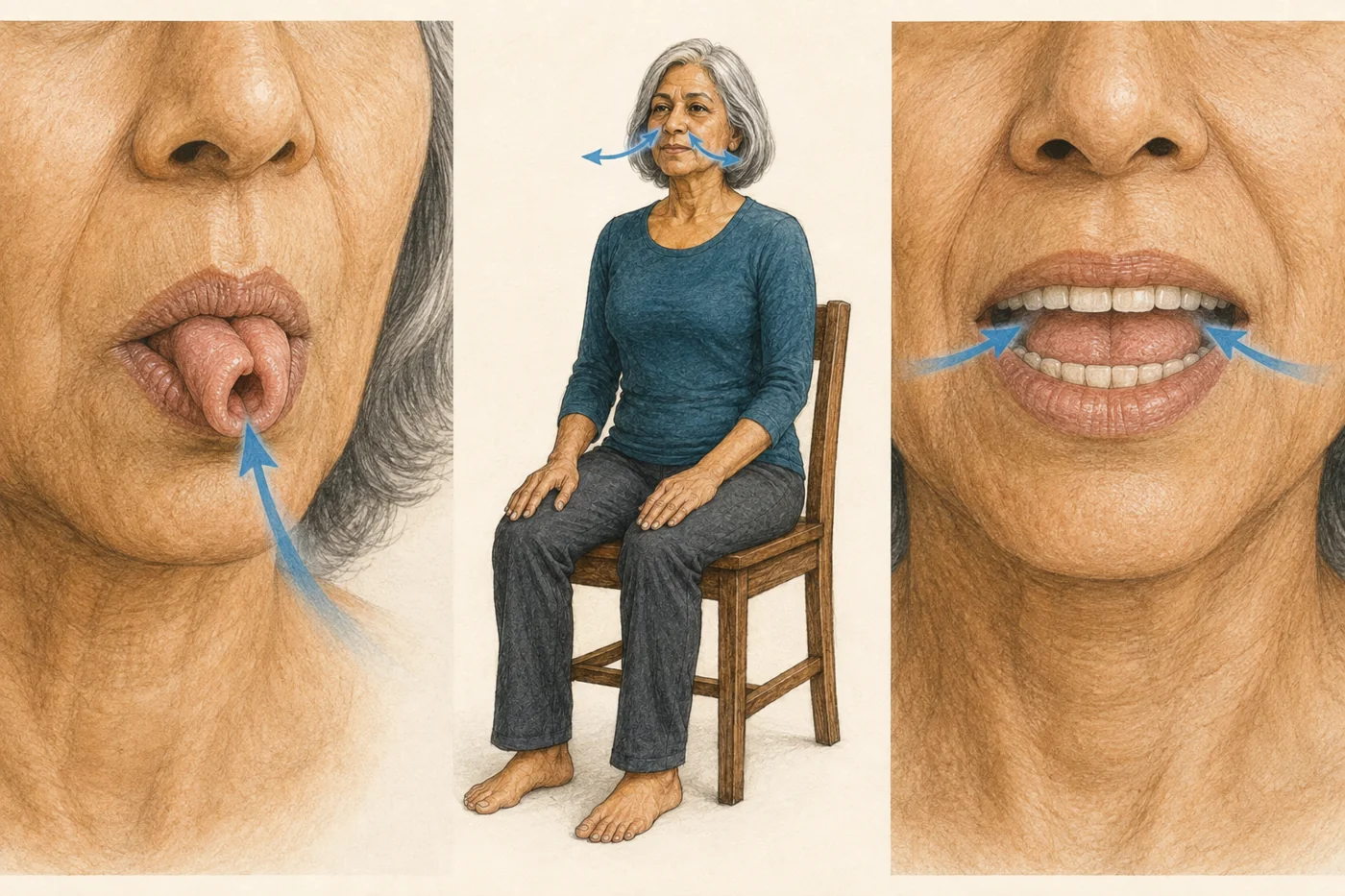
Set up
Sit tall with hands relaxed. Curl the sides of the tongue into a tube if that shape is naturally available.
How to practice
- Extend the curled tongue slightly through the lips.
- Inhale slowly through the tongue tube.
- Close the mouth and exhale gently through both nostrils.
- If the tongue does not roll, use Hissing breath (sītkārī): rest the tongue behind lightly parted teeth and inhale through the teeth.
Breath & pace
Begin with 4 rounds.
Understanding the practice
The names Shitali and Sitkari describe two different ways of drawing the air in through the mouth. The classical hatha yoga description then goes on to a held breath, kumbhaka. This beginning form leaves that step out. Do not take it as a treatment for any illness or for fever.
Historical context: Hatha Yoga Pradipika 2.54 to 58. This modern introductory version omits the retention described in traditional practice.
Sources and scope
Main edition
Hatha Yoga Pradipika, chapter 2
Passage for this reading
- Hatha Yoga Pradipika, chapter 2
Sanskrit verses 2.54 to 56.
Svātmārāma; Sanskrit with Pancham Sinh’s 1914 translation. Verse numbers follow the Sanskrit.
- The Science of Pranayama
Chapter Four, “Sitkari”.
Swami Sivananda; Divine Life Society, sixteenth edition 1997, authorized web edition 2000. Traditional teaching, not clinical evidence.
- Basic Practice of Some Pranayamas
“Cooling pranayamas: Sitkari,” PDF pp. 4 to 5.
Ananda Balayogi Bhavanani, International Centre for Yoga Education and Research. Source page numbering refers to the PDF; hand descriptions compared independently.
What this edition covers
A modern introductory adaptation with complete guidance and source comparisons.
Limits and differences
The prose above identifies material differences. Traditional explanations and promised attainments are attributed to their sources; they are not clinical evidence. Review date: September 11, 2026.