A shape, a sensation, a name
Shitali gives the incoming air a passage through the rolled tongue before the outgoing breath returns through the nose. The name and the traditional cooling description help identify the practice. They do not establish a treatment for fever, diabetes, or another medical condition.
Read the method beside its source
The Hatha Yoga Pradipika places Shitali after Sitkari and includes retention. The Common Yoga Protocol presents a modern introductory sequence. This library’s introductory version omits retention and suggests four rounds. Its Sitkari alternative remains below; the separate Sitkari page explains why the two names deserve their own entries.
The complete guidance
Gentle practice
Cooling Breath
śītalī
Draw air through a curled tongue, then exhale gently through the nose.
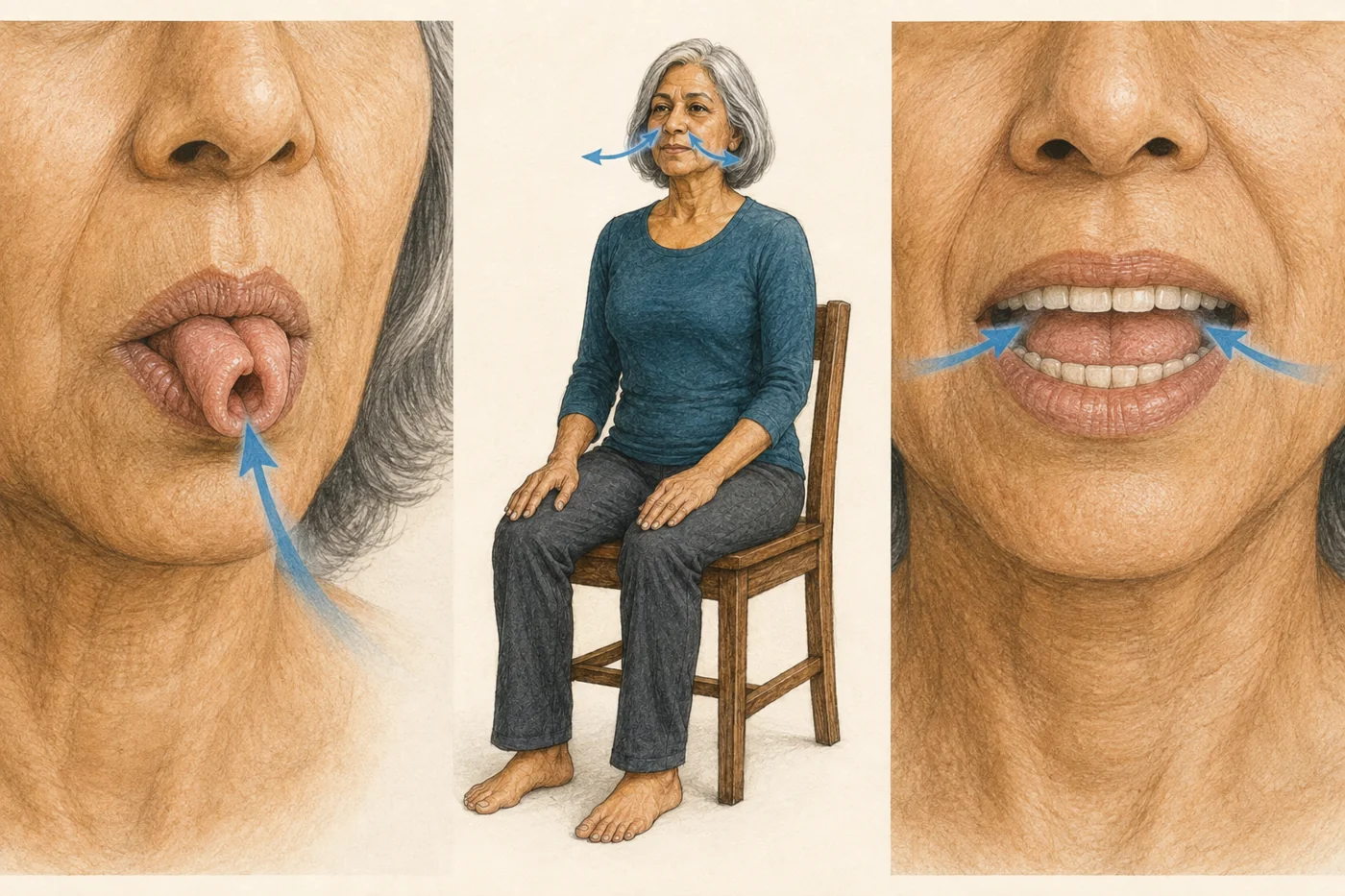
Set up
Sit tall with hands relaxed. Curl the sides of the tongue into a tube if that shape is naturally available.
How to practice
- Extend the curled tongue slightly through the lips.
- Inhale slowly through the tongue tube.
- Close the mouth and exhale gently through both nostrils.
- If the tongue does not roll, use Hissing breath (sītkārī): rest the tongue behind lightly parted teeth and inhale through the teeth.
Breath & pace
Begin with 4 rounds.
Understanding the practice
The names Shitali and Sitkari describe two different ways of drawing the air in through the mouth. The classical hatha yoga description then goes on to a held breath, kumbhaka. This beginning form leaves that step out. Do not take it as a treatment for any illness or for fever.
Historical context: Hatha Yoga Pradipika 2.54 to 58. This modern introductory version omits the retention described in traditional practice.
Sources and scope
Main edition
Hatha Yoga Pradipika, chapter 2
Passage for this reading
- Hatha Yoga Pradipika, chapter 2
Sanskrit verses 2.54 to 58.
Svātmārāma; Sanskrit with Pancham Sinh’s 1914 translation. Verse numbers follow the Sanskrit.
- Common Yoga Protocol (2026)
Shitali, printed pp. 43 to 44.
Ministry of Ayush, Government of India. Modern teaching protocol.
- The Science of Pranayama
Chapter Four, “Sitali”.
Swami Sivananda; Divine Life Society, sixteenth edition 1997, authorized web edition 2000. Traditional teaching, not clinical evidence.
What this edition covers
A modern introductory adaptation with complete guidance and source comparisons.
Limits and differences
The prose above identifies material differences. Traditional explanations and promised attainments are attributed to their sources; they are not clinical evidence. Review date: September 11, 2026.