On this page
Devi Mahatmya
Chapter 6 · The Slaying of Dhumralochana · Final Charita
The messenger carried the Devi’s answer back, and Shumbha could not stomach it. He sent his general Dhumralochana up the mountain with sixty thousand asuras and one order: seize the Devi by her hair and drag her in. Dhumralochana reached the Himalaya to close with her, and a single humkara from the Devi turned him to ash where he stood. What remained of his army the Devi’s lion tore through in a moment. For this slaying the Devi lifted neither bow nor sword; one sound was enough.
1 · 2
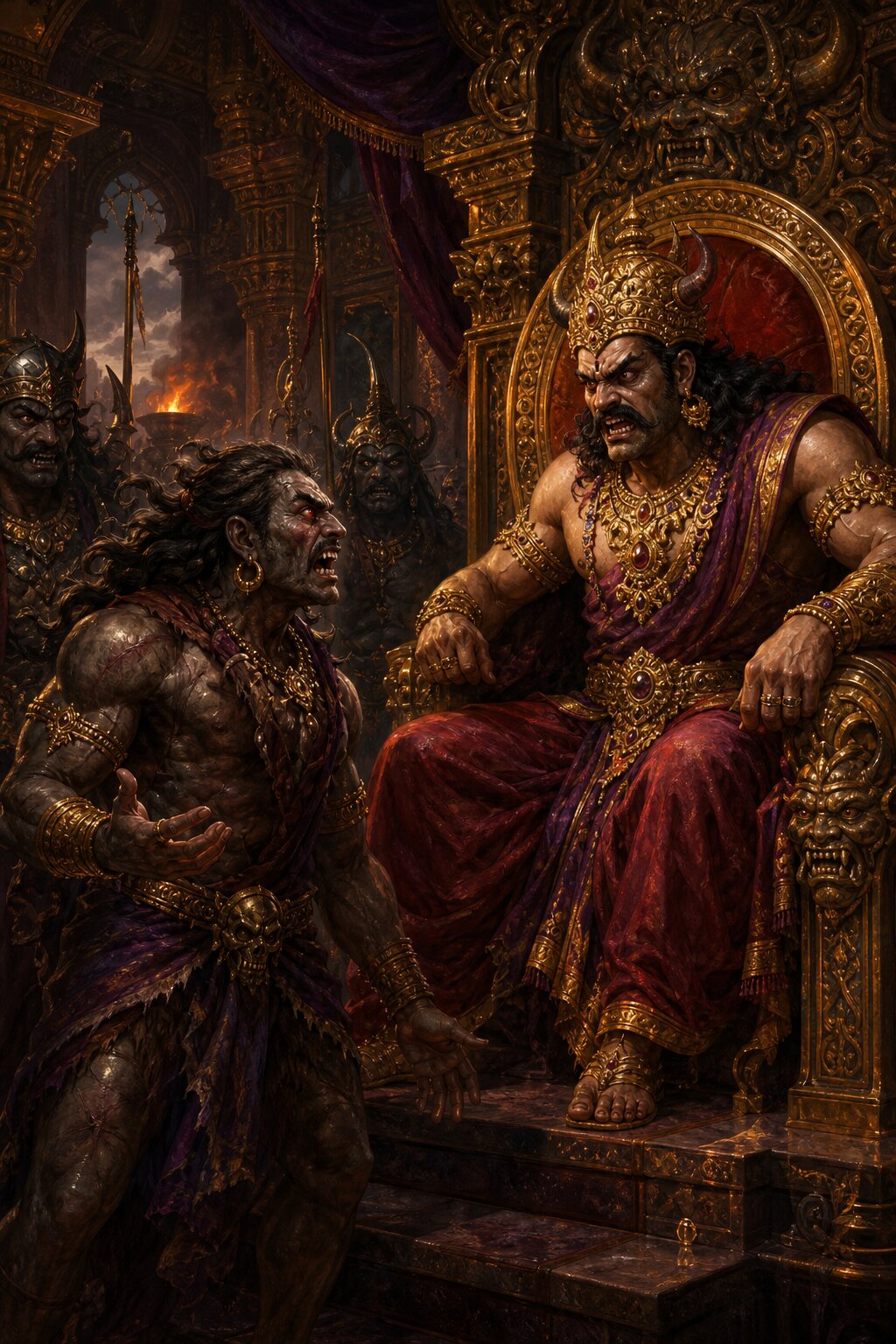
The rishi says: at the Devi’s words the messenger went back seething, the long descent from the snows doing nothing to cool him, and he set out every detail of her answer before the king of the daityas, word upon word, sparing him nothing. The moment that reply reached Shumbha from his messenger’s mouth, the asura king’s fury broke loose, and he turned to Dhumralochana, the smoke-eyed, a chieftain among his daityas.
3 · 4
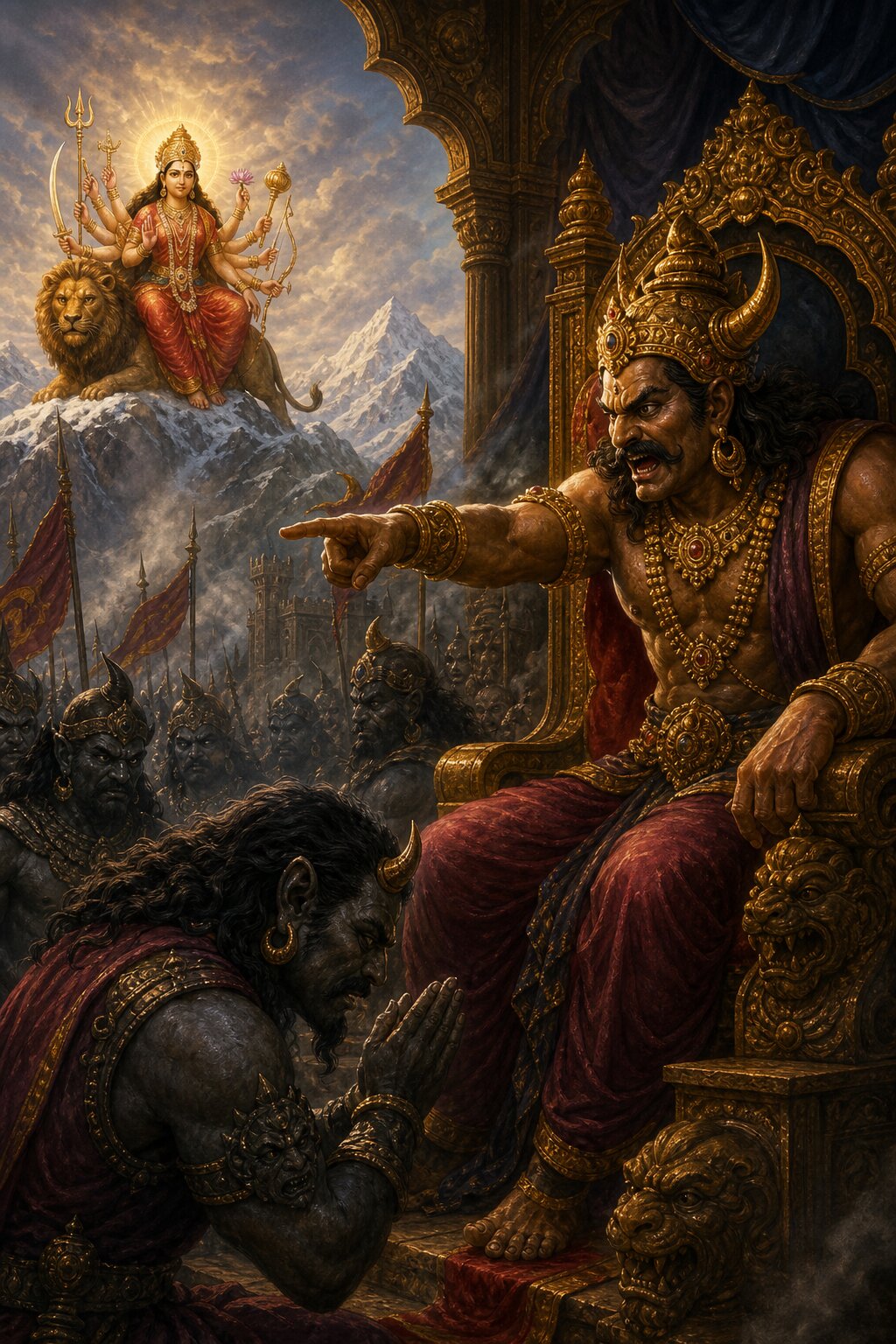
Dhumralochana, he said, gather your army about you and go at once; seize that shrew by the hair, drag her here helpless, and haul her before me by force. Shumbha had already settled it in his own mind that the Devi was merely a woman, a thing to be dragged, one more gem to be fetched for the treasury. And should any other rise to her defense, he ordered, cut him down where he stands, be he an immortal, a yaksha of Kubera’s hidden hills, or a gandharva out of heaven’s own choirs. Shumbha wanted the very chance of a rescuer erased, with no notion that the Devi has never needed one.
5 · 6 · 7
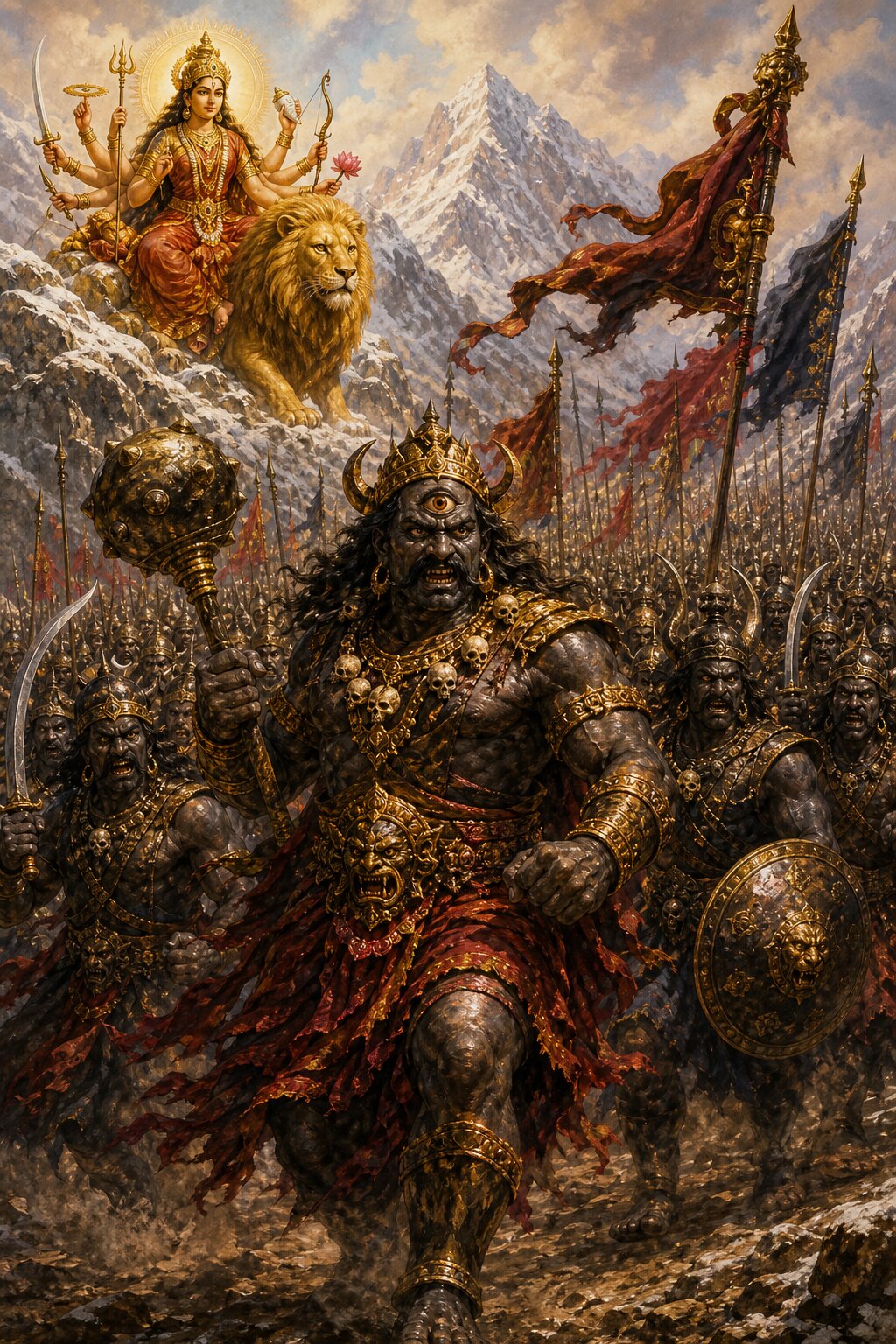
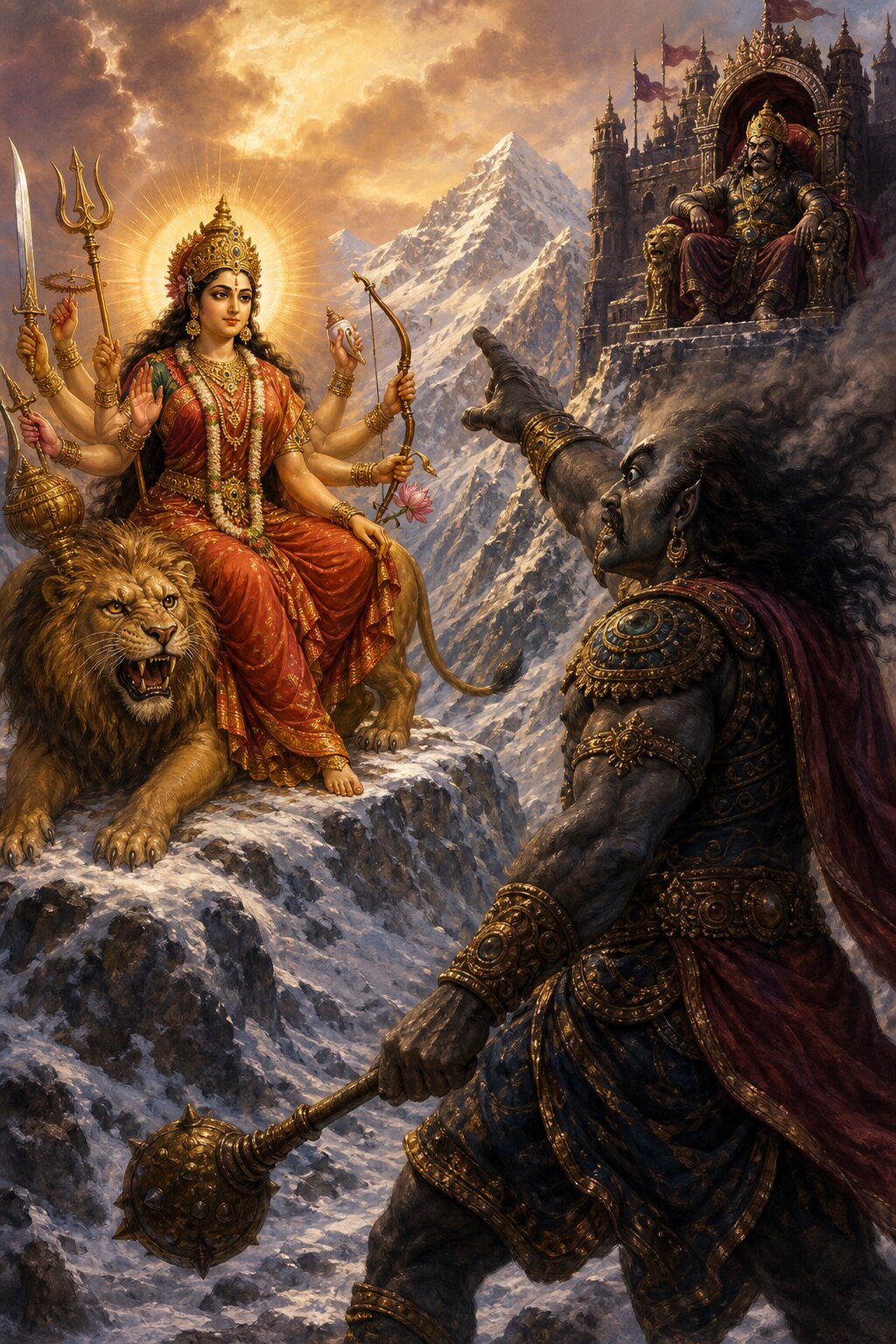
The rishi says: at that command the daitya Dhumralochana set out at once, sixty thousand asuras around him, a host so vast it darkened the passes as it climbed. The sheer size of that escort tells its own story; for all their scorn, the asuras had already come to dread her. Catching sight of the Devi seated calm upon the snows of the Himalaya, he shouted up to her: come to my master today of your own will and gladly, or I will drag you off by the hair, helpless, by sheer force. He threw Shumbha’s order back at her word for word, down to the hair and the dragging, with no idea whom he was facing.
8 · 9
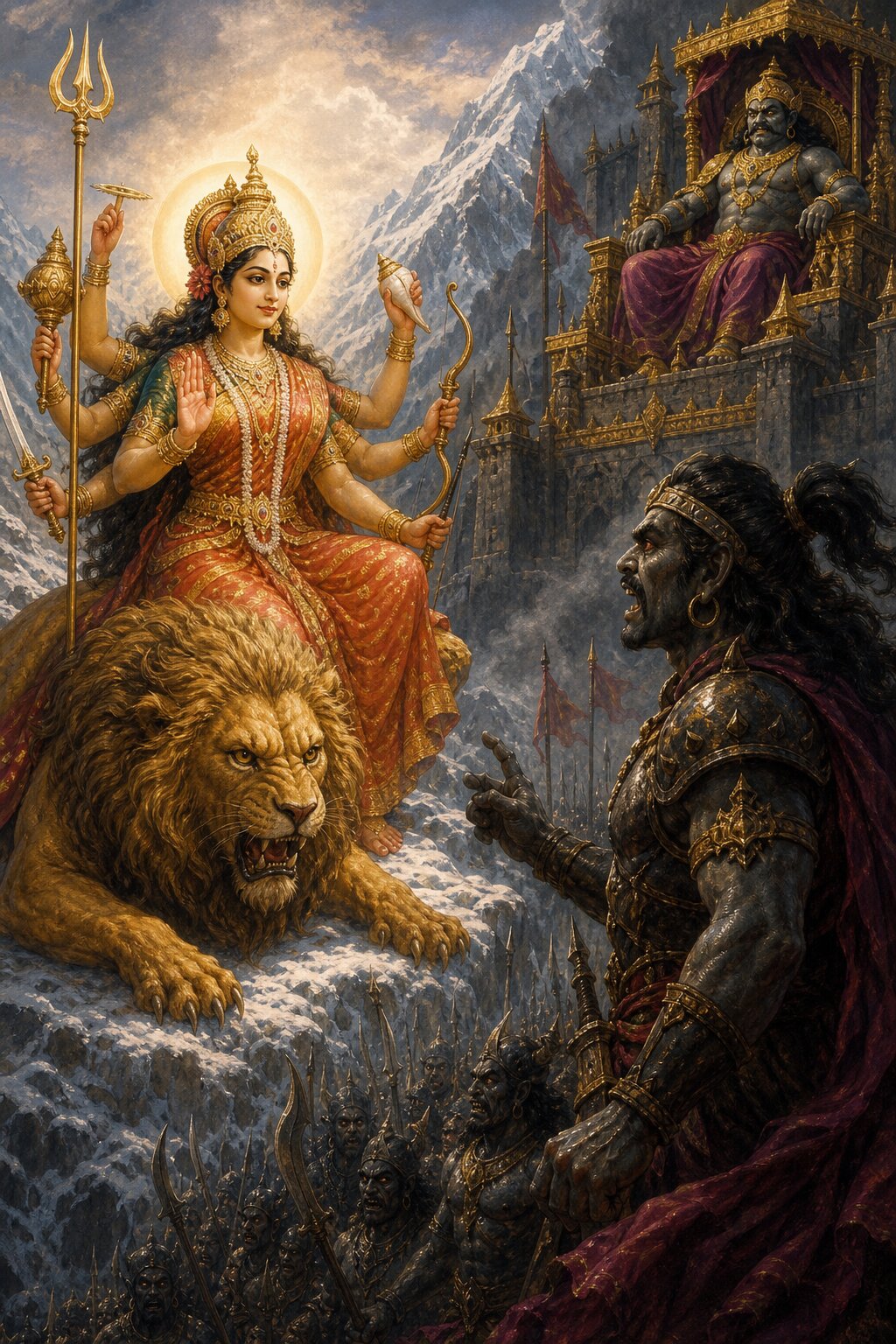
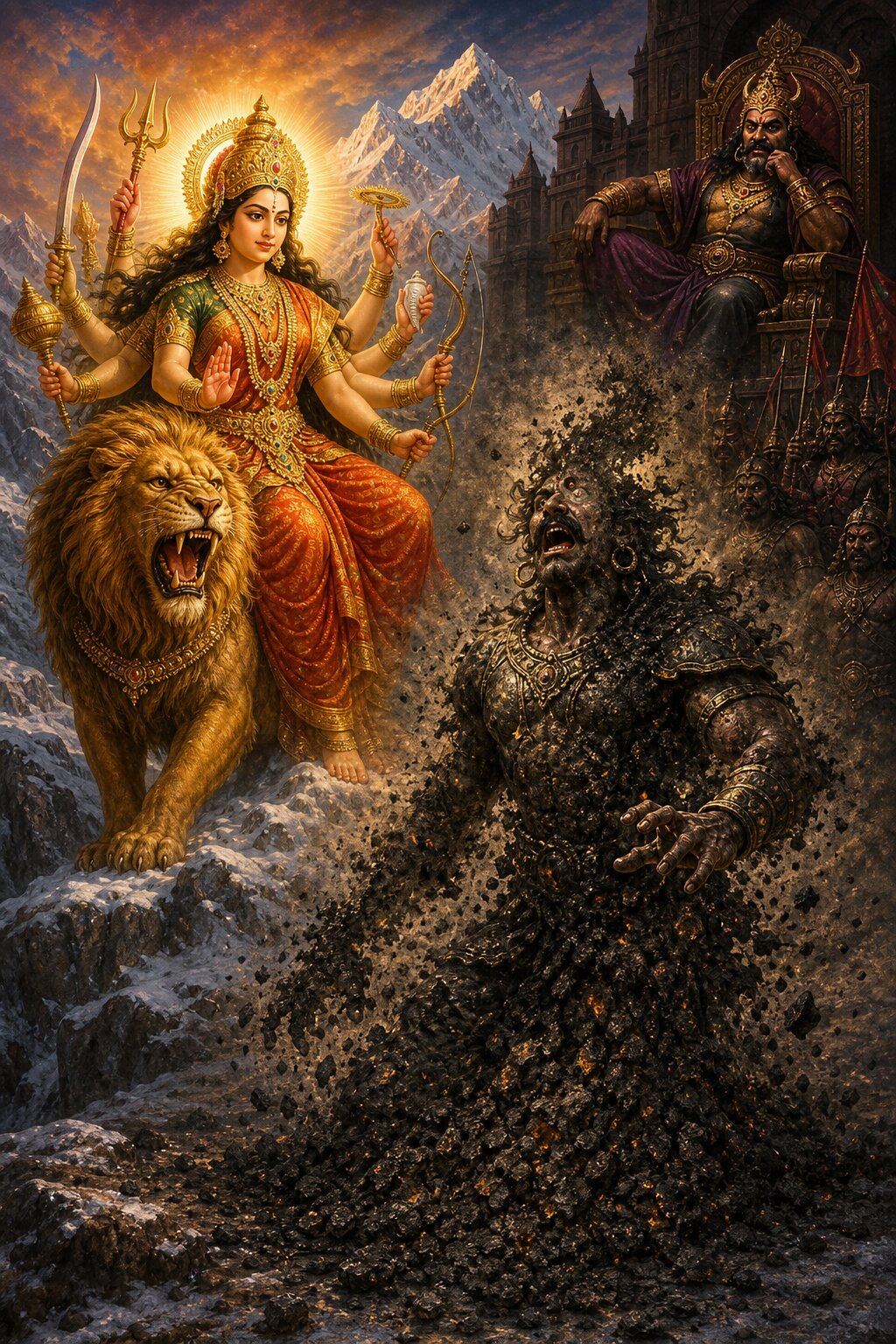
The Sri Devi answered in a quiet voice. You are strong, sent by the lord of the daityas, with an army wrapped around you; if you mean to carry me off by force like this, then what indeed can I do to stop you? Her question was quiet as snowfall, and in it the whole boast of the asura rang hollow. The rishi says: the words were barely spoken when the asura Dhumralochana charged her, arms out for her hair, and Ambika, with a single humkara, one syllable of wrath let go on her breath, turned him to ash on the spot. No bow rose, no sword, no trident. The Devi loosed one sound, and the commander of sixty thousand drifted as ash across the mountainside where a moment before a general had been running.
10 · 11
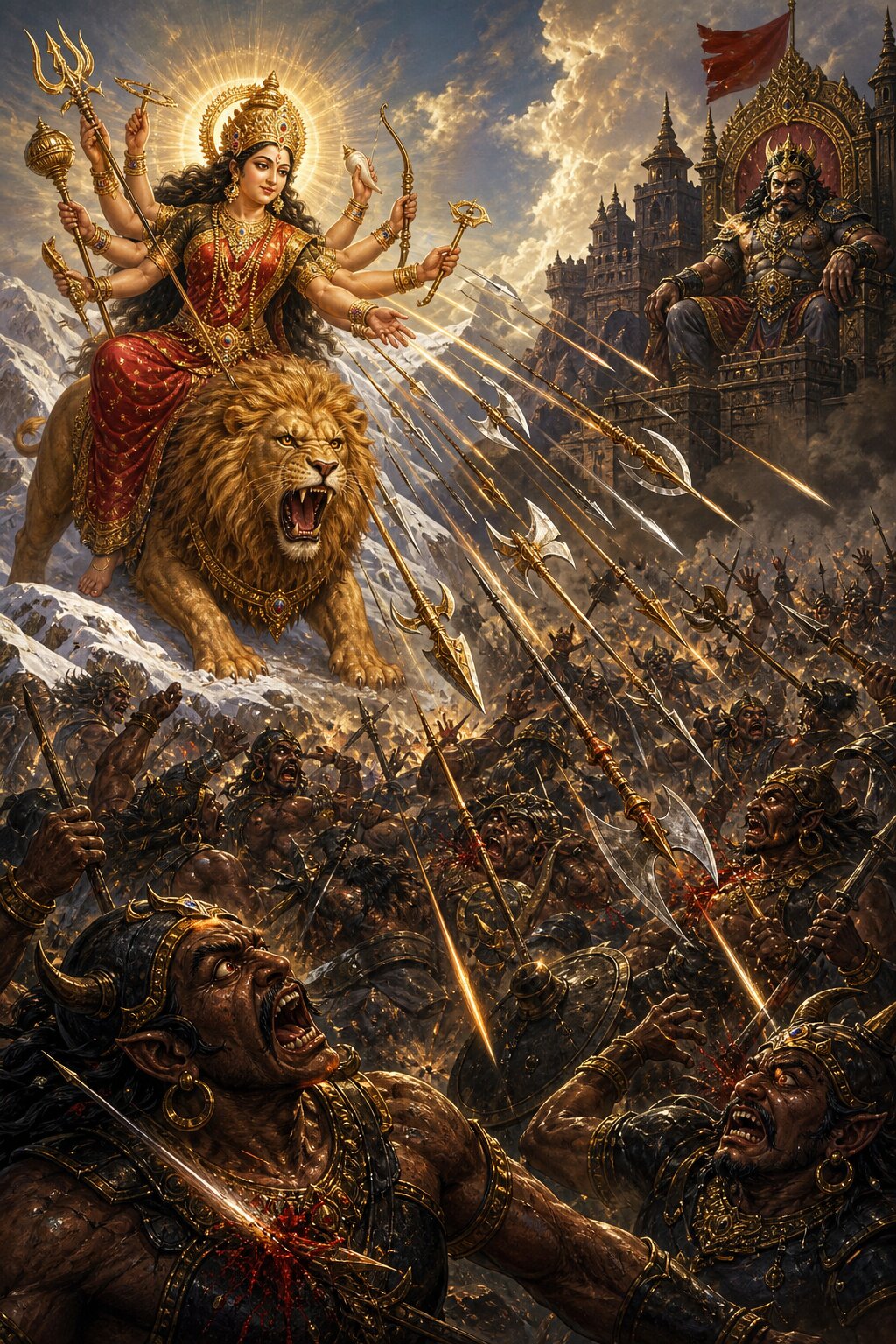
The moment their general fell, the great asura army surged at the Devi in fury, sixty thousand voices howling up the slope at once, and Ambika met them with a rain of sharp arrows, javelins, and battle-axes. And then the Devi’s own mount, the lion, shook out its mane, gave a roar of terrifying rage that rolled from ridge to ridge, and dropped into the asura ranks, so that the Devi had no further need to lift her own hand.
12 · 13
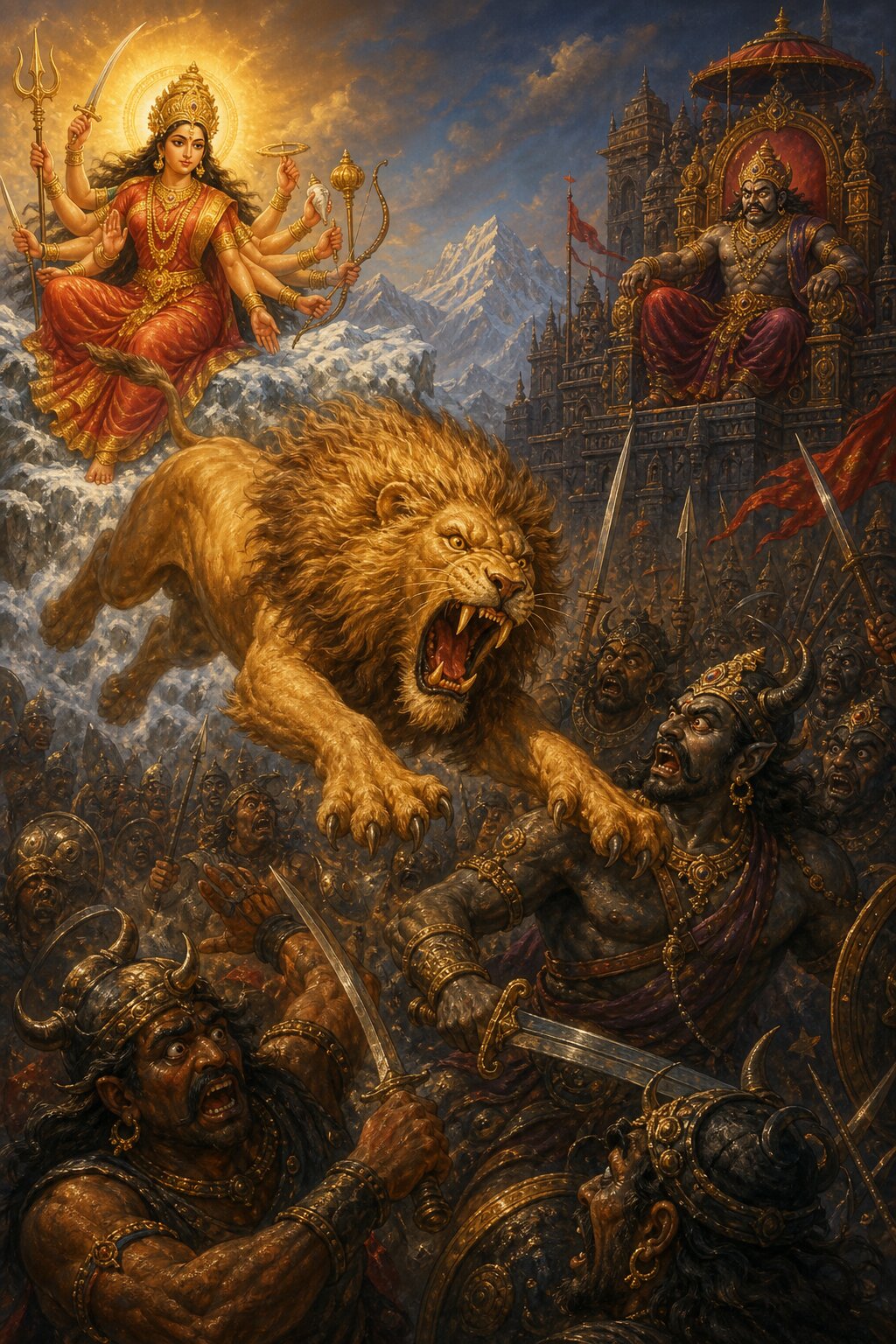
The lion went through the great asuras one by one, crushing some under a blow of its fore-paw, seizing some in its jaws, and throwing the mightiest of them down to tear them with the fangs behind its lips. The tawny one ripped open bellies with its claws, and with a single cuffing blow of its paw sent head after head clean off its body. Fore-paw and fang, jaw and claw and mane: every limb of that beast became death for the great asuras, and the snow around it lost its whiteness.
14 · 15
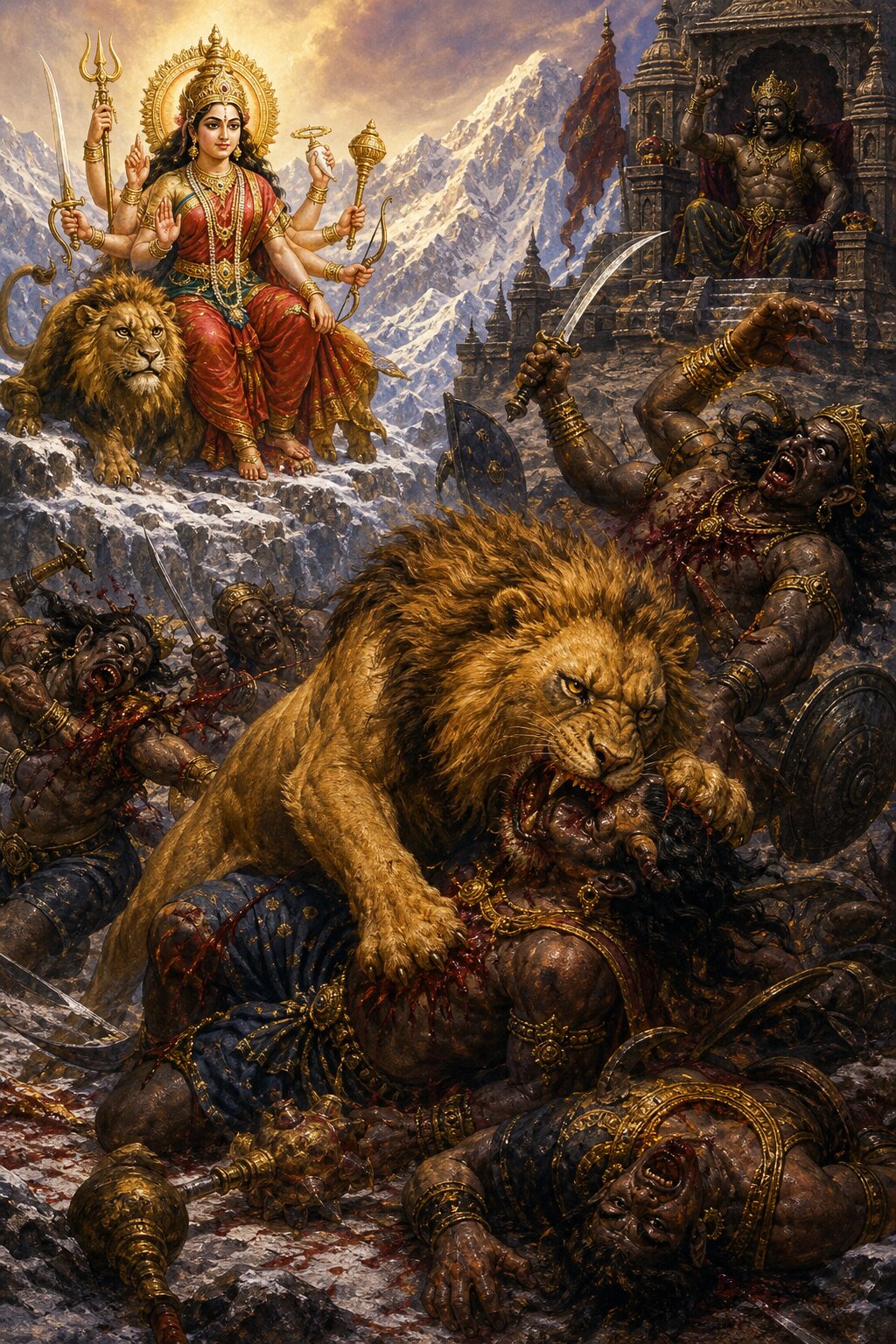
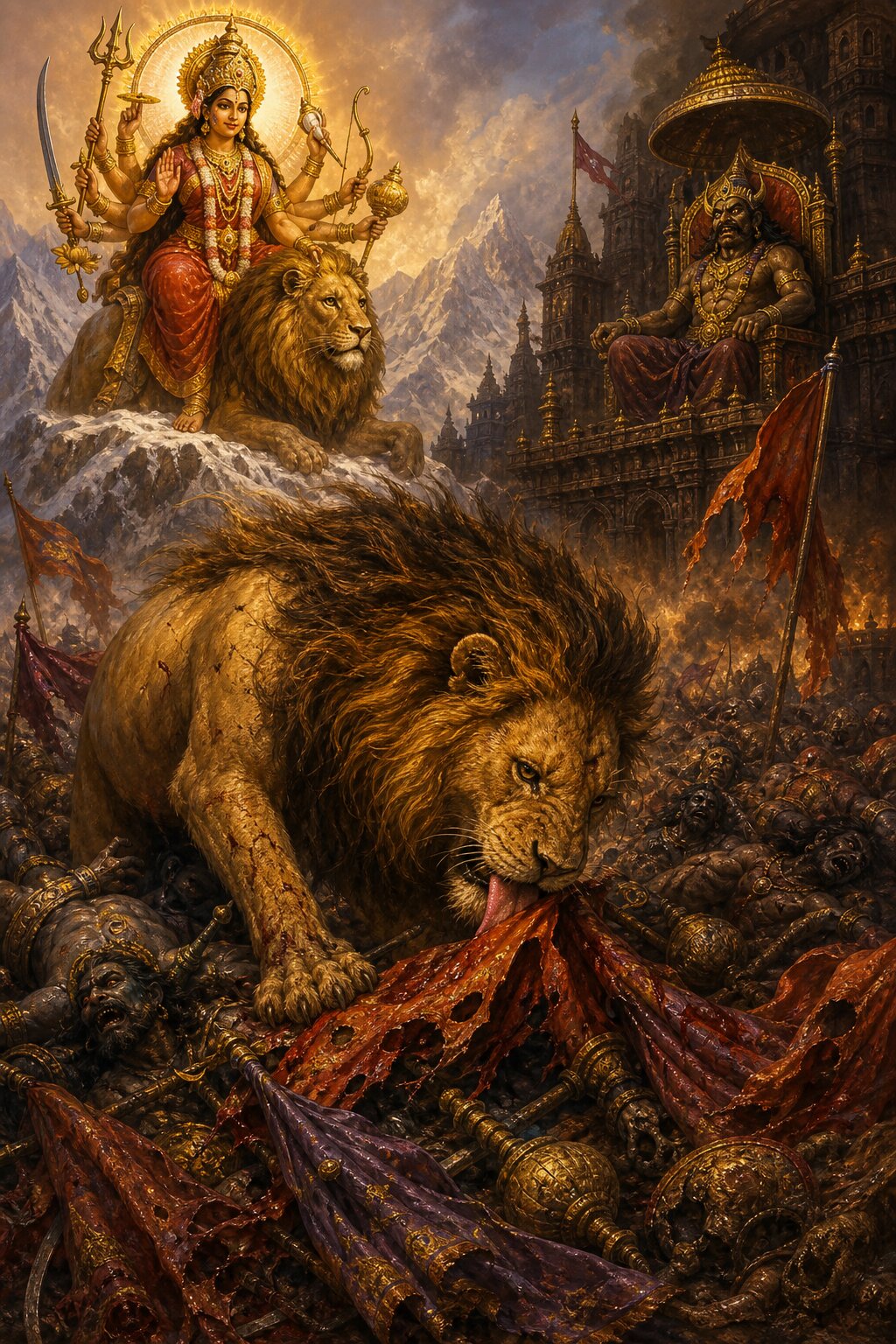
Asuras with severed arms and severed heads lay strewn across the field, and the lion, mane still shaking, lowered its head and drank the very blood from the bellies of others. Within moments that entire force was brought to ruin by that utterly furious lion who carried the Devi, while she watched from above and let her mount finish what her one syllable had begun. Sixty thousand had marched up the mountain to spread terror, and this one lion, alone, ended them in the space of a breath.
16 · 17
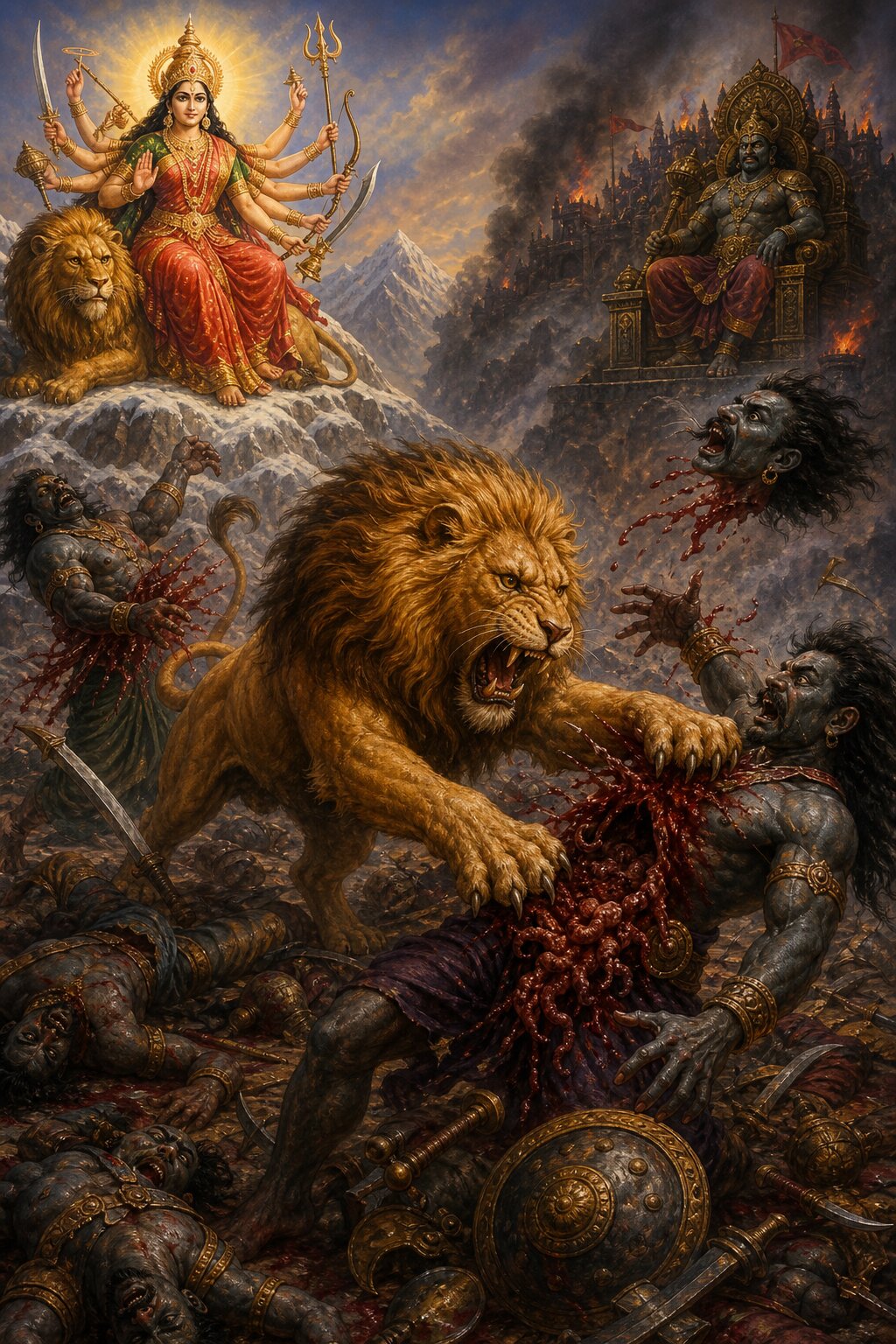
The general burned to ash, the whole army finished: this was the news that traveled back down the mountain to Shumbha, and no telling could soften it. At the word that Dhumralochana had been slain by the Devi and the entire force destroyed by the Devi’s lion, the sovereign of the daityas shook with rage, his lips quivering beyond his command, and he turned to two more of his great asuras, Chanda and Munda, the same two who had first carried him word of her beauty, with a new command.
18 · 19
Chanda, Munda, he said, go there with armies upon armies around you, and bring that Devi back quickly, delivered into my presence. This time Shumbha sent two generals in place of one, with a still larger host at their backs, and repeated the same old error unchanged, for it never once crossed his mind that the fault might lie in the errand itself. He went on: drag her by the hair and bind her; and if any doubt of the fight should arise, then let every weapon, and the strength of every asura, kill her right there.
20
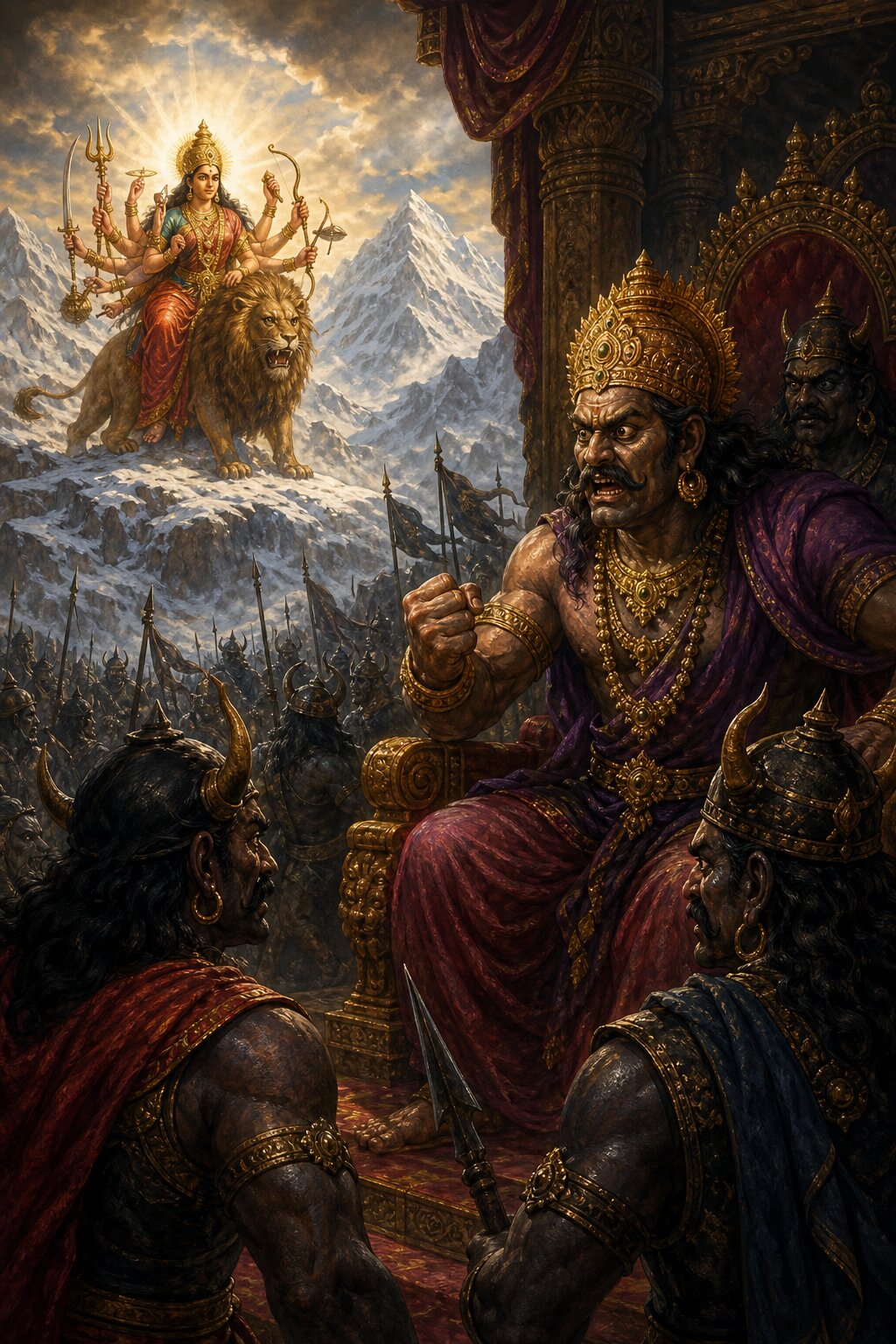
Once that wicked one is slain and the lion brought down, seize Ambika, bind her, and return at once: this was the last order Shumbha gave before he fell silent, an order in which slaying her and binding her sat side by side, as if even he no longer knew which of the two he believed possible. Soon Chanda and Munda would stand with their army before the Devi, and out of her darkened brow would step a thing the three worlds had never seen.
Ahead
The seventh chapter brings the slaying of Chanda and Munda. From the Devi’s wrath Kali (Kalika) springs out of her brow, and the moment Chanda and Munda fall into her hands their heads are struck off; from this Kali earns a new name, “Chamunda”.