Textual context
Rest in the Self is the nineteenth chapter: atma-vishranti, repose within the atman. The word rest arrives here in a fresh sense. It names a condition in a person’s own depths where nothing is left to do, and it runs far deeper than any pause or holiday a king might grant himself.
In modern times Rabindranath Tagore carried the same mood of repose into the Bengali of Gitanjali (1910), the songs that brought him the Nobel Prize in 1913, and a reader who knows those songs will hear their quiet under Janaka’s questions.
Rest in the Self
Rest in one’s own glory · 8 shlokas
Eight shlokas from Janaka. Six of them close on the same line, “svamahimni sthitasya me”, for me, abiding in my own glory, and the chapter is built as a string of questions, each beginning with the word kva, where. Janaka asks after one category after another and finds none of them in the place where he now stands.
The whole force of the chapter rests on self-repose, rest within the atman: a settled condition in which no effort is left. It stands close to what the Buddhist tradition calls passaddhi, tranquility, counted among the seven factors of awakening, though the two currents rose from separate roots.
So far
After liberation in life, self-repose. Janaka asks where everything has gone.
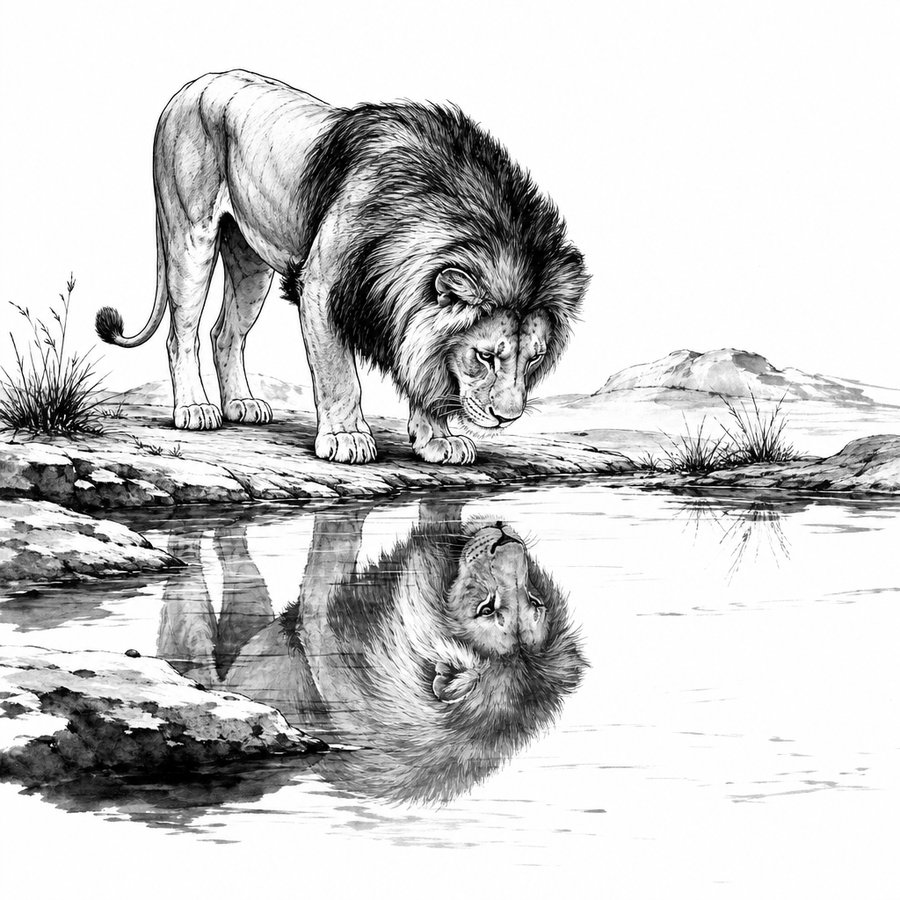
Janaka begins with an image from a physician’s room. Judgments and opinions of every kind lie lodged in the heart the way thorns lie in flesh, and a thorn in the flesh cannot be worked out by the fingers alone; it needs a pair of tongs. The knowledge of the real, he says, is that pair of tongs. He took it up, reached into the depths of his own heart, and drew the thorns out one by one. A king’s heart holds more such thorns than most, every verdict he has given and every grudge he has kept, and he describes the pulling as finished.
Shloka 1
With the tongs of the knowledge of truth I have drawn out, from deep in my heart, the thorn of judgments of every kind.
Once the thorns are gone, what remains is the I that rests in its own glory, and from that stillness Janaka begins to ask where things have gone. Where is dharma, where is desire, where is wealth, where is the discernment that sorts good from bad: the four pillars a court is built on, and he finds none of them in the place he stands. The distinction between duality and non-duality, the question the hall’s philosophers have argued for years, comes to rest there too, because the one who drew the distinction is absorbed in himself. Then the frame of time gives way. Where is the past, where is what is to come, where even is this present; where is place, and where even is the eternal, for the one who sits in his own glory.
Shloka 2 · 3
For me, abiding in my own glory, where is duty, where is pleasure, where is wealth, where is discrimination? Where is duality, and where non-duality?
For me, abiding in my own glory, where is the past, where the future, where even the present? Where is space, and where the eternal?
Now Janaka lets go of distinctions deeper still. Vedanta builds its whole inquiry on the difference between the atman and what is other than the atman; Janaka asks where even that difference is. Where is the self, where is the not-self, where is good, where is evil, where is worry and where its absence. Then he lets go of the three states through which every life turns. Where is waking, where is dream, where is deep sleep; and the fourth state the teachers call turiya, where is that too, and where at all is fear, for the one who stands in his own glory.
Shloka 4 · 5
For me, abiding in my own glory, where is self and where not-self, where good and where evil, where thought and where the absence of thought?
For me, abiding in my own glory, where is dream, where deep sleep, where waking? Where is the fourth state, and where even fear?
Now the last net, the one woven of space, slips from his hand. Where is far, where is near, where is outside, where is inside, where is the gross, where is the subtle; consciousness takes no measure, and it has no near shore or far shore. Then he crosses the border where all fear is born, the one between life and death. Where is death, where is life, where are the worlds, where is the business of the worlds; even dissolution and samadhi, where are they. For the one already seated where samadhi was supposed to lead, samadhi is one more word, and the I that rests in its own glory has no use for it.
Shloka 6 · 7
For me, abiding in my own glory, where is far and where near, where outside and where inside, where gross and where subtle?
For me, abiding in my own glory, where is death and where life, where are the worlds and where the affairs of the world? Where is dissolution, and where samadhi?
At the end Janaka says one word three times, “alam”, enough. Enough of talk about the three aims of life, dharma, wealth and desire, the trivarga a prince is trained in from boyhood. Enough of talk about yoga. Enough of talk about the knowledge of the real, even that. For the one who has found rest in the atman no further talk is needed, and the king who began the dialogue by asking three questions ends this chapter by declining to discuss the answers. The nineteenth chapter comes to rest in the same place he does.
Shloka 8
Enough of talk about the three aims of life, enough of talk about yoga, enough of talk about knowledge. I rest in the self.