On this page
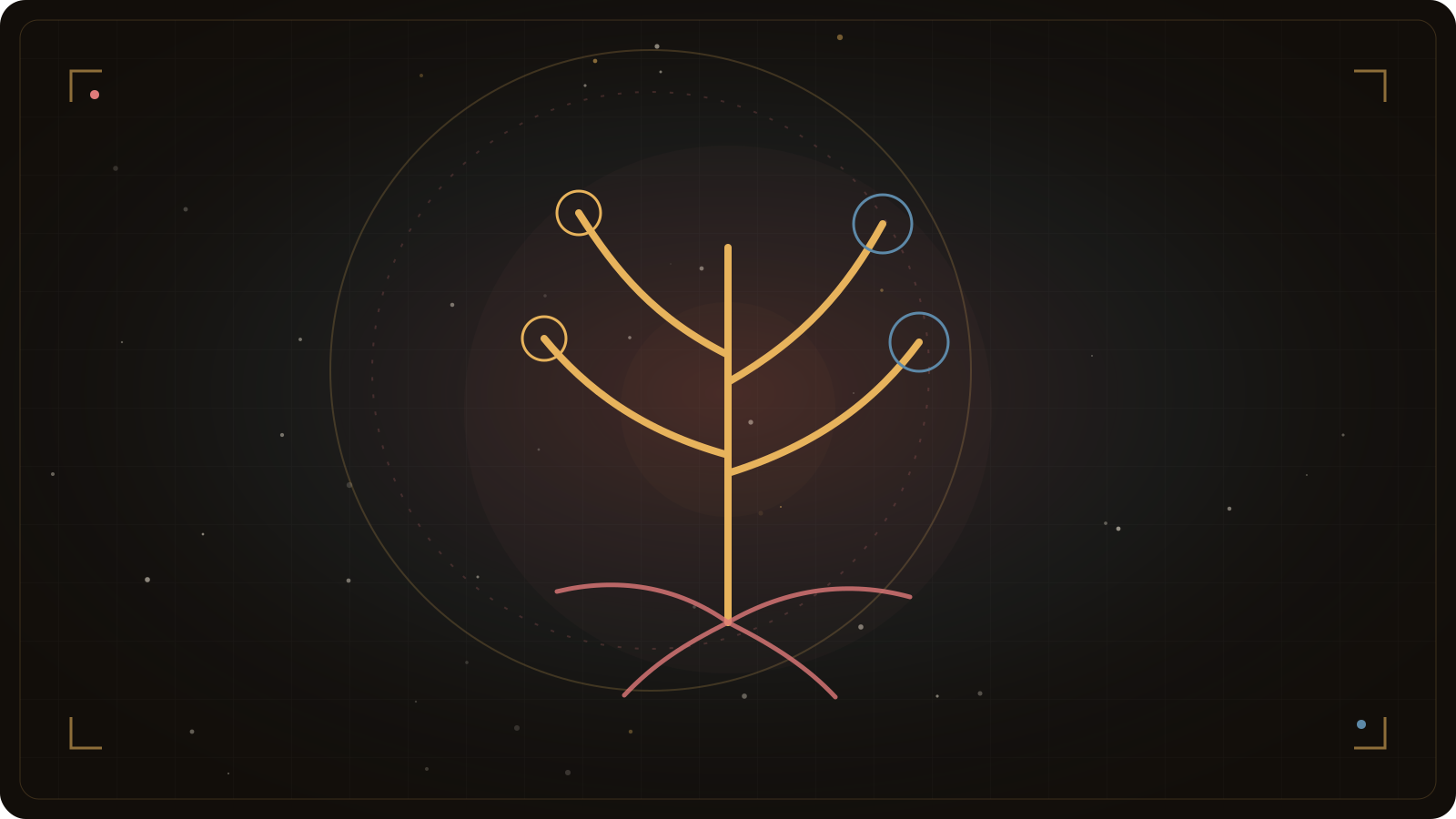
The gist: the eighth chapter opens with a volley of questions from Arjuna and comes to rest on one deep law, that whatever a person remembers in the final moment becomes the direction of the journey that follows. Folded into this are the imperishable akshara, the chanting of Om, the two unmanifests that lie behind all that appears, and the two paths of departure, one of which brings the traveler back and one of which never does.
Moments ago Krishna had let a few words fall at the very edge of his speech, and Arjuna’s mind had snagged on them. Now Arjuna asks him to open them up. He folds his hands and says, Purushottama, what is that Brahman? What goes by the name adhyatma? What does karma mean? What should be understood by adhibhuta, and what by adhidaiva? Who is the adhiyajna, and how does he dwell inside this body? And the deepest question of all: at the hour of departure, when a man must let the body go, how are you to be known by those who have steadied their minds?
Krishna answers each in turn. That which is supreme and imperishable, he says, is Brahman. One’s own self, the living soul seated within each being, is what goes by the name adhyatma. The creative outpouring by which beings come into existence and are carried forward, that act of release, is karma. All perishable things make up the adhibhuta. The radiant cosmic Person, Brahma the creator, first-born and lord of all the gods, is the adhidaiva. And here inside this very body it is we ourselves, seated as the silent witness within, who are the adhiyajna.
Remembrance at the final hour
With that said, Krishna comes to the law that is the very breath of this whole chapter. Kaunteya, he says, whatever a man carries in his mind as he lets go of the body at the end, that alone he moves toward next.
अन्तकाले च मामेव स्मरन्मुक्त्वा कलेवरम्।
यः प्रयाति स मद्भावं याति नास्त्यत्र संशयः॥
The one who departs from this body remembering us alone in the final moment reaches our very nature; in this there is no doubt. (Gita 8.5)
यं यं वापि स्मरन्भावं त्यजत्यन्ते कलेवरम्।
तं तमेवैति कौन्तेय सदा तद्भावभावितः॥
Whatever state a person remembers while leaving the body at the last, Kaunteya, that alone is what they reach, because their whole life long they had been steeped in that very state. (Gita 8.6)
Arjuna gauges the depth of this. The final moment is a sum, the total of a whole life’s thinking; nothing about it drops out of the sky. Whatever a person spent a lifetime remembering will rise on its own and stand before them at the last breath. This is why Krishna presses him. Remember us at every hour, he says, and fight this battle that is yours to fight. Keep your mind and your reason fixed on us, and you will come to us, past any shadow of doubt.
One syllable, Om
Then Krishna points to the practice by which the mind holds steady all the way to the end. The one who trains the mind through steady meditation and lets it wander toward nothing else, he says, who draws the senses inward, gathers the mind in the heart, and by the power of yoga lifts the life-breath to the crown of the head, and who leaves the body sounding that one imperishable syllable Om while remembering us, reaches the supreme goal. This Om is the single indestructible syllable that is Brahman itself, the seed-sound in which the whole of the Veda lies gathered.
Krishna also paints the supreme Person on whom the mind is to be fixed. He is all-knowing and ancient, the ruler of all, subtler than the atom, the sustainer of everything, a form past all imagining, luminous as the sun on the far side of every darkness. Whoever holds that Person in mind with love and unswerving bhakti (devotion), settling the life-breath between the brows by the strength of yoga at the very hour of departure, travels all the way to that radiant, supreme Person.
And he offers an assurance. For the one who remembers us without a break, with a mind that admits nothing else, for that ever-yoked yogi we are easy to reach. Such a devotee needs no elaborate contriving to arrive.
Krishna carries the promise one step further. The realized devotees who reach Krishna, having come to the highest perfection, are not born again into this house of sorrow that keeps changing its shape and never lasts.
Brahma’s day and night
Krishna sets this against the reach of the worlds themselves. Every world, he says, from Brahma’s own realm at the summit of creation down to the lowest, rises and falls in its season and sends its dwellers back to birth. Only the one who reaches us comes back no more.
Then Krishna turns to the vast wheel of time, against which a human life shrinks to a single instant. One day of Brahma, he says, stretches across a thousand cycles of the four yugas, a span the seers name a kalpa, and his night, the great dissolution, runs just as long. When that day dawns, all beings pour out of the unmanifest into form, and when the night comes down, the same beings sink back into that unmanifest. So it turns, again and again, with no say of their own for the beings caught in it, an unstopping cycle of birth and dissolution.
But Krishna does not stop there. Beyond all this appearing and disappearing, he says, stands another unmanifest, older and deeper than the first, the eternal one that endures even when every other thing perishes. That is our supreme abode. Whoever reaches it once never again returns to this coming and going. That supreme Person holds all beings within himself and reaches out through everything that exists, and there is a single road to him, an undivided devotion, a love that turns nowhere else. Arjuna sees where the true aim of practice points, past the worlds that form and scatter with time, to the one abode that never moves.
The two paths
Last of all, Krishna describes the two roads by which a soul leaves the body, roads he calls as old as the world itself. One is the road of light, running through fire, through day, through the bright fortnight, and through the six months of the sun’s northward course. The yogi who knows Brahman and takes this road reaches Brahman and never comes back. The other is the road of smoke, running through night, through the dark fortnight, and through the sun’s southward course. Whoever goes by it rises to the light of the moon, drinks the pleasures earned by his good deeds, and then returns to the world once more.
Krishna says, Partha, the yogi who knows both these roads falls into no delusion. So stay steady in yoga through every season, and keep your mind leaning toward us. And the one who takes this whole truth to heart, he says, walks past every reward the scriptures promise for study of the Vedas, for sacrifice, for austerity, for charity, and arrives at the primal, supreme abode. The one who grasps all this fears neither the living nor the dying.
As he listens, a quietness settles into Arjuna. Death, which only moments ago stood at the mouth of this war as the largest of all fears, begins to look like a doorway, and the road through it runs inside his own mind.
Source: Srimad Bhagavad Gita
Verse by verse
All 28 verses of this chapter: Devanagari, Roman transliteration, word by word, prose order, and a plain rendering. Every verse has its own link, such as lulla.net/en/bhagwad-gita/8/1/. Read the chapter above first, then come down to the source.
8.1किं तद्ब्रह्म किमध्यात्मं किं कर्म पुरुषोत्तम
अर्जुन उवाच
किं तद्ब्रह्म किमध्यात्मं किं कर्म पुरुषोत्तम ।
अधिभूतं च किं प्रोक्तमधिदैवं किमुच्यते ॥1॥
kiṃ tad brahma kim adhyātmaṃ kiṃ karma puruṣottama |
adhibhūtaṃ ca kiṃ proktam adhidaivaṃ kim ucyate
- किम्
- क्या है
- तत्
- वह
- ब्रह्म
- ब्रह्म
- किम्
- क्या है
- अध्यात्मम्
- अध्यात्म
- किम्
- क्या है
- कर्म
- कर्म
- पुरुषोत्तम
- हे पुरुषोत्तम
- अधिभूतम्
- अधिभूत
- च
- और
- किम्
- क्या
- प्रोक्तम्
- कहा गया है
- अधिदैवम्
- अधिदैव
- किम्
- क्या
- उच्यते
- कहा जाता है
Prose order: पुरुषोत्तम, तत् ब्रह्म किम्? अध्यात्मम् किम्? कर्म किम्? अधिभूतम् च किम् प्रोक्तम्? अधिदैवम् किम् उच्यते?
puruṣottama, tat brahma kim? adhyātmam kim? karma kim? adhibhūtam ca kim proktam? adhidaivam kim ucyate?
Purushottama, what is that Brahman, what is adhyatma, and what is karma? What is said to be adhibhuta, and what is called adhidaiva?
8.2अधियज्ञः कथं कोऽत्र देहेऽस्मिन्मधुसूदन
अधियज्ञः कथं कोऽत्र देहेऽस्मिन्मधुसूदन ।
प्रयाणकाले च कथं ज्ञेयोऽसि नियतात्मभिः ॥2॥
adhiyajñaḥ kathaṃ ko ’tra dehe ’smin madhusūdana |
prayāṇakāle ca kathaṃ jñeyo ’si niyatātmabhiḥ
- अधियज्ञः
- अधियज्ञ
- कथम्
- कैसे है
- कः
- कौन है
- अत्र
- यहाँ
- देहे
- देह में
- अस्मिन्
- इस
- मधुसूदन
- हे मधुसूदन
- प्रयाणकाले
- मृत्यु के समय
- च
- और
- कथम्
- किस प्रकार
- ज्ञेयः
- जानने योग्य
- असि
- हैं आप
- नियतात्मभिः
- संयत चित्त वालों द्वारा
Prose order: मधुसूदन, अत्र अस्मिन् देहे अधियज्ञः कः, कथम्? प्रयाणकाले च नियतात्मभिः (त्वम्) कथम् ज्ञेयः असि?
madhusūdana, atra asmin dehe adhiyajñaḥ kaḥ, katham? prayāṇakāle ca niyatātmabhiḥ (tvam) katham jñeyaḥ asi?
Madhusudana, who is the adhiyajna here in this body, and how is he so? And at the time of departure, how are you to be known by those of disciplined mind?
8.3अक्षरं ब्रह्म परमं स्वभावोऽध्यात्ममुच्यते
श्रीभगवानुवाच
अक्षरं ब्रह्म परमं स्वभावोऽध्यात्ममुच्यते ।
भूतभावोद्भवकरो विसर्गः कर्मसंज्ञितः ॥3॥
akṣaraṃ brahma paramaṃ svabhāvo ’dhyātmam ucyate |
bhūtabhāvodbhavakaro visargaḥ karmasaṃjñitaḥ
- अक्षरम्
- अविनाशी
- ब्रह्म
- ब्रह्म है
- परमम्
- परम
- स्वभावः
- अपना स्वरूप (जीवात्मा)
- अध्यात्मम्
- अध्यात्म
- उच्यते
- कहा जाता है
- भूतभावोद्भवकरः
- प्राणियों के भाव उत्पन्न करने वाला
- विसर्गः
- त्याग (यज्ञ रूप)
- कर्मसंज्ञितः
- कर्म नाम से कहा गया है
Prose order: परमम् अक्षरम् ब्रह्म (अस्ति)। स्वभावः अध्यात्मम् उच्यते। भूतभावोद्भवकरः विसर्गः कर्मसंज्ञितः।
paramam akṣaram brahma (asti)| svabhāvaḥ adhyātmam ucyate| bhūtabhāvodbhavakaraḥ visargaḥ karmasaṃjñitaḥ|
The supreme imperishable is Brahman, and one’s own nature, the embodied self, is called adhyatma. The offering that brings forth the being of creatures is known as karma.
8.4अधिभूतं क्षरो भावः पुरुषश्चाधिदैवतम्
अधिभूतं क्षरो भावः पुरुषश्चाधिदैवतम् ।
अधियज्ञोऽहमेवात्र देहे देहभृतां वर ॥4॥
adhibhūtaṃ kṣaro bhāvaḥ puruṣaś cādhidaivatam |
adhiyajño ’ham evātra dehe dehabhṛtāṃ vara
- अधिभूतम्
- अधिभूत है
- क्षरः
- नाशवान
- भावः
- पदार्थ
- पुरुषः
- पुरुष (हिरण्यगर्भ)
- च
- और
- अधिदैवतम्
- अधिदैव है
- अधियज्ञः
- अधियज्ञ
- अहम्
- मैं
- एव
- ही
- अत्र
- यहाँ
- देहे
- देह में
- देहभृताम्
- देहधारियों में
- वर
- हे श्रेष्ठ
Prose order: क्षरः भावः अधिभूतम्, पुरुषः च अधिदैवतम्। देहभृताम् वर, अत्र देहे अहम् एव अधियज्ञः।
kṣaraḥ bhāvaḥ adhibhūtam, puruṣaḥ ca adhidaivatam| dehabhṛtām vara, atra dehe aham eva adhiyajñaḥ|
The perishable existence is adhibhuta, and the Purusha, the cosmic person, is adhidaiva. Here in this body I myself am the adhiyajna, best of embodied beings.
8.5अन्तकाले च मामेव स्मरन्मुक्त्वा कलेवरम्
अन्तकाले च मामेव स्मरन्मुक्त्वा कलेवरम् ।
यः प्रयाति स मद्भावं याति नास्त्यत्र संशयः ॥5॥
antakāle ca mām eva smaran muktvā kalevaram |
yaḥ prayāti sa madbhāvaṃ yāti nāsty atra saṃśayaḥ
- अन्तकाले
- अन्तकाल में
- च
- और
- माम्
- मुझे
- एव
- ही
- स्मरन्
- स्मरण करता हुआ
- मुक्त्वा
- छोड़कर
- कलेवरम्
- शरीर को
- यः
- जो
- प्रयाति
- जाता है
- सः
- वह
- मद्भावम्
- मेरे स्वरूप को
- याति
- प्राप्त होता है
- न
- नहीं
- अस्ति
- है
- अत्र
- इसमें
- संशयः
- संशय
Prose order: यः च अन्तकाले माम् एव स्मरन् कलेवरम् मुक्त्वा प्रयाति, सः मद्भावम् याति। अत्र संशयः न अस्ति।
yaḥ ca antakāle mām eva smaran kalevaram muktvā prayāti, saḥ madbhāvam yāti| atra saṃśayaḥ na asti|
Whoever at the final hour departs, leaving the body while remembering me alone, attains my own being. There is no doubt about this.
8.6यं यं वापि स्मरन्भावं त्यजत्यन्ते कलेवरम्
यं यं वापि स्मरन्भावं त्यजत्यन्ते कलेवरम् ।
तं तमेवैति कौन्तेय सदा तद्भावभावितः ॥6॥
yaṃ yaṃ vāpi smaran bhāvaṃ tyajaty ante kalevaram |
taṃ tam evaiti kaunteya sadā tadbhāvabhāvitaḥ
- यम् यम्
- जिस जिस
- वा
- भी
- अपि
- ही
- स्मरन्
- स्मरण करता हुआ
- भावम्
- भाव को
- त्यजति
- छोड़ता है
- अन्ते
- अन्त में
- कलेवरम्
- शरीर को
- तम् तम्
- उस उस को
- एव
- ही
- एति
- प्राप्त होता है
- कौन्तेय
- हे कौन्तेय
- सदा
- सदा
- तद्भावभावितः
- उस भाव से भावित हुआ
Prose order: कौन्तेय, यम् यम् वा अपि भावम् स्मरन् अन्ते कलेवरम् त्यजति, सदा तद्भावभावितः तम् तम् एव एति।
kaunteya, yam yam vā api bhāvam smaran ante kalevaram tyajati, sadā tadbhāvabhāvitaḥ tam tam eva eti|
Kaunteya, whatever state of being a person remembers when leaving the body at the end, that very state he reaches, having always been absorbed in that thought.
8.7तस्मात्सर्वेषु कालेषु मामनुस्मर युध्य च
तस्मात्सर्वेषु कालेषु मामनुस्मर युध्य च ।
मय्यर्पितमनोबुद्धिर्मामेवैष्यस्यसंशयः ॥7॥
tasmāt sarveṣu kāleṣu mām anusmara yudhya ca |
mayy arpitamanobuddhir mām evaiṣyasy asaṃśayaḥ
- तस्मात्
- इसलिए
- सर्वेषु
- सब
- कालेषु
- समयों में
- माम्
- मेरा
- अनुस्मर
- निरन्तर स्मरण कीजिए
- युध्य
- युद्ध कीजिए
- च
- और
- मयि
- मुझमें
- अर्पितमनोबुद्धिः
- मन बुद्धि अर्पित किए हुए
- माम्
- मुझे
- एव
- ही
- एष्यसि
- प्राप्त होंगे
- असंशयः
- निःसंदेह
Prose order: तस्मात् सर्वेषु कालेषु माम् अनुस्मर, युध्य च। मयि अर्पितमनोबुद्धिः असंशयः माम् एव एष्यसि।
tasmāt sarveṣu kāleṣu mām anusmara, yudhya ca| mayi arpitamanobuddhiḥ asaṃśayaḥ mām eva eṣyasi|
Therefore remember me at all times and fight. With your mind and understanding offered to me, you will surely come to me alone.
8.8अभ्यासयोगयुक्तेन चेतसा नान्यगामिना
अभ्यासयोगयुक्तेन चेतसा नान्यगामिना ।
परमं पुरुषं दिव्यं याति पार्थानुचिन्तयन् ॥8॥
abhyāsayogayuktena cetasā nānyagāminā |
paramaṃ puruṣaṃ divyaṃ yāti pārthānucintayan
- अभ्यासयोगयुक्तेन
- अभ्यास योग से युक्त
- चेतसा
- चित्त से
- न
- नहीं
- अन्यगामिना
- अन्यत्र जाने वाले
- परमम्
- परम
- पुरुषम्
- पुरुष को
- दिव्यम्
- दिव्य
- याति
- प्राप्त होता है
- पार्थ
- हे पार्थ
- अनुचिन्तयन्
- निरन्तर चिन्तन करता हुआ
Prose order: पार्थ, अभ्यासयोगयुक्तेन न अन्यगामिना चेतसा अनुचिन्तयन् परमम् दिव्यम् पुरुषम् याति।
pārtha, abhyāsayogayuktena na anyagāminā cetasā anucintayan paramam divyam puruṣam yāti|
Partha, one who meditates without pause, with a mind trained by the yoga of constant practice and turned nowhere else, reaches the supreme divine Purusha.
8.9कविं पुराणमनुशासितारमणोरणीयांसमनुस्मरेद्यः
कविं पुराणमनुशासितारमणोरणीयांसमनुस्मरेद्यः ।
सर्वस्य धातारमचिन्त्यरूपमादित्यवर्णं तमसः परस्तात् ॥9॥
kaviṃ purāṇam anuśāsitāram aṇor aṇīyāṃsam anusmared yaḥ |
sarvasya dhātāram acintyarūpam ādityavarṇaṃ tamasaḥ parastāt
- कविम्
- सर्वज्ञ
- पुराणम्
- अनादि
- अनुशासितारम्
- सबके नियामक
- अणोः
- अणु से
- अणीयांसम्
- भी सूक्ष्म
- अनुस्मरेत्
- स्मरण करे
- यः
- जो
- सर्वस्य
- सबके
- धातारम्
- धारण पोषण करने वाले
- अचिन्त्यरूपम्
- अचिन्त्य स्वरूप
- आदित्यवर्णम्
- सूर्य के समान प्रकाशमान
- तमसः
- अज्ञान अन्धकार से
- परस्तात्
- परे
Prose order: यः कविम् पुराणम् अनुशासितारम् अणोः अणीयांसम् सर्वस्य धातारम् अचिन्त्यरूपम् आदित्यवर्णम् तमसः परस्तात् (पुरुषम्) अनुस्मरेत्,
yaḥ kavim purāṇam anuśāsitāram aṇoḥ aṇīyāṃsam sarvasya dhātāram acintyarūpam ādityavarṇam tamasaḥ parastāt (puruṣam) anusmaret,
Whoever remembers the all-knowing, the ancient, the ruler of all, subtler than the subtlest, the sustainer of everything, of inconceivable form, radiant like the sun and beyond the darkness.
8.10प्रयाणकाले मनसाचलेन भक्त्या युक्तो योगबलेन चैव
प्रयाणकाले मनसाचलेन भक्त्या युक्तो योगबलेन चैव ।
भ्रुवोर्मध्ये प्राणमावेश्य सम्यक्स तं परं पुरुषमुपैति दिव्यम् ॥10॥
prayāṇakāle manasācalena bhaktyā yukto yogabalena caiva |
bhruvor madhye prāṇam āveśya samyak sa taṃ paraṃ puruṣam upaiti divyam
- प्रयाणकाले
- मृत्यु के समय
- मनसा
- मन से
- अचलेन
- अचल
- भक्त्या
- भक्ति से
- युक्तः
- युक्त
- योगबलेन
- योग के बल से
- च
- और
- एव
- भी
- भ्रुवोः
- दोनों भौंहों के
- मध्ये
- मध्य में
- प्राणम्
- प्राण को
- आवेश्य
- स्थापित करके
- सम्यक्
- भली प्रकार
- सः
- वह
- तम्
- उस
- परम्
- परम
- पुरुषम्
- पुरुष को
- उपैति
- प्राप्त होता है
- दिव्यम्
- दिव्य
Prose order: सः प्रयाणकाले भक्त्या युक्तः योगबलेन च एव भ्रुवोः मध्ये प्राणम् सम्यक् आवेश्य अचलेन मनसा तम् परम् दिव्यम् पुरुषम् उपैति।
saḥ prayāṇakāle bhaktyā yuktaḥ yogabalena ca eva bhruvoḥ madhye prāṇam samyak āveśya acalena manasā tam param divyam puruṣam upaiti|
At the time of departure, with an unwavering mind, filled with devotion and with the power of yoga, having fixed the life breath firmly between the eyebrows, he reaches that supreme divine Purusha.
8.11यदक्षरं वेदविदो वदन्ति विशन्ति यद्यतयो वीतरागाः
यदक्षरं वेदविदो वदन्ति विशन्ति यद्यतयो वीतरागाः ।
यदिच्छन्तो ब्रह्मचर्यं चरन्ति तत्ते पदं संग्रहेण प्रवक्ष्ये ॥11॥
yad akṣaraṃ vedavido vadanti viśanti yad yatayo vītarāgāḥ |
yad icchanto brahmacaryaṃ caranti tat te padaṃ saṃgraheṇa pravakṣye
- यत्
- जिसको
- अक्षरम्
- अक्षर
- वेदविदः
- वेद के ज्ञाता
- वदन्ति
- कहते हैं
- विशन्ति
- प्रवेश करते हैं
- यत्
- जिसमें
- यतयः
- यत्नशील संन्यासी
- वीतरागाः
- राग रहित
- यत्
- जिसको
- इच्छन्तः
- चाहते हुए
- ब्रह्मचर्यम्
- ब्रह्मचर्य का
- चरन्ति
- आचरण करते हैं
- तत्
- उस
- ते
- आपको
- पदम्
- पद को
- संग्रहेण
- संक्षेप में
- प्रवक्ष्ये
- कहूँगा
Prose order: वेदविदः यत् अक्षरम् वदन्ति, वीतरागाः यतयः यत् विशन्ति, यत् इच्छन्तः ब्रह्मचर्यम् चरन्ति, तत् पदम् ते संग्रहेण प्रवक्ष्ये।
vedavidaḥ yat akṣaram vadanti, vītarāgāḥ yatayaḥ yat viśanti, yat icchantaḥ brahmacaryam caranti, tat padam te saṃgraheṇa pravakṣye|
That which the knowers of the Veda call the imperishable, which the striving ascetics free from passion enter, and desiring which they practice celibacy, that goal I will declare to you in brief.
8.12सर्वद्वाराणि संयम्य मनो हृदि निरुध्य च
सर्वद्वाराणि संयम्य मनो हृदि निरुध्य च ।
मूर्ध्न्याधायात्मनः प्राणमास्थितो योगधारणाम् ॥12॥
sarvadvārāṇi saṃyamya mano hṛdi nirudhya ca |
mūrdhny ādhāyātmanaḥ prāṇam āsthito yogadhāraṇām
- सर्वद्वाराणि
- सब इन्द्रिय द्वारों को
- संयम्य
- रोककर
- मनः
- मन को
- हृदि
- हृदय में
- निरुध्य
- स्थिर करके
- च
- और
- मूर्ध्नि
- मस्तक में
- आधाय
- स्थापित करके
- आत्मनः
- अपने
- प्राणम्
- प्राण को
- आस्थितः
- स्थित हुआ
- योगधारणाम्
- योग धारणा में
Prose order: सर्वद्वाराणि संयम्य, मनः हृदि निरुध्य, आत्मनः प्राणम् मूर्ध्नि आधाय च योगधारणाम् आस्थितः,
sarvadvārāṇi saṃyamya, manaḥ hṛdi nirudhya, ātmanaḥ prāṇam mūrdhni ādhāya ca yogadhāraṇām āsthitaḥ,
Having closed all the gates of the body, having confined the mind in the heart, and having fixed one’s own life breath in the head, one is established in yogic concentration.
8.13ओमित्येकाक्षरं ब्रह्म व्याहरन्मामनुस्मरन्
ओमित्येकाक्षरं ब्रह्म व्याहरन्मामनुस्मरन् ।
यः प्रयाति त्यजन्देहं स याति परमां गतिम् ॥13॥
om ity ekākṣaraṃ brahma vyāharan mām anusmaran |
yaḥ prayāti tyajan dehaṃ sa yāti paramāṃ gatim
- ओम्
- ओम्
- इति
- इस
- एकाक्षरम्
- एक अक्षर रूप
- ब्रह्म
- ब्रह्म का
- व्याहरन्
- उच्चारण करता हुआ
- माम्
- मेरा
- अनुस्मरन्
- निरन्तर स्मरण करता हुआ
- यः
- जो
- प्रयाति
- जाता है
- त्यजन्
- त्यागता हुआ
- देहम्
- देह को
- सः
- वह
- याति
- प्राप्त होता है
- परमाम्
- परम
- गतिम्
- गति को
Prose order: यः ओम् इति एकाक्षरम् ब्रह्म व्याहरन् माम् अनुस्मरन् देहम् त्यजन् प्रयाति, सः परमाम् गतिम् याति।
yaḥ om iti ekākṣaram brahma vyāharan mām anusmaran deham tyajan prayāti, saḥ paramām gatim yāti|
Whoever departs, leaving the body while uttering Om, the one syllable that is Brahman, and remembering me, reaches the supreme goal.
8.14अनन्यचेताः सततं यो मां स्मरति नित्यशः
अनन्यचेताः सततं यो मां स्मरति नित्यशः ।
तस्याहं सुलभः पार्थ नित्ययुक्तस्य योगिनः ॥14॥
ananyacetāḥ satataṃ yo māṃ smarati nityaśaḥ |
tasyāhaṃ sulabhaḥ pārtha nityayuktasya yoginaḥ
- अनन्यचेताः
- अनन्य चित्त वाला
- सततम्
- निरन्तर
- यः
- जो
- माम्
- मुझे
- स्मरति
- स्मरण करता है
- नित्यशः
- नित्य
- तस्य
- उस
- अहम्
- मैं
- सुलभः
- सुलभ हूँ
- पार्थ
- हे पार्थ
- नित्ययुक्तस्य
- नित्य युक्त
- योगिनः
- योगी के लिए
Prose order: पार्थ, यः अनन्यचेताः सततम् नित्यशः माम् स्मरति, तस्य नित्ययुक्तस्य योगिनः अहम् सुलभः।
pārtha, yaḥ ananyacetāḥ satatam nityaśaḥ mām smarati, tasya nityayuktasya yoginaḥ aham sulabhaḥ|
Partha, for the yogi who is always united with me, who remembers me constantly with a mind fixed on nothing else, I am easy to reach.
8.15मामुपेत्य पुनर्जन्म दुःखालयमशाश्वतम्
मामुपेत्य पुनर्जन्म दुःखालयमशाश्वतम् ।
नाप्नुवन्ति महात्मानः संसिद्धिं परमां गताः ॥15॥
mām upetya punarjanma duḥkhālayam aśāśvatam |
nāpnuvanti mahātmānaḥ saṃsiddhiṃ paramāṃ gatāḥ
- माम्
- मुझे
- उपेत्य
- प्राप्त करके
- पुनर्जन्म
- पुनर्जन्म को
- दुःखालयम्
- दुःखों के घर
- अशाश्वतम्
- क्षणभंगुर
- न
- नहीं
- आप्नुवन्ति
- प्राप्त होते
- महात्मानः
- महात्मा जन
- संसिद्धिम्
- सिद्धि को
- परमाम्
- परम
- गताः
- प्राप्त हुए
Prose order: परमाम् संसिद्धिम् गताः महात्मानः माम् उपेत्य दुःखालयम् अशाश्वतम् पुनर्जन्म न आप्नुवन्ति।
paramām saṃsiddhim gatāḥ mahātmānaḥ mām upetya duḥkhālayam aśāśvatam punarjanma na āpnuvanti|
Having come to me, the great souls who have reached the highest perfection do not take rebirth, which is the abode of sorrow and does not last.
8.16आ ब्रह्मभुवनाल्लोकाः पुनरावर्तिनोऽर्जुन
आ ब्रह्मभुवनाल्लोकाः पुनरावर्तिनोऽर्जुन ।
मामुपेत्य तु कौन्तेय पुनर्जन्म न विद्यते ॥16॥
ā brahmabhuvanāl lokāḥ punarāvartino ’rjuna |
mām upetya tu kaunteya punarjanma na vidyate
- आ
- तक
- ब्रह्मभुवनात्
- ब्रह्मलोक
- लोकाः
- सब लोक
- पुनरावर्तिनः
- लौटकर आने वाले हैं
- अर्जुन
- हे अर्जुन
- माम्
- मुझे
- उपेत्य
- प्राप्त करके
- तु
- परन्तु
- कौन्तेय
- हे कौन्तेय
- पुनर्जन्म
- पुनर्जन्म
- न
- नहीं
- विद्यते
- होता
Prose order: अर्जुन, आ ब्रह्मभुवनात् लोकाः पुनरावर्तिनः। कौन्तेय, माम् उपेत्य तु पुनर्जन्म न विद्यते।
arjuna, ā brahmabhuvanāt lokāḥ punarāvartinaḥ| kaunteya, mām upetya tu punarjanma na vidyate|
Arjuna, all the worlds up to the realm of Brahma are places of return. But on reaching me, Kaunteya, there is no rebirth.
8.17सहस्रयुगपर्यन्तमहर्यद्ब्रह्मणो विदुः
सहस्रयुगपर्यन्तमहर्यद्ब्रह्मणो विदुः ।
रात्रिं युगसहस्रान्तां तेऽहोरात्रविदो जनाः ॥17॥
sahasrayugaparyantam ahar yad brahmaṇo viduḥ |
rātriṃ yugasahasrāntāṃ te ’horātravido janāḥ
- सहस्रयुगपर्यन्तम्
- एक हजार युगों तक का
- अहः
- दिन
- यत्
- जो
- ब्रह्मणः
- ब्रह्मा का
- विदुः
- जानते हैं
- रात्रिम्
- रात्रि को
- युगसहस्रान्ताम्
- हजार युगों में समाप्त होने वाली
- ते
- वे
- अहोरात्रविदः
- दिन रात का तत्त्व जानने वाले
- जनाः
- लोग
Prose order: (ये) ब्रह्मणः यत् अहः सहस्रयुगपर्यन्तम् रात्रिम् (च) युगसहस्रान्ताम् विदुः, ते जनाः अहोरात्रविदः।
(ye) brahmaṇaḥ yat ahaḥ sahasrayugaparyantam rātrim (ca) yugasahasrāntām viduḥ, te janāḥ ahorātravidaḥ|
Those who know that the day of Brahma lasts a thousand ages and that his night ends after a thousand ages, they are the people who truly know day and night.
8.18अव्यक्ताद्व्यक्तयः सर्वाः प्रभवन्त्यहरागमे
अव्यक्ताद्व्यक्तयः सर्वाः प्रभवन्त्यहरागमे ।
रात्र्यागमे प्रलीयन्ते तत्रैवाव्यक्तसंज्ञके ॥18॥
avyaktād vyaktayaḥ sarvāḥ prabhavanty aharāgame |
rātryāgame pralīyante tatraivāvyaktasaṃjñake
- अव्यक्तात्
- अव्यक्त से
- व्यक्तयः
- व्यक्त पदार्थ
- सर्वाः
- सब
- प्रभवन्ति
- उत्पन्न होते हैं
- अहरागमे
- दिन के आरम्भ में
- रात्र्यागमे
- रात्रि के आरम्भ में
- प्रलीयन्ते
- लीन हो जाते हैं
- तत्र
- उसी में
- एव
- ही
- अव्यक्तसंज्ञके
- अव्यक्त नामक में
Prose order: अहरागमे सर्वाः व्यक्तयः अव्यक्तात् प्रभवन्ति। रात्र्यागमे तत्र एव अव्यक्तसंज्ञके प्रलीयन्ते।
aharāgame sarvāḥ vyaktayaḥ avyaktāt prabhavanti| rātryāgame tatra eva avyaktasaṃjñake pralīyante|
At the coming of the day all manifest things arise from the unmanifest, and at the coming of the night they dissolve into that very thing called the unmanifest.
8.19भूतग्रामः स एवायं भूत्वा भूत्वा प्रलीयते
भूतग्रामः स एवायं भूत्वा भूत्वा प्रलीयते ।
रात्र्यागमेऽवशः पार्थ प्रभवत्यहरागमे ॥19॥
bhūtagrāmaḥ sa evāyaṃ bhūtvā bhūtvā pralīyate |
rātryāgame ’vaśaḥ pārtha prabhavaty aharāgame
- भूतग्रामः
- प्राणियों का समुदाय
- सः
- वह
- एव
- ही
- अयम्
- यह
- भूत्वा भूत्वा
- बार बार उत्पन्न होकर
- प्रलीयते
- लीन हो जाता है
- रात्र्यागमे
- रात्रि के आरम्भ में
- अवशः
- परवश हुआ
- पार्थ
- हे पार्थ
- प्रभवति
- उत्पन्न होता है
- अहरागमे
- दिन के आरम्भ में
Prose order: पार्थ, सः एव अयम् भूतग्रामः भूत्वा भूत्वा रात्र्यागमे प्रलीयते, अवशः अहरागमे प्रभवति।
pārtha, saḥ eva ayam bhūtagrāmaḥ bhūtvā bhūtvā rātryāgame pralīyate, avaśaḥ aharāgame prabhavati|
Partha, this same multitude of beings, coming into existence again and again, dissolves at the coming of the night and, helpless, arises again at the coming of the day.
8.20परस्तस्मात्तु भावोऽन्योऽव्यक्तोऽव्यक्तात्सनातनः
परस्तस्मात्तु भावोऽन्योऽव्यक्तोऽव्यक्तात्सनातनः ।
यः स सर्वेषु भूतेषु नश्यत्सु न विनश्यति ॥20॥
paras tasmāt tu bhāvo ’nyo ’vyakto ’vyaktāt sanātanaḥ |
yaḥ sa sarveṣu bhūteṣu naśyatsu na vinaśyati
- परः
- परे
- तस्मात्
- उससे
- तु
- परन्तु
- भावः
- भाव (सत्ता)
- अन्यः
- दूसरा
- अव्यक्तः
- अव्यक्त
- अव्यक्तात्
- अव्यक्त से
- सनातनः
- सनातन
- यः
- जो
- सः
- वह
- सर्वेषु
- सब
- भूतेषु
- प्राणियों के
- नश्यत्सु
- नष्ट होने पर
- न
- नहीं
- विनश्यति
- नष्ट होता
Prose order: तस्मात् अव्यक्तात् तु परः अन्यः सनातनः अव्यक्तः भावः (अस्ति), यः सः सर्वेषु भूतेषु नश्यत्सु न विनश्यति।
tasmāt avyaktāt tu paraḥ anyaḥ sanātanaḥ avyaktaḥ bhāvaḥ (asti), yaḥ saḥ sarveṣu bhūteṣu naśyatsu na vinaśyati|
But beyond that unmanifest there is another eternal unmanifest being, which does not perish when all beings perish.
8.21अव्यक्तोऽक्षर इत्युक्तस्तमाहुः परमां गतिम्
अव्यक्तोऽक्षर इत्युक्तस्तमाहुः परमां गतिम् ।
यं प्राप्य न निवर्तन्ते तद्धाम परमं मम ॥21॥
avyakto ’kṣara ity uktas tam āhuḥ paramāṃ gatim |
yaṃ prāpya na nivartante tad dhāma paramaṃ mama
- अव्यक्तः
- अव्यक्त
- अक्षरः
- अक्षर
- इति
- ऐसा
- उक्तः
- कहा गया है
- तम्
- उसे
- आहुः
- कहते हैं
- परमाम्
- परम
- गतिम्
- गति
- यम्
- जिसे
- प्राप्य
- प्राप्त करके
- न
- नहीं
- निवर्तन्ते
- लौटते
- तत्
- वह
- धाम
- धाम
- परमम्
- परम
- मम
- मेरा
Prose order: (यः) अव्यक्तः अक्षरः इति उक्तः, तम् परमाम् गतिम् आहुः। यम् प्राप्य न निवर्तन्ते, तत् मम परमम् धाम।
(yaḥ) avyaktaḥ akṣaraḥ iti uktaḥ, tam paramām gatim āhuḥ| yam prāpya na nivartante, tat mama paramam dhāma|
That unmanifest is called the imperishable, and they call it the supreme goal. Those who reach it do not return; that is my supreme abode.
8.22पुरुषः स परः पार्थ भक्त्या लभ्यस्त्वनन्यया
पुरुषः स परः पार्थ भक्त्या लभ्यस्त्वनन्यया ।
यस्यान्तःस्थानि भूतानि येन सर्वमिदं ततम् ॥22॥
puruṣaḥ sa paraḥ pārtha bhaktyā labhyas tv ananyayā |
yasyāntaḥsthāni bhūtāni yena sarvam idaṃ tatam
- पुरुषः
- पुरुष
- सः
- वह
- परः
- परम
- पार्थ
- हे पार्थ
- भक्त्या
- भक्ति से
- लभ्यः
- प्राप्त होने योग्य है
- तु
- ही
- अनन्यया
- अनन्य
- यस्य
- जिसके
- अन्तःस्थानि
- भीतर स्थित हैं
- भूतानि
- सब प्राणी
- येन
- जिससे
- सर्वम्
- सम्पूर्ण
- इदम्
- यह (जगत्)
- ततम्
- व्याप्त है
Prose order: पार्थ, यस्य अन्तःस्थानि भूतानि, येन इदम् सर्वम् ततम्, सः परः पुरुषः अनन्यया भक्त्या तु लभ्यः।
pārtha, yasya antaḥsthāni bhūtāni, yena idam sarvam tatam, saḥ paraḥ puruṣaḥ ananyayā bhaktyā tu labhyaḥ|
Partha, that supreme Purusha, within whom all beings dwell and by whom all this is pervaded, is to be reached through undivided devotion.
8.23यत्र काले त्वनावृत्तिमावृत्तिं चैव योगिनः
यत्र काले त्वनावृत्तिमावृत्तिं चैव योगिनः ।
प्रयाता यान्ति तं कालं वक्ष्यामि भरतर्षभ ॥23॥
yatra kāle tv anāvṛttim āvṛttiṃ caiva yoginaḥ |
prayātā yānti taṃ kālaṃ vakṣyāmi bharatarṣabha
- यत्र
- जिस
- काले
- काल में
- तु
- और
- अनावृत्तिम्
- न लौटने की गति को
- आवृत्तिम्
- लौटने की गति को
- च
- और
- एव
- ही
- योगिनः
- योगी
- प्रयाताः
- शरीर छोड़कर गए हुए
- यान्ति
- प्राप्त होते हैं
- तम्
- उस
- कालम्
- काल को
- वक्ष्यामि
- कहूँगा
- भरतर्षभ
- हे भरतवंशियों में श्रेष्ठ
Prose order: भरतर्षभ, यत्र काले तु प्रयाताः योगिनः अनावृत्तिम् आवृत्तिम् च एव यान्ति, तम् कालम् वक्ष्यामि।
bharatarṣabha, yatra kāle tu prayātāḥ yoginaḥ anāvṛttim āvṛttim ca eva yānti, tam kālam vakṣyāmi|
Best of the Bharatas, I will now tell you the time at which yogis who depart do not return, and the time at which they return.
8.24अग्निर्ज्योतिरहः शुक्लः षण्मासा उत्तरायणम्
अग्निर्ज्योतिरहः शुक्लः षण्मासा उत्तरायणम् ।
तत्र प्रयाता गच्छन्ति ब्रह्म ब्रह्मविदो जनाः ॥24॥
agnir jyotir ahaḥ śuklaḥ ṣaṇmāsā uttarāyaṇam |
tatra prayātā gacchanti brahma brahmavido janāḥ
- अग्निः
- अग्नि
- ज्योतिः
- ज्योति
- अहः
- दिन
- शुक्लः
- शुक्ल पक्ष
- षण्मासाः
- छह महीने
- उत्तरायणम्
- उत्तरायण
- तत्र
- उस मार्ग में
- प्रयाताः
- शरीर छोड़कर गए हुए
- गच्छन्ति
- जाते हैं
- ब्रह्म
- ब्रह्म को
- ब्रह्मविदः
- ब्रह्म को जानने वाले
- जनाः
- लोग
Prose order: अग्निः, ज्योतिः, अहः, शुक्लः, उत्तरायणम् षण्मासाः, तत्र प्रयाताः ब्रह्मविदः जनाः ब्रह्म गच्छन्ति।
agniḥ, jyotiḥ, ahaḥ, śuklaḥ, uttarāyaṇam ṣaṇmāsāḥ, tatra prayātāḥ brahmavidaḥ janāḥ brahma gacchanti|
Fire, light, the day, the bright fortnight, the six months of the sun’s northern course: departing by this path, those who know Brahman go to Brahman.
8.25धूमो रात्रिस्तथा कृष्णः षण्मासा दक्षिणायनम्
धूमो रात्रिस्तथा कृष्णः षण्मासा दक्षिणायनम् ।
तत्र चान्द्रमसं ज्योतिर्योगी प्राप्य निवर्तते ॥25॥
dhūmo rātris tathā kṛṣṇaḥ ṣaṇmāsā dakṣiṇāyanam |
tatra cāndramasaṃ jyotir yogī prāpya nivartate
- धूमः
- धूम
- रात्रिः
- रात्रि
- तथा
- तथा
- कृष्णः
- कृष्ण पक्ष
- षण्मासाः
- छह महीने
- दक्षिणायनम्
- दक्षिणायन
- तत्र
- उस मार्ग में
- चान्द्रमसम्
- चन्द्रमा की
- ज्योतिः
- ज्योति को
- योगी
- योगी
- प्राप्य
- प्राप्त करके
- निवर्तते
- लौट आता है
Prose order: धूमः, रात्रिः, तथा कृष्णः, दक्षिणायनम् षण्मासाः, तत्र योगी चान्द्रमसम् ज्योतिः प्राप्य निवर्तते।
dhūmaḥ, rātriḥ, tathā kṛṣṇaḥ, dakṣiṇāyanam ṣaṇmāsāḥ, tatra yogī cāndramasam jyotiḥ prāpya nivartate|
Smoke, night, the dark fortnight, the six months of the sun’s southern course: departing by this path, the yogi attains the light of the moon and returns.
8.26शुक्लकृष्णे गती ह्येते जगतः शाश्वते मते
शुक्लकृष्णे गती ह्येते जगतः शाश्वते मते ।
एकया यात्यनावृत्तिमन्ययावर्तते पुनः ॥26॥
śuklakṛṣṇe gatī hy ete jagataḥ śāśvate mate |
ekayā yāty anāvṛttim anyayāvartate punaḥ
- शुक्लकृष्णे
- शुक्ल और कृष्ण
- गती
- दो गतियाँ
- हि
- निश्चय ही
- एते
- ये
- जगतः
- जगत् की
- शाश्वते
- सनातन
- मते
- मानी गई हैं
- एकया
- एक से
- याति
- जाता है
- अनावृत्तिम्
- न लौटने की गति को
- अन्यया
- दूसरी से
- आवर्तते
- लौट आता है
- पुनः
- फिर
Prose order: एते शुक्लकृष्णे गती हि जगतः शाश्वते मते। एकया अनावृत्तिम् याति, अन्यया पुनः आवर्तते।
ete śuklakṛṣṇe gatī hi jagataḥ śāśvate mate| ekayā anāvṛttim yāti, anyayā punaḥ āvartate|
These two paths of the world, the bright and the dark, are held to be eternal. By one a person goes to no return; by the other he comes back again.
8.27नैते सृती पार्थ जानन्योगी मुह्यति कश्चन
नैते सृती पार्थ जानन्योगी मुह्यति कश्चन ।
तस्मात्सर्वेषु कालेषु योगयुक्तो भवार्जुन ॥27॥
naite sṛtī pārtha jānan yogī muhyati kaś cana |
tasmāt sarveṣu kāleṣu yogayukto bhavārjuna
- न
- नहीं
- एते
- इन
- सृती
- दोनों मार्गों को
- पार्थ
- हे पार्थ
- जानन्
- जानता हुआ
- योगी
- योगी
- मुह्यति
- मोहित होता
- कश्चन
- कोई भी
- तस्मात्
- इसलिए
- सर्वेषु
- सब
- कालेषु
- समयों में
- योगयुक्तः
- योग से युक्त
- भव
- होइए
- अर्जुन
- हे अर्जुन
Prose order: पार्थ, एते सृती जानन् कश्चन योगी न मुह्यति। तस्मात् अर्जुन, सर्वेषु कालेषु योगयुक्तः भव।
pārtha, ete sṛtī jānan kaścana yogī na muhyati| tasmāt arjuna, sarveṣu kāleṣu yogayuktaḥ bhava|
Partha, no yogi who knows these two paths is ever deluded. Therefore, Arjuna, be steadfast in yoga at all times.
8.28वेदेषु यज्ञेषु तपःसु चैव दानेषु यत्पुण्यफलं प्रदिष्टम्
वेदेषु यज्ञेषु तपःसु चैव दानेषु यत्पुण्यफलं प्रदिष्टम् ।
अत्येति तत्सर्वमिदं विदित्वा योगी परं स्थानमुपैति चाद्यम् ॥28॥
vedeṣu yajñeṣu tapaḥsu caiva dāneṣu yat puṇyaphalaṃ pradiṣṭam |
atyeti tat sarvam idaṃ viditvā yogī paraṃ sthānam upaiti cādyam
- वेदेषु
- वेदों में
- यज्ञेषु
- यज्ञों में
- तपःसु
- तपों में
- च
- और
- एव
- भी
- दानेषु
- दानों में
- यत्
- जो
- पुण्यफलम्
- पुण्य फल
- प्रदिष्टम्
- कहा गया है
- अत्येति
- उल्लंघन कर जाता है
- तत्
- उस
- सर्वम्
- सबको
- इदम्
- यह (तत्त्व)
- विदित्वा
- जानकर
- योगी
- योगी
- परम्
- परम
- स्थानम्
- स्थान को
- उपैति
- प्राप्त होता है
- च
- और
- आद्यम्
- आदि (सनातन)
Prose order: वेदेषु यज्ञेषु तपःसु दानेषु च एव यत् पुण्यफलम् प्रदिष्टम्, इदम् विदित्वा योगी तत् सर्वम् अत्येति, परम् आद्यम् स्थानम् च उपैति।
vedeṣu yajñeṣu tapaḥsu dāneṣu ca eva yat puṇyaphalam pradiṣṭam, idam viditvā yogī tat sarvam atyeti, param ādyam sthānam ca upaiti|
Whatever fruit of merit is declared for the Vedas, for sacrifices, for austerities and for gifts, the yogi who knows this surpasses it all and reaches the supreme, primal abode.