What is Sanatana Dharma
Split one word into two pieces, then hear its claim, then see how it is used today
Wait a moment, friend. There is a word that gets heard a lot and opened rarely. Come, let us first lay it out in two parts, then understand its claim, and then see how it is treated today.
Open the word
The word is Sanatana Dharma. Set it down in two parts. Sanatana (sanatana): that which has no beginning, which has always been, eternal. And dharma, built from the root dhr, from the act of upholding, of holding together. So dharma is what holds things up, what keeps a thing from scattering. Join the two, and Sanatana Dharma reads as the eternal order, the law that has always run.
The spread of dharma
Dharma does not fit inside any one English word. It walks carrying several meanings at once. It is the world-order the old Vedas called rta, that inheritance. It is also a thing’s own nature, the way fire’s dharma is to burn. It is duty and right conduct too. And it is the law of society and policy as well. One word, and so many plates balanced in one hand.
Why sanatana
Now come to sanatana. This is not a claim about a date; it is a claim about rank. The tradition holds the Veda to be apauruseya, not composed by any person. The rishis did not craft it; they heard it and saw it. The Gita calls the atman (self) sanatana (2.24), and the jiva an eternal fragment of that Supreme (15.7). The Mahabharata repeats one refrain again and again, एष धर्मः सनातनः (esa dharmah sanatanah), this is the eternal dharma, and with it puts its seal on a few things, ahimsa, truth, and forgiveness, that these are forever.
What changes, and what stays
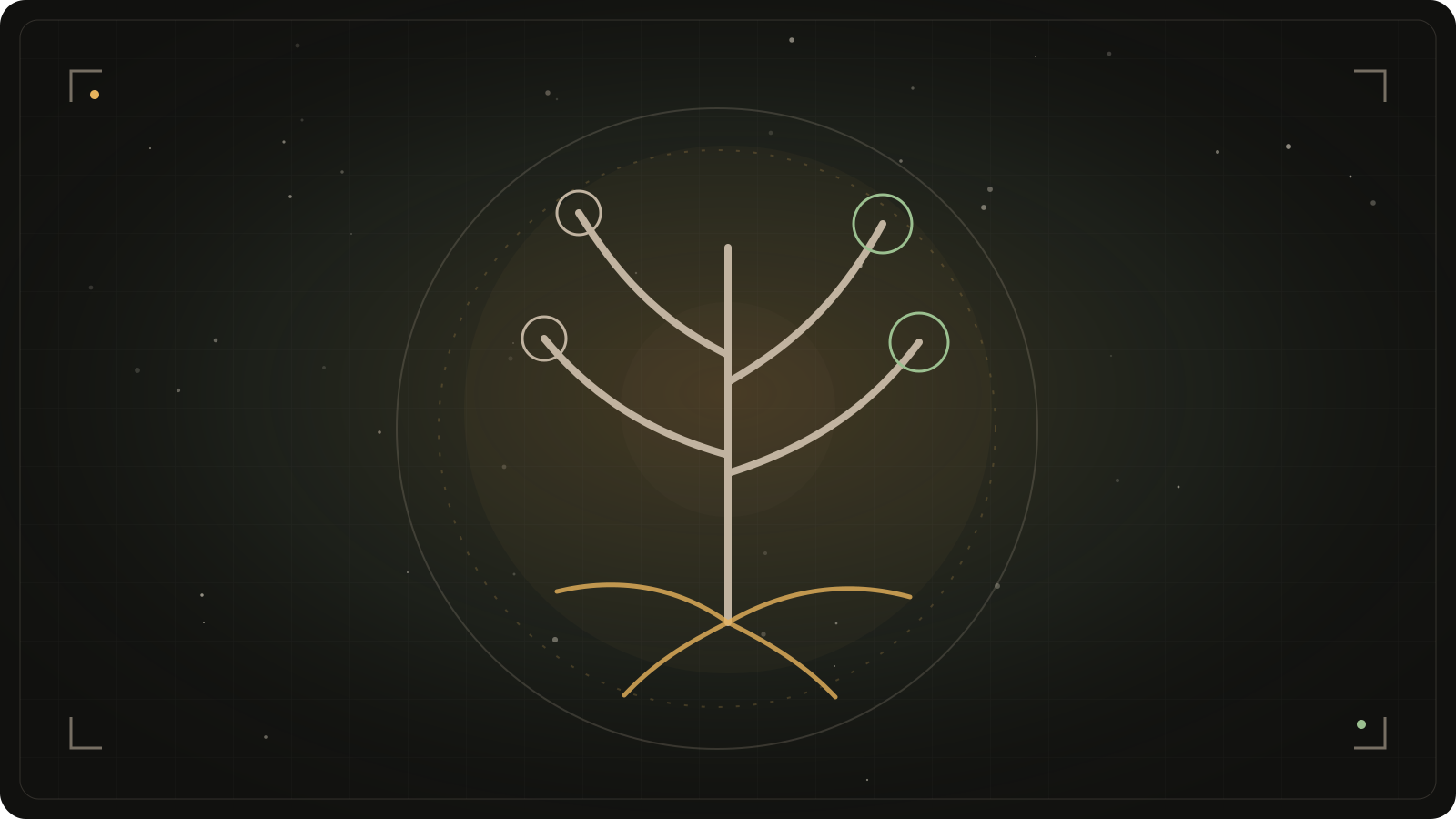
Now look at it as a system, friend. Sanatana dharma is the set of constants that stay the same in every condition. Around them the tradition places layers bound to time and place. Yuga-dharma, suited to an age. Desha-kala dharma, which moves by place and time. Apad-dharma, which applies in a crisis. And svadharma, the duty of your own role and your own nature. These layers are context settings. The setting changes, the layers change, and whatever still remains is the sanatana.
The story of the name
There is a story in the name too. The word Hindu began as the name of a geography. Persians and Greeks used it for the people across the river Sindhu. The name Sanatana Dharma was adopted later, a name given from within, one that says this has no single founder and no single birth date. In the nineteenth century it also carried a narrower sense, when traditionalist Sanatani Hindus stood apart from the reformers of the Arya Samaj.
And one thing said honestly. Many scholars hold that seeing the tradition as one, eternal, and founderless is itself, to a degree, a modern construction, one that took shape in conversation with Western categories of religion.
Frequently asked questions
Are Sanatana Dharma and Hinduism the same thing?
In everyday use the two run alike. The difference is only this: the name Hindu came from geography, while the name Sanatana Dharma was given by the tradition from within, with the insistence that it has no single beginning.
Does sanatana just mean very old?
It goes beyond old: without beginning. It is less a word about age, more a word about rank.
So does nothing in it ever change?
A great deal changes. The layers keep shifting with age, place, time, and role. The sanatana is what stays put even as all of these change.
What is the direct translation of dharma?
No single direct translation comes to hand. Order, nature, duty, and policy all live in it at once.
Further reading
- Monier-Williams, A Sanskrit-English Dictionary
- Gavin Flood, An Introduction to Hinduism
For anyone who thinks in systems, this page’s job is simple. Read sanatana dharma as a stable interface, and yuga, desha, kala, and svadharma as the changing layers running on top of it. Then whenever any debate about the tradition comes up, you can ask whether it concerns the constant or one particular setting. That one question dissolves half the confusion on the spot.